
Keep bees and wasps away by removing the food, odors, and nesting gaps that draw them in. That means cleaner patios, tighter trash cans, and fewer open entry points around eaves and rooflines, so you reduce both nuisance traffic and sting risk without harming pollinators.
For patios, grills, trash areas, and garden beds, the right move depends on the insect in front of you. You need a bee-safe approach, a wasp-specific response, and a clear line between harmless foraging and a nest that needs outside help.
Start With the Insect Before You Act
That first read tells you whether to leave the area, clean it up, or call for help. Honeybees, yellowjackets, and paper wasps do not behave the same way, so shape, color, and nesting spot matter before any spray or repellent.
Use Shape And Behavior As Clues
Honeybees look fuzzy and rounded, and they usually hover near flowering plants. Yellowjackets and paper wasps look sleeker, fly faster, and pay more attention to sugar sources, meat, and garbage cans than to blooms.
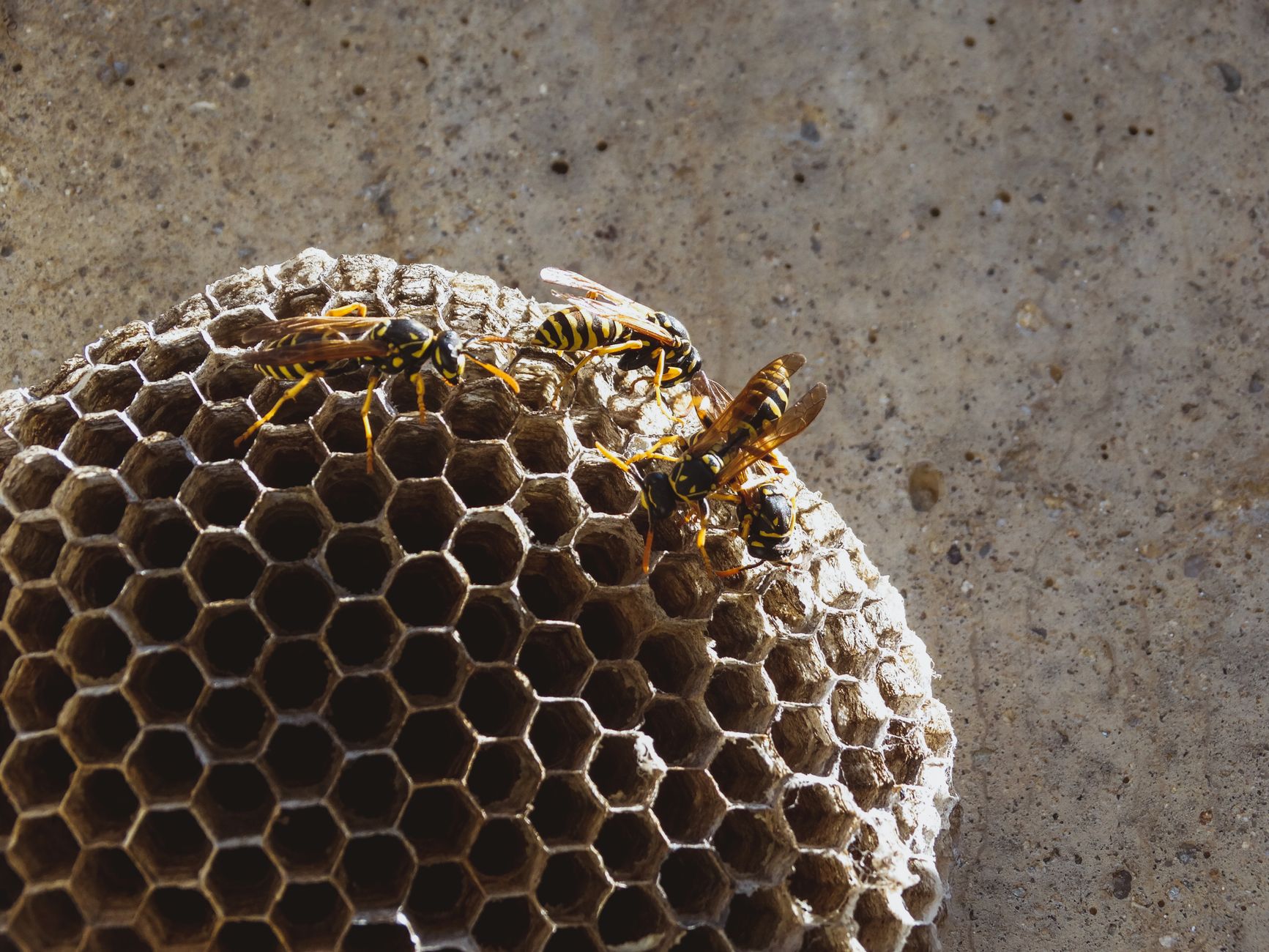
Paper wasps often build open combs under porch ceilings, railings, and eaves and rooflines. Yellowjackets hide in ground holes, wall voids, and other protected spaces, which means the insect you see near the table may be coming from somewhere far less obvious.
Stay Still Around Stinging Insects
Quick swats and sudden steps can trigger defense behavior in seconds. Move slowly, keep your hands down, and leave the area without crowding the insect or its flight path.
That calm response is the safest starting point, and it also gives you time to identify the problem correctly. UC IPM and Penn State Extension both stress species identification before action, because bees and wasps call for different handling.
Leave a nest site alone until you know what built it. A honeybee cluster and a yellowjacket entrance can look similar at a glance, but the safest response is not the same.
Once you know what you are seeing, the next step is to remove the things that keep them coming back. Food odor is often the real driver, and that is where prevention becomes much easier.
That prevention mindset makes it easier to focus on the smells and scraps that keep drawing them in.
Clear The Food Triggers That Draw Them In
That outdoor traffic usually starts with scent. Sugar, protein, and trash odor pull stinging insects into seating areas fast, and a sticky table can become a problem in one afternoon.
Cover Food And Drinks
- Lid every cup: Sugary drinks are a strong cue for yellowjackets and wasps.
- Use tight covers: Wrap plates and serving bowls instead of leaving them exposed.
- Clean spills fast: Sticky residue on tables and railings keeps foragers returning.
- Move scraps indoors: Meat, fruit, and dessert crumbs belong inside, not on the deck.
University of Minnesota Extension and the USDA Forest Service both point to exposed food, sugary drinks, and open containers as major attractants. Late summer is especially active because yellowjacket colonies are larger and workers search harder for easy calories.
Keep Trash Tight And Dry
Open bins act like a dinner bell. Keep garbage and recycling lidded, rinse sticky cans before setting them out, and wash residue from bin rims and handles on a regular schedule.
Fallen fruit creates the same problem in the yard, especially near garden beds and fruit trees. Pick it up quickly, then wipe down grill grates, prep tables, and any surface that held sauces or marinade.
Do not leave trash bags beside the bin for later. A single torn bag can turn the area into a foraging stop within hours.
That sanitation step does more than cut nuisance activity. It also gives you a cleaner baseline for the next part, which is choosing bee-safe deterrents that do not punish the insects you want in the garden.
Once those attractants are reduced, the question shifts to repellents that work without disrupting the garden balance.
Use Bee-Safe Deterrents With Realistic Expectations
No scent makes an outdoor space insect-proof. The best results come from cleanup, distance from flowers, and physical barriers, with home remedies used only as minor support around a table or doorway.
Use Low-Risk Deterrents In Seating Zones
Peppermint oil, vinegar, citrus peels, and similar DIY ideas can shift local activity for a short time, but the effect is inconsistent. A few drops on a cloth may nudge wasps away from a table edge, yet it will not clear a nest or override a strong food source.
National Pesticide Information Center guidance backs that up: there is no widely reliable scent that keeps bees and wasps away without affecting other insects too. Treat these tools as optional helpers, not the main plan.
Keep Flowers For Pollinators And Food For People Separate
Flowering plants belong in the yard, but not beside the picnic spread. Place seating away from dense blooms, and keep sweet drinks and uncovered dishes well clear of garden beds.
| Tool | What It Can Do | Where It Fits |
|---|---|---|
| Peppermint oil | May reduce close-range activity for a short period | Table edges, door thresholds |
| Vinegar | Can mask some food odors | Quick cleanup, not a nest fix |
| Citrus peels | May add scent near a seating area | Small patios, temporary use |
| Screened barriers | Block access to people and food | Doors, porches, vents |
The tradeoff is simple. Scents can help around a table, but screening and sanitation do the real work of how to keep bees away from patio seating without turning the yard into a chemical bath.
Those surface-level fixes only go so far if insects can still get inside the structure. Blocking the openings they use to nest is what stops the cycle from restarting.
Even the best deterrent falls short when a structure still offers easy access points for nesting.
Block The Openings They Use To Nest
That calm only lasts if the structure stays sealed. Bees and wasps exploit soffit gaps, vent openings, loose trim, and utility penetrations that stay dry and sheltered, so tiny defects matter.
Seal Cracks And Screen Vents
Caulk small gaps, repair torn screens, and close openings around eaves and rooflines before colony growth starts. A gap under 1/8 inch can still serve as an entry point for some species.
Foam sealant, weatherstripping, and insect screen all help, but timing matters. Closing an active nest entrance without checking first can drive insects into living spaces through a different exit.
Inspect The Hidden Corners
- Porch ceilings: Look for paper wasp combs near beams and light fixtures.
- Deck undersides: Check shaded joints, joists, and loose boards.
- Sheds and garages: Scan vents, corners, and unused holes in siding.
- Utility entries: Watch around pipes, cables, and cutouts in walls or trim.
North Carolina State University Extension and UC IPM both point to cavities, holes, and protected voids as favored nesting sites. Repeat the exterior check after storms or seasonal weather shifts, since a shifted board or torn screen can open a new route.
Look again after heavy wind or rain. Fresh damage around a roofline often becomes the new nest entrance before you notice insect traffic.
Once access points are handled, the job becomes more local. A patio, trash area, or garden bed each needs a slightly different setup, and that is where the practical payoff shows up.
Those entry points are only part of the picture, because each outdoor area creates its own pressure points.
Adjust Prevention By Patio, Trash, And Garden
That layout does more than decorate a yard. It directs insect traffic, so a clean patio near a sealed bin behaves very differently from a deck beside ripe fruit and an open recycling tote.
Set Up Eating Areas Wisely
Move meals away from flowering shrubs and uncovered waste. A few extra feet from blooms, fruit trees, and trash can cut foraging pressure enough to keep the table calmer.
One family picnic on a shaded patio can attract yellowjackets within minutes once desserts come out. Cover the pie, close the drink cooler, and take serving dishes back inside as soon as the meal ends.
Keep Garbage And Recycling Tidy
Garbage cans deserve regular washing, not just lid duty. Rinsed residue, tight lids, and a closed storage spot do more than scent tricks ever will.
Place bins away from doors and seating whenever the layout allows. That simple distance reduces the path between a food source and a place where people sit still.
Trim Late-Season Attractants
Late summer and fall bring the roughest yellowjacket season because colonies are largest then. Sweets, meat, and overripe fruit become high-value targets, so clean outdoor eating zones with extra care during that stretch.
For gardens, keep nectar plants healthy and avoid heavy disturbance around them. A pollinator bed can stay productive while the dining zone stays separate, and that split is the heart of how to keep stinging insects away outdoors without punishing the bees you want to keep.
With food and layout under control, the hardest question is what to do when a nest is already there. The answer depends on species, access, and risk.
With the surroundings under control, attention turns to whether intervention is actually necessary.
Decide When To Leave A Nest Alone
A quiet nest is not a harmless nest. Many colonies defend a site only after someone gets too close, and repeated disturbance raises the chance of multiple stings.
Keep Children And Pets Clear
Block off the area fast and keep kids and pets away from the nest site. A dog nosing into a ground hole or a child tossing a ball under an eave can turn a routine afternoon into an emergency.
USDA Forest Service guidance stresses distance for a reason: most bees and wasps sting when threatened. That risk rises sharply near doorways, play spaces, and allergy concerns.
Call A Professional Or Beekeeper
Honey bee swarms on a shrub, fence, or post often belong with a beekeeper, not a can of spray. Yellowjackets in a wall cavity, a ground entrance near a walkway, or any nest you cannot identify call for professional help.
UC ANR and Penn State Extension both favor targeted removal over broad spraying when the site is established in a risky spot. A specialist can tell whether the job is relocation, structural removal, or simple leave-alone management.
Do not poke at a nest to see what comes out. That move turns a cautious problem into a defensive one in a matter of seconds.
One porch soffit nest can look minor in April and serious by August. That seasonal shift is why the safest plan starts with observation, then moves to exclusion, and only then reaches for outside help.
By late summer, that judgment matters more than ever, when caution and timing determine the safest outcome.
Bottom Line
The safest way to keep bees and wasps away is to remove the reasons they stay: food, trash odor, open gaps, and easy nesting sites. Once you know whether you are dealing with honeybees, yellowjackets, or paper wasps, the right move becomes clear. Clean the space, seal the structure, and leave active nests alone when the risk climbs.
FAQ
How do you keep bees and wasps away naturally?
Keep food covered, clean spills fast, and seal cracks around porches, vents, and rooflines. Natural scents such as peppermint oil or vinegar can help a little near a table, but sanitation and exclusion do the real work.
How do you get rid of wasps but keep bees?
Focus on wasp attractants such as trash, meat scraps, and sugary drinks, then leave flowering plants alone. Honeybees belong on blooms, so avoid broad spraying and use targeted nest removal only where a wasp nest creates a safety issue.
What smells do bees and wasps hate?
Peppermint, vinegar, and citrus scents can make a small area less attractive for a short time. Those odors do not replace cleaning, screening, or nest removal, and they do not work the same way across species.
What attracts bees and wasps to my yard?
Sugary drinks, open trash, exposed food, fallen fruit, and grill residue are strong attractants. Flowering plants also draw bees, which is good for pollination but means you should keep dining areas separate from dense blooms.
Should I remove a wasp nest myself?
Small early-season nests in low-risk spots can be handled by some homeowners, but wall voids, ground nests, and anything near a doorway are better left to a professional. Any known sting allergy shifts the choice toward outside help right away.
What is the safest way to keep wasps away from outdoor food?
Cover every dish, cap every drink, and move leftovers inside as soon as the meal ends. Lidded trash bins and fast cleanup matter just as much, because wasps return to carbohydrate and protein odors fast.