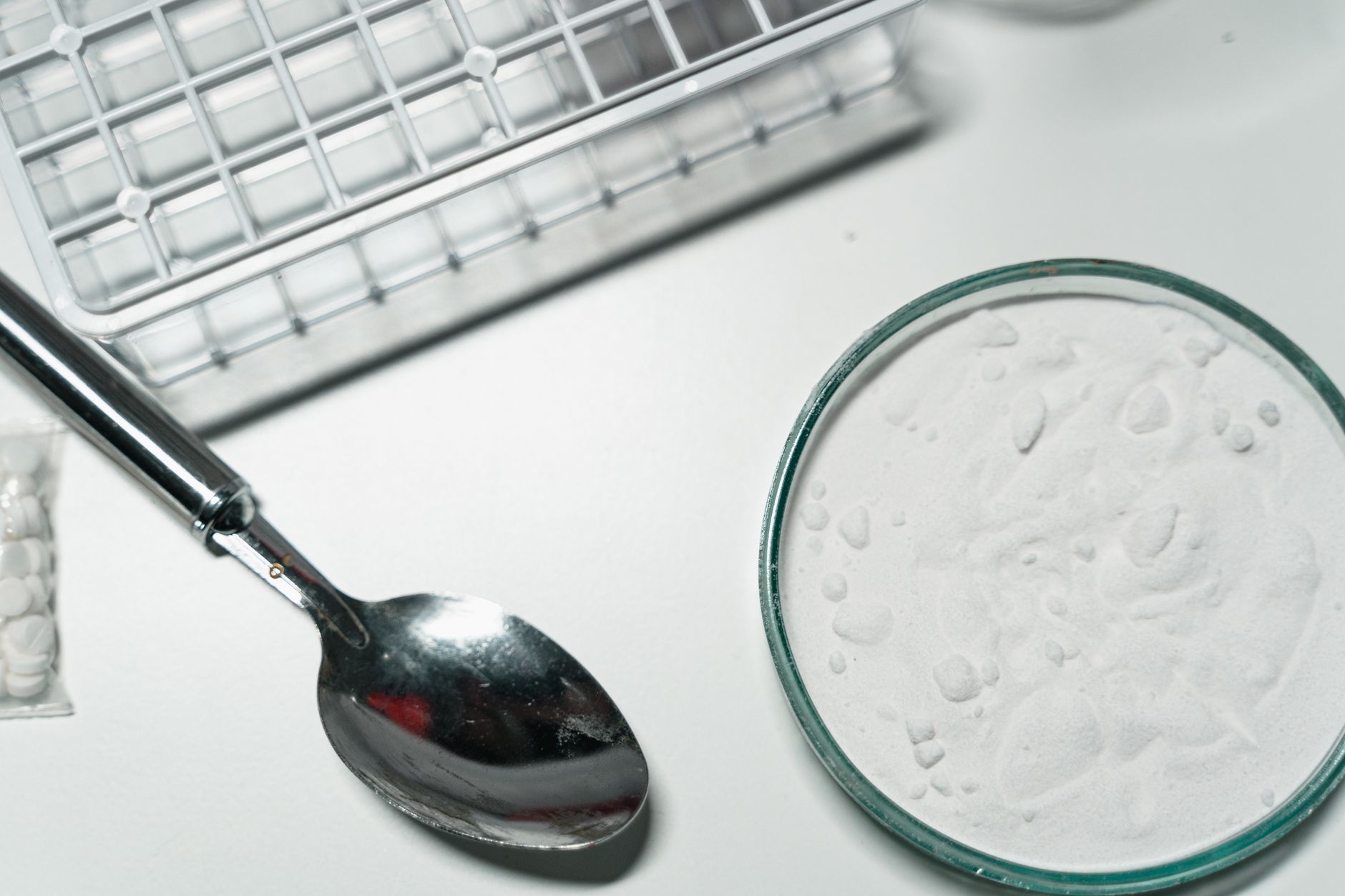

In powder form, this reactive oxidizing salt, LiClO, releases chlorine chemistry for bleaching and sanitizing. The lithium ion is mostly a carrier, while the hypochlorite part does the work in water and on surfaces. You usually see it in specialty chemical settings, not on a standard store shelf.
If you are comparing chlorine sources for pools, treatment systems, or industrial cleaning, the key issues are water balance, storage safety, and cost. The compound behaves like a niche member of the hypochlorite family, so the practical tradeoffs matter more than the name.
Lithium Hypochlorite In Plain English
The compound is a white solid with a sharp chlorine smell and the formula LiClO. Lithium hypochlorite is an inorganic hypochlorite salt, and its chlorine-bearing part drives the redox action that makes it useful in bleaching and cleaning. PubChem lists it as an oxidizing compound, which fits that chemistry.
The hypochlorite ion is the active piece. In practice, that puts it in the same chemical family as sodium hypochlorite and calcium hypochlorite, two far more common products in pool care and water treatment. That shared family matters because all three depend on available chlorine, not on lithium, sodium, or calcium alone.
Availability and handling details usually come from a safety data sheet or a product sheet from suppliers such as ChemicalBook, American Elements, Sigma-Aldrich, and Thermo Fisher. Those references matter because they flag storage limits, incompatibilities, and available chlorine values that determine whether the material is useful in a lab, plant room, or dry-feed system.
Those labels only make sense once the chemistry behind cleaning and disinfection is clear.
| Property | What it tells you | Why it matters |
|---|---|---|
| Formula | LiClO | Confirms the salt contains lithium and hypochlorite |
| Type | Inorganic oxidizing salt | Explains its bleaching and chlorine-release behavior |
| Main role | Bleaching and water sanitation | Shows the chemistry is about oxidation, not lithium |
| Commonness | Niche product | Signals limited commercial use compared with other hypochlorites |
How It Sanitizes Water And Bleaches Surfaces
Once it dissolves, the active chlorine shifts into forms that do the real work. Hypochlorite and hypochlorous acid sit in equilibrium, and hypochlorous acid, or HOCl, passes through microbial cell walls more easily and oxidizes proteins and enzymes.
pH controls how much of each form is present. Lower pH pushes more active chlorine toward HOCl, while higher pH shifts the balance toward hypochlorite ion, OCl-, which is less effective. That is why pH balance sits at the center of lithium hypochlorite disinfection and every other hypochlorite dosing decision.
The same oxidation explains surface whitening. Pigments and colored organic molecules fade because the oxidizer breaks their chromophores apart, which is why a small dose can change both water clarity and stain color. In a pool, a service tech sees the same reaction a lab tech sees in a dilute bleach bath.
The same oxidizing action also explains why it still turns up in a few niche settings.
In water, the active species matters more than the salt name. HOCl does most of the heavy lifting, while OCl- carries less punch and needs better pH control to perform well.
Where The Compound Still Shows Up
The compound still appears where a dry chlorine source makes sense. Lithium hypochlorite uses include specialty bleaching, niche disinfection, small-scale water treatment, and industrial cleaning, especially when a solid oxidizer is more convenient than a liquid.
That limited footprint makes its uses narrow, not absent. In pool treatment and shock use, a residential pool can get a dose to raise free chlorine without adding calcium hardness or sodium load, which can help when water balance is already tight.
Pool Treatment And Shock Use
A dry chlorine source can be helpful when a pool already carries too much calcium or sodium. In that case, the operator may prefer a product that raises sanitizer levels without pushing hardness or salt balance in the wrong direction.
General Water Treatment And Industrial Work
In plant settings, the compound may appear in dry chemical feed systems or specialty cleaning processes. INCHEM safety cards and ECHA hazard records are the kinds of documents that show up when a material is handled in regulated industrial work rather than retail use.
Why Most People Never See It
Cost, packaging, and limited demand keep it out of common retail channels. Sodium hypochlorite dominates liquid bleach use, and calcium hypochlorite dominates many solid pool applications, so this one stays in the background unless a specific formulation calls for it.
Lithium salts are also expensive compared with sodium and calcium analogs, and routine sanitation rarely needs another oxidizer with similar chemistry. That is why the compound remains a specialty choice instead of a default pool or water-treatment product.
When a product is niche, its strength is often measured in active chlorine rather than bulk weight.
Why Available Chlorine Matters More Than Mass
Two containers can weigh the same and still deliver different chlorine power. Available chlorine measures the oxidizing capacity a product can release, so it is the useful number for treatment planning, not gross mass alone.
A damp or partially decomposed sample can weigh the same as a fresh one and still deliver less active chlorine. Thermo Fisher product sheets and chemistry references use this assay value because purity, moisture, and formulation all affect performance.
| Measure | What it means | Practical use |
|---|---|---|
| Mass | Total amount of material in the container | Useful for shipping and inventory |
| Available chlorine | Chlorine release capacity expressed as chlorine equivalent | Used for dosing and product comparison |
| Purity | How much of the sample is actual active salt | Explains why two batches can perform differently |
| Moisture content | Water held in the product or package | Signals storage loss and lower shelf stability |
Review literature in ScienceDirect points to the same conclusion: disinfecting power tracks active chlorine species, not container weight. A treatment decision based on mass alone can underdose or overdose a system, which changes sanitation and water balance at the same time. That practical difference leads straight into handling and storage.
That margin between safe treatment and wasted chemical is where handling rules become critical.
The Safety Risks That Make Handling Matter
Heat, moisture, and contamination all shorten storage stability. Lithium hypochlorite is an oxidizer, and oxidizers can intensify fire behavior or break down faster than expected when they meet the wrong material or a warm, damp shelf.
The lithium hypochlorite safety data sheet usually gives the same message in technical language: keep the material dry, cool, and separated from incompatible chemicals. In plain terms, storage is part of the hazard control, not a separate administrative detail.
Keep it dry, cool, and separated from reactive material. A vented oxidizer cabinet beats a crowded utility shelf every time.
The incompatibility list is short but serious.
- Acids can push chlorine release and create dangerous fumes.
- Ammonia cleaners can form irritating chloramine species.
- Amines can react in ways that release heat and gas.
- Reducing agents can drive fast, unwanted redox reactions.
- Paper, oil, and other organics can raise fire risk around the oxidizer.
Fisher Scientific safety sheets and INCHEM hazard cards give the same advice in plainer language: keep the material dry, segregate it from acids and combustibles, and use gloves and eye protection during handling. A dusty spill is not just housekeeping; it becomes a compatibility problem as soon as moisture enters the picture.
Store the container tightly closed, away from ammonia-based cleaners, and never near fertilizer, solvent rags, or acid wash stock. Once that habit is in place, the comparison with other chlorine products becomes easier to judge.
Careful separation from incompatible materials becomes the benchmark for judging competing chlorine sources.
How It Stacks Up Against Sodium And Calcium Hypochlorite
Sodium hypochlorite wins on convenience, calcium hypochlorite wins on broad pool use, and it stays niche. The chemistry is shared, but cost, form, and water balance shift the decision in different directions.
The practical gap shows up fast in pool care and water treatment. Sodium hypochlorite is usually sold as liquid bleach, while calcium hypochlorite is a common solid for pool sanitation and shock treatment. it, by contrast, appears when a dry source of chlorine is needed and the water chemistry has to stay within tighter limits.
| Product | Common form | Water balance effect | Typical use |
|---|---|---|---|
| it | Solid oxidizer | Raises chlorine with no calcium load and less sodium load | Niche pool and industrial use |
| Sodium hypochlorite | Liquid bleach | Adds sodium and can raise pH | Household and municipal sanitation |
| Calcium hypochlorite | Solid granule or tablet | Adds calcium and can influence scaling risk | Pool sanitation and shock treatment |
The verdict is blunt. Sodium hypochlorite suits routine liquid dosing, calcium hypochlorite suits many pool systems, and this solid only makes sense where a dry chlorine source is needed and the extra cost fits the job. It also fits rare cases where adding sodium or calcium would push water balance in the wrong direction.
Case in point: a pool owner with already high calcium hardness may avoid calcium hypochlorite and choose a different chlorine source. A water chemist comparing shock options may value the solid form and cleaner residue profile, but that same chemist still has to account for pH shift, free chlorine demand, and the compound’s weaker commercial footprint.
That tradeoff is why it remains a specialty choice rather than a default. It solves a narrow water chemistry problem, and it does not beat the common products on price or convenience.
Compared with common alternatives, it stays a specialized fix for specific conditions.
Final Thoughts
it matters because it behaves like the rest of the hypochlorite family while sitting far outside the mainstream. You get chlorine chemistry, pH sensitivity, and oxidizer hazards in one package, so the right choice depends on water balance, storage conditions, and the need for a niche solid source rather than a standard bleach.
FAQ
What is lithium hypochlorite?
it is an inorganic hypochlorite salt with the formula LiClO. It is a chlorine-bearing oxidizer used in specialty bleaching, sanitation, and some water treatment tasks.
How does lithium hypochlorite work as a sanitizer or oxidizer?
It dissolves to release active chlorine, which shifts between hypochlorite and hypochlorous acid in water. Hypochlorous acid is the more active sanitizer because it penetrates microbial cell walls and oxidizes proteins and enzymes more easily.
What is lithium hypochlorite used for?
It is used mainly for bleaching, niche disinfection, small-scale water treatment, and industrial cleaning. In some pool settings, it can raise free chlorine without adding calcium hardness or much sodium load.
How does it compare with calcium hypochlorite and sodium hypochlorite?
As a common liquid bleach, sodium hypochlorite contrasts with calcium hypochlorite, a widely used solid for pool sanitation and shock. it is rarer, more expensive, and mainly useful when you need a dry chlorine source without adding calcium.
Is lithium hypochlorite safe to handle and store?
It can be handled safely only with strict oxidizer precautions. Keep it dry, cool, closed, and separated from acids, ammonia cleaners, amines, reducing agents, paper, oil, and other combustibles, and follow the it safety data sheet.
Does lithium hypochlorite affect water pH or chemistry?
Yes. Its effect depends on the chlorine species present in water, and pH controls whether more active hypochlorous acid or less active hypochlorite ion dominates. Water balance can also shift when you choose one chlorine source over another, especially in pools.