
Liquid solar blanket refers to a pool evaporation reducer that spreads into a one-molecule film on the water and slows vapor loss. It uses fatty alcohol molecules, often cetyl alcohol, to create that surface layer, which can help keep water temperature steadier in calm conditions.
If you want a lower-effort way to cut daily refill loss without handling a rigid cover, this option deserves a close look. The tradeoff is simple: convenience improves, but insulation, debris control, and safety still favor a physical cover.
The Film On The Water Surface
The product works at the top of the pool, where evaporation starts. That thin layer is almost invisible, but it changes how easily water leaves the surface.
What The Product Actually Is
The active ingredient is usually a long-chain fatty alcohol, with cetyl alcohol as the classic example. Those molecules spread into a monolayer, one molecule thick, and that film slows water vapor from escaping.
A pool evaporation reducer like this uses the same physics as a cover, just without a physical lid. The U.S. Department of Energy Energy Saver materials treat evaporation as a major source of heat loss in outdoor pools, and EPA WaterSense materials point to pool covers as a water-saving step for the same reason.
What It Is Not
This product is not a debris barrier, and it is not a safety cover. It will not stop a child, a pet, or a branch from reaching the water, so normal pool safety hardware still matters.
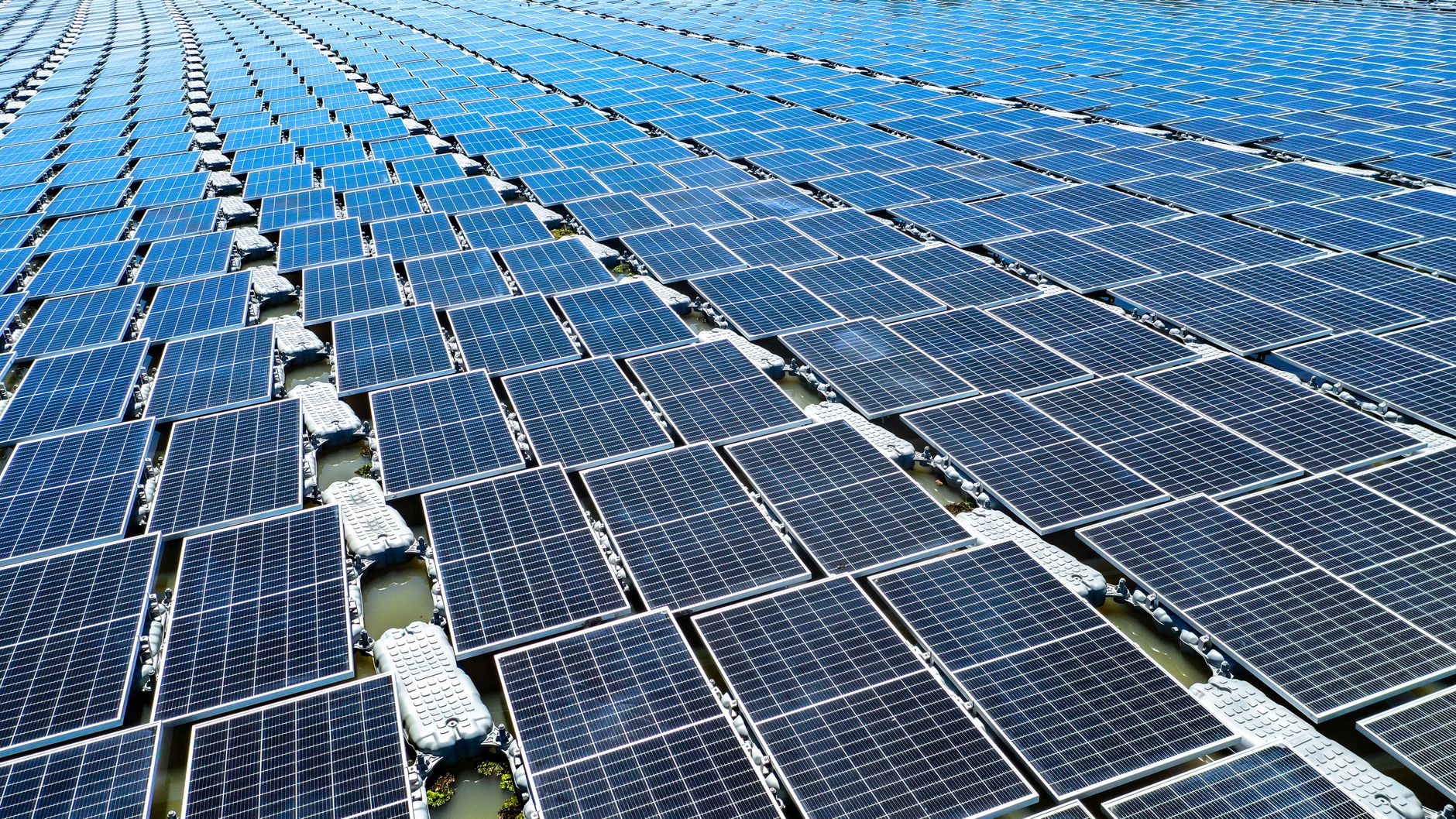
It also is not photovoltaic technology. A liquid pool cover does not generate power; it only sits on the water and slows evaporation, which is why the name sounds more dramatic than the chemistry.
That distinction matters, because the benefit comes from a thin barrier that limits vapor escape and associated heat loss.
The real work happens at the surface. The film does not trap sunlight the way a panel does; it only makes it harder for water molecules to leave the pool.
Why It Reduces Evaporation And Heat Loss
The benefit starts where air meets water. A surface film for pools adds resistance at that boundary, so fewer molecules escape into the air each minute and less heat leaves with them.
How The Monolayer Slows Vapor Transfer
At the molecular level, the film disrupts the free exchange that open water allows. Surface tension shifts only a little, but that small change matters because evaporation depends on molecules crossing a moving boundary, not a solid wall.
Research on monolayer suppressants shows the same mechanism: thinner exchange at the interface means lower evaporation. In plain English, the surface becomes a little less willing to give up water.
Why Heat Loss Drops Too
Evaporation carries away energy, so less evaporation means less cooling. That is why a pool can hold temperature better overnight even when the film does nothing dramatic during sunny hours.
The U.S. Department of Energy and EPA both treat pool covers as heat-retention tools for that reason. The liquid version sits in the same family of physics, but it works as an evaporation suppressing pool treatment, not as a heater.
Even with the same basic mechanism, a treatment that drifts across the surface still faces very different pool conditions.
Tip: Use the product on calm water late in the day. Wind and splashing chew through the surface film faster than still water does.
Where The Promise Meets Pool Reality
The chemistry is sound, but pool conditions decide how much you actually get. Wind, jets, waterfalls, and heavy swimmer traffic can strip away a large part of the effect.
Wind And Surface Agitation Matter Most
Surface turbulence breaks the monolayer into patches. A return jet pointed across the top, a fountain running all afternoon, or strong swimmer traffic can thin the film enough that the savings stay modest.
That is why performance depends more on calm conditions than on bottle claims. This water-saving pool additive can help during low-use periods, but once the surface keeps moving, the film starts losing its grip.
Intermittent Pools And Spas Need Different Expectations
A hotel pool that sits unused overnight can see a decent benefit from the film. A spa with bubbling jets may see little, because aeration keeps tearing the surface apart and gives vapor an easier exit route.
Pond owners and ornamental water-feature operators run into the same issue. The product makes more sense where evaporation is the main loss and surface disturbance is limited, not where spillover and circulation dominate.
Warning: Do not count on the label to outrun the water conditions. A quiet surface helps the film far more than a stronger dose.
That reality makes the comparison with a real cover unavoidable, because a physical barrier still does more.
By contrast, a solid cover blocks debris, conserves heat, and prevents far more exchange with the air.
Physical Pool Covers Still Do More
A solar pool cover or bubble cover blocks the surface far more completely than a liquid film. That stronger barrier cuts evaporation and heat loss better, and it also keeps leaves and grit out of the water.
Evaporation Control
The Department of Energy says pool covers can sharply reduce heat loss because evaporation is the biggest drain on outdoor pools. A bubble-style cover creates a much tighter shield than a surface film, so the vapor barrier is stronger from the start.
That difference shows up on breezy days. A solid or bubble cover keeps doing the same job while the liquid version struggles as soon as wind, splashing, or filtration movement hits the surface.
Heat Retention And Safety
Physical covers keep heat in longer, especially overnight. They also add a layer of debris exclusion, and some rigid products play a role in safety planning, which a liquid additive cannot do.
The liquid route wins on convenience, not on insulation. If you want the strongest heat retention, the clearest waterline, or any safety function, the physical cover remains the better tool.
| Feature | Liquid Film | Physical Cover |
|---|---|---|
| Evaporation control | Moderate in calm water | Stronger barrier |
| Heat retention | Modest | Higher |
| Debris exclusion | None | Yes |
| Safety role | None | Some covers contribute |
| Convenience | High | Lower |
For most owners, that table settles the comparison: the liquid version is a convenience play, not a substitute for a cover. From there, the real question becomes how to use it without wasting product.
That tradeoff means dosing and timing matter, especially when the goal is stretching each application instead of overusing it.
Using The Product Without Guesswork
Dosage instructions matter more than casual pool care habits suggest. The right amount depends on pool size, surface area, and the brand’s dosing directions, and underdosing tends to leave you with little visible benefit.
Follow The Label For Pool Size
Manufacturers set doses by water volume or surface area because the film has to spread across the top evenly. A small plunge pool and a 20-by-40-foot backyard pool do not need the same amount, even if both look clean.
Pool chemicals matter too. Chlorine, bromine, pH adjustments, and automatic feeders can all change how long the film lingers, so the label should sit beside your maintenance log, not in the trash.
Reapply After Disturbance
Backwashing, splash-out, rain, and heavy use weaken the surface layer. So do fountains, waterfalls, and return jets that churn the top few inches of water.
Reapplication usually makes sense after those events, and it makes more sense still during warm, dry weather with strong wind exposure. A decorative pool in a resort courtyard may need more frequent treatment than a lightly used residential pool.
Check Equipment Before Routine Use
- Pump flow: Strong return flow can scatter the film before it settles.
- Skimmer action: Surface suction can pull part of the layer away.
- Heater setup: Heated water still loses less energy with the film, but the gain stays modest.
- Automatic cleaners: Heavy circulation from cleaning cycles can shorten surface residence time.
- Water features: Fountains, spillways, and jets can undo the surface layer fast.
A pool technician at a busy apartment complex would treat this as a scheduling tool as much as a chemical dose. That practical mindset matches what agencies and labs say about evaporation control.
Practical use still depends on evidence, and the evidence points to modest gains rather than miracle-level savings.
What The Science And Agencies Actually Say
The core idea is straightforward: exposed water loses heat and moisture at the surface, and anything that slows that exchange can help. National Renewable Energy Laboratory work treats that principle as part of thermal system design, while Energy Saver and WaterSense focus on pool covers as the practical application.
What Agencies Emphasize
The Department of Energy says pool covers can cut heating demand by reducing heat loss when the pool sits unused. The EPA takes the same view through WaterSense, which highlights water conservation and lower chemical use from less evaporation.
Neither agency presents a liquid solar blanket as a standard solar technology. NREL research on thermal systems centers on evaporation control, not on a branded liquid product, which is a meaningful distinction for any buying decision.
What The Literature Supports
Peer-reviewed work on monomolecular surface films shows that thin layers can slow evaporation under some conditions. The effect fades with wind, agitation, and contamination, which is exactly why real-world performance can vary from one pool to another.
University of Florida IFAS Extension and Penn State Extension materials on pool care both stress the same general idea: reduce evaporation where you can, but do not expect a passive additive to match a real cover. That is the fairest reading of the science.
Direct answer: a liquid solar blanket can help with water conservation and mild heat retention in calm pools, but a solid solar cover still does the heavier lifting. Pool water that sits still for long stretches can make the product worthwhile in routine maintenance; water that stays busy shrinks the gain fast.
That is the verdict most pool owners need before spending money on another bottle. The next step is separating the useful cases from the weak ones.
Those limits make the final call straightforward: it helps in some setups, but only if expectations stay realistic.
Wrap Up
The smartest way to judge a liquid solar blanket is by the pool, not by the label. Calm water, light use, and a need to trim evaporation suit it well; windy, active, or splash-heavy conditions call for a physical cover instead.
FAQ
Do liquid solar covers really work?
Yes, they can reduce evaporation, and that can trim some heat loss too. The effect is real but modest, and it drops fast in windy or heavily used pools.
What is in a liquid solar blanket?
Most products rely on a long-chain fatty alcohol such as cetyl alcohol. That chemistry spreads across the surface and forms a thin monolayer that slows vapor escape.
How do you use a liquid solar blanket?
You pour the measured dose onto the pool surface as directed by the label. Reapply after splash-out, backwashing, or any event that disturbs the top layer.
How long does a liquid solar blanket last on pool water?
Duration varies with wind, circulation, swimmers, and surface agitation. A calm pool can hold the film longer, while a spa with jets or a waterfall can break it up fast.
Does a liquid solar blanket replace a pool cover?
No. A physical solar cover still blocks evaporation better, holds heat more effectively, and adds debris control that a liquid film cannot match.
Is a liquid solar blanket a solar power product?
No. It does not produce electricity or collect solar energy the way photovoltaic panels do. The product works by slowing evaporation at the water surface.