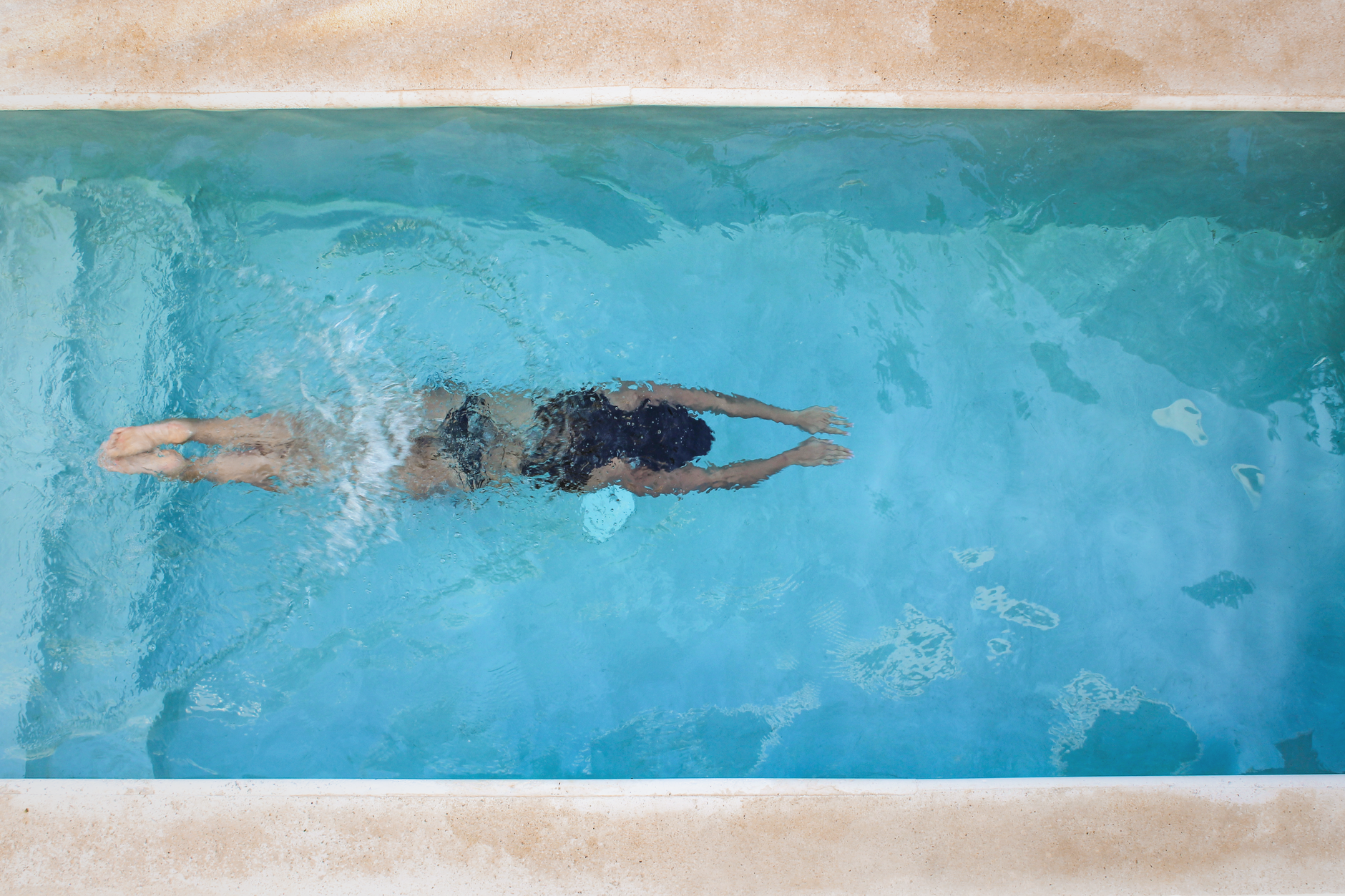

Built for soaking, cooling off, and seated immersion rather than lap swimming, this compact, deep basin suits tight backyards and patios. Its smaller footprint makes it a practical fit for a small backyard, courtyard, patio, or rooftop where depth matters more than length.
For homeowners weighing a backyard plunge pool against a larger build, the real questions are use, cost, permits, and upkeep. The right choice depends on how you want the space to function, whether it is indoors or out, and how much site work your lot can handle.
What A Plunge Pool Actually Delivers
A compact basin gives you immersion first and exercise second. You can sit, cool down, or submerge your shoulders, but you should not expect room for laps or active play.
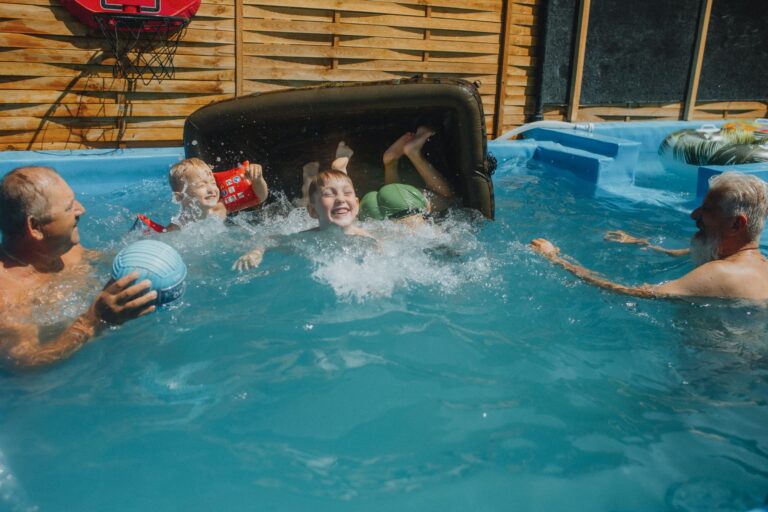
That tradeoff becomes obvious in daily use. A 6-foot-by-10-foot pool can feel generous for two adults on a hot afternoon, yet floats, toys, and movement quickly use up the available space.
Size And Use Set The Limit
The usable job is the real design brief. Most residential models occupy a small footprint, run deeper than a spa, and can be set up for ambient water, heating, or chilled water depending on the intended routine.
That makes the format useful for hydrotherapy, post-sauna recovery, or quiet soaking. A cold plunge pool serves a different purpose than a lap pool, so the use case should be settled before anyone drawings up the shell.
The Term Overlaps With Other Compact Formats
Builders often group this format with small fiberglass pools, spools, and spa-like basins. A spool blends spa and pool traits, while a fiberglass shell can fit the same conversation because it installs quickly and needs less custom forming.
Context matters beyond residential design. In geomorphology, a plunge pool is a deep basin at the base of a waterfall, formed by falling water and moving sediment, and that natural meaning has no relation to backyard use.
Safety Still Applies At Small Scale
Small does not mean low risk. Queensland treats plunge pools as swimming pools for barrier and fencing rules, and the U.S. Consumer Product Safety Commission pushes the same drowning-prevention basics for residential water features.
That means self-closing gates, proper barriers, and supervision still belong in the plan. Once the function is clear, the next question is where a compact basin fits best in the yard.
A clear purpose often makes the footprint feel easier to justify in a tight yard.
Why Small Yards Keep Coming Back To Them
Space limits are the main reason compact pools keep showing up in tight residential plans. A shallow footprint can still deliver water, seating, and a visual anchor without taking over the whole outdoor area.
Extension services in Wisconsin and Texas point to the same planning logic: match the feature to the lot and the maintenance load you can realistically handle. A small plunge pool works because it turns limited square footage into a usable outdoor room.
The Footprint Works Where Setbacks Bite
Setback lines, service access, and existing patios can make a standard in-ground pool feel oversized. A compact basin can fit courtyards, narrow backyards, and rooftop terraces where excavation, decking, and circulation space all have to stay tight.
That matters in city lots, where every square foot has a job. You can preserve lawn, planting beds, or dining space and still have a place to cool off after work.
The Lifestyle Appeal Is Practical, Not Frilly
Quick immersion is often more useful than a long swim. You can step in after gardening, rinse off after a sauna session, or sit in water while talking with guests on a small patio.
Supervision also feels easier because the water zone stays compact and close to the house. With the right edge detail, seating, and landscaping, the pool can read like part of the outdoor room instead of a separate object.
Some Pools Become More Decorative Than Useful
A basin with weak benching, awkward entry, or a mismatched depth can look good and work poorly. In that case, you are paying for water as a visual feature more than a daily-use amenity.
Measure the likely use before you measure the shell. A pool that fits the footprint but not the routine becomes expensive hardscape with water in it.
That fit check leads straight to construction choices, because the shell you pick changes comfort, upkeep, and installation time.
That fit question quickly becomes a materials question, because structure shapes both comfort and upkeep.
Materials And Builds That Shape The Experience
Shell choice changes nearly everything you feel later. Concrete gives you the most freedom, fiberglass installs fast, and vinyl liner systems usually cost less up front but need liner replacement over time.
The U.S. Department of Energy and Penn State Extension point to the same basic physics: material, insulation, and equipment affect heat loss, surface feel, and maintenance load. In a small basin, those effects show up quickly because the water volume is low.
| Build Type | What You Feel | Where It Fits Best |
|---|---|---|
| Fiberglass | Smooth surface, fast installation, fewer custom shapes | Small yards that need a quick, clean install |
| Concrete | Deep customization, strong structural shell, more finish choices | Courtyards, irregular lots, high-design projects |
| Vinyl liner | Lower shell cost, softer feel, periodic liner replacement | Budget-conscious projects with simpler geometry |
| Semi-inground or above-ground | Less excavation, easier access on tricky sites | Sloped yards, limited digging access, staged builds |
Concrete Brings Shape And Weight
Gunite and shotcrete are common for custom it design because they form deep, irregular basins and can support benches, steps, and infinity edges. That flexibility matters when the pool has to tuck into a courtyard or line up with a terrace wall.
Concrete also asks more of the waterproofing layer, tile, and finish work. A well-built shell can last for decades, but the tradeoff is more care during construction and more surface upkeep over time.
Fiberglass Keeps The Build Tight
A fiberglass pool arrives as a preformed shell, so installation can move faster and the interior feels smooth underfoot. The surface is easy to brush, and the shape is fixed, which suits homeowners who want fewer custom decisions.
The limit is geometry. Deep, narrow, or highly irregular shapes are harder to get from a molded shell, so the design has to bend around the product rather than the other way around.
Heating, Saltwater, And Circulation Change The Day-To-Day Feel
A heating system extends the season and makes shoulder-season use more realistic. A saltwater system can change how the water feels and reduce some chemical handling, but it still depends on balanced water and solid circulation.
Small water volume also swings temperature quickly. That is a physical reality, not a sales line: a compact basin loses and gains heat faster than a large pool, so insulation, cover use, and equipment sizing carry outsized weight.
That equipment story turns into dollars fast, which is why the cost breakdown deserves close attention.
Those build decisions carry a price tag, and that is where the budget starts to separate into pieces.
The Cost Stack Behind A Compact Pool
The shell is only one line in the budget. Excavation, delivery, plumbing, electrical work, decking, drainage, heating, permits, and finishes can add more than the basin itself.
University of Florida IFAS Extension and the National Association of Home Builders point to the same pattern: fixed project costs do not shrink in direct proportion to water volume. A small pool still needs access, circulation, safety features, and utility connections.
| Budget Item | What It Covers | Why It Moves The Total |
|---|---|---|
| Excavation | Digging, hauling spoil, grading | Rock, roots, and tight access slow the job |
| Shell or structural work | Fiberglass shell, concrete shell, or liner system | Material choice changes labor and finish cost |
| Equipment | Pump, filter, drains, controls, lights | Small pools still need sized circulation and sanitation parts |
| Decking and coping | Walking surface, edge detail, access points | More finish area means more labor and material |
| Heating and electrical | Heater, wiring, panel work, timers | Cold-water therapy and year-round use push these costs up |
| Permits and code work | Plans, inspections, fencing, drainage compliance | Local rules can add time and paperwork |
Headlines that quote only the shell hide the real number. Pool and Hot Tub Alliance material makes the same point: pumps, drains, sanitation, and controls still have to be sized correctly, even in a small basin.
Use a bid comparison that lists every line item, not just the shell. You want excavation, equipment, electrical, drainage, decking, permits, and finish work shown separately so one contractor’s low quote does not hide missing pieces.
- Check the exclusions. Ask what is not included, especially electrical, fencing, and drainage.
- Match equipment sizes. Small water volume still needs a proper pump and filter pair.
- Price the site. Tight access, slope, and soil type can change labor fast.
- Separate finishes. Decking, coping, tile, and lighting belong on their own lines.
- Ask for code items. Barrier work and inspections should appear before signing.
Once the budget is clearer, the next obstacle is the paperwork around it.
With the budget mapped out, attention shifts to the permits and safety requirements that can delay everything.
Permits, Safety Rules, And Local Code Hurdles
Pool projects fail in the quiet middle, not at the sale pitch. Zoning, setbacks, drainage, fencing, electrical work, and entrapment rules can stop excavation even after a contract is signed.
The International Swimming Pool and Spa Code, used by many local jurisdictions, covers barriers, alarms, electrical systems, and circulation safety. The CPSC also backs four-sided isolation fencing, self-closing gates, and strong supervision for residential pools and spas.
Zoning And Setback Rules Shape The Layout
Lot lines decide more than the fence line. A small basin near a property edge may run into setback limits, utility easements, or runoff rules tied to nearby structures and neighboring yards.
Drainage deserves special care. Water from backwash, rain, and splash-out needs a legal path away from foundations and adjacent lots, and that path can change the entire layout of the project.
Barrier And Drain Safety Stay Non-Negotiable
Close doors, patios, and hardscape make access easier for adults and more dangerous for small children. That is why barrier height, gate hardware, and alarm placement matter even more in compact yards.
Drain and suction outlet design also matters. ASME A112.19.8 and ANSI/APSP standards focus on entrapment risk, because even a small basin can create dangerous suction at the outlet without the right components.
Get local building permits before excavation starts. A code officer can flag barrier, electrical, or drainage issues long before concrete or a shell locks the layout in place.
Those rules can feel strict, but they protect the project from stalling halfway through. Once the site passes that hurdle, design can do a lot with a little space.
Even firm rules leave room for creativity once the site clears review and the layout can work harder.
Design Moves That Make A Small Pool Feel Larger
Clean edges and dark water read bigger than busy lines. Landscape architects often favor simple geometry, restrained contrast, and a tight visual field because the eye sees a calmer, broader surface.
That matters in a compact it design. You are not trying to hide the size; you are trying to keep the space from feeling chopped into fragments by too many textures and objects.
Layout And Sightlines Stretch The Room
Extend deck lines straight past the water, and avoid breaking the patio into tiny zones. A continuous plane of paving, a bench wall, or one side of glass can make the area feel wider than the footprint says.
Taller planting works better a few feet away from the water, not pressed against the edge. Low groundcovers, a slim coping profile, and a clear approach path keep the basin readable as a single room.
Lighting, Tile, And Finishes Change The Perception
Subtle lighting under steps and along the waterline adds depth without clutter. Waterline tile in a restrained palette and an interior finish with lower visual noise can make the basin feel calm rather than cramped.
A dark interior finish absorbs more light, so the water reads as a broad sheet instead of a box. That visual effect shows up in courtyards, rooftop builds, and narrow patios where edge detail matters as much as square footage.
Benches, Jets, And Shade Add Use Without Growing The Shell
Benches let you sit in place without wasting swim space you do not have. Jets add movement for hydrotherapy, and a shade sail or pergola can keep the deck usable during hot afternoons.
Pairing a sauna it with a sauna or steam room makes the water part of a recovery loop, not just a decorative feature. In that setup, the pool serves a clear job and earns its footprint.
A small above-ground or semi-inground pool still makes sense on sloped sites, and a spool fits better when you want more warmth and spa-style seating. A true backyard it wins when you need immersion, compact scale, and a clean fit with the rest of the yard.
Space-saving tricks matter, but the real appeal is how compact water can still feel generous and inviting.
Wrap Up
The smartest compact pool matches how you live, not just the square footage you have left. A small deep basin can deliver cooling, soaking, and a strong visual anchor, but the layout, code work, and equipment need to support that use from the start.
FAQ
What is a plunge pool?
A it is a compact, deep basin built for soaking, cooling off, and seated immersion rather than lap swimming. It is usually chosen when you want the feel of a pool in a small footprint.
How big is a plunge pool typically?
Many its are built in compact footprints such as 6 feet by 10 feet or similar small-yard dimensions. The exact size depends on seating, entry steps, and whether the goal is relaxation, cold immersion, or light hydrotherapy.
How much does a plunge pool cost to install?
The total cost depends on excavation, access, shell type, decking, electrical work, heating, permits, and drainage. A small shell can still carry a large site cost, so bids should be compared line by line instead of by headline price alone.
Can a plunge pool be heated and used year-round?
Yes. A heating system can extend the season, and some owners pair it with a cover and insulation to hold heat better in a small basin. Year-round use depends on climate, energy costs, and how well the equipment is sized.
What materials are plunge pools made from?
Common materials include fiberglass, concrete, and vinyl liner systems. Some projects also use semi-inground or above-ground construction when excavation is limited or the site is sloped.
Is a plunge pool better than a regular swimming pool for a small yard?
For a small yard, it often is. A it uses less space, fits tighter setbacks, and still gives you a place to soak or cool off, while a regular swimming pool is better when lap swimming and active play matter more.