Don't miss our holiday offer - up to 50% OFF!

Pool Safety: Practical Steps to Prevent Drowning

Pool safety is the set of barriers, supervision habits, and rescue steps that keep children and adults away from drowning risk before a crisis starts. It works best in layers because a quiet pool can turn dangerous in under a minute.
You need practical steps that fit a backyard pool, a family gathering, or a weak swimmer’s first day near water. The focus here is what matters most, in the right order, so you can reduce risk without guesswork.
The drowning risk that demands fast action
A child can slip under water in the time it takes to answer a text. Drowning is fast and quiet, which is why a calm-looking deck can still turn dangerous in seconds. Young children face the highest risk because they move fast, tire quickly, and need constant adult control near water.
The hard truth is that response time beats regret. Prevention starts with keeping a child out of the water unless an adult is already watching, and it gets stronger when barriers, alarms, and rescue gear are in place. That layered approach matters because no single item covers every risk.
Drowning often looks like stillness, not struggle. A child who is in trouble may not call out, wave, or splash in a way that grabs attention.
Public health guidance treats supervision, fencing, life jackets for open water, swim lessons, and CPR as separate layers, not interchangeable choices. A confident swimmer can still panic, cramp, or slip from a pool edge. Once that basic risk is clear, the next issue is who is actually watching the water for drowning prevention.
That danger makes constant attention the difference between a close call and tragedy.
Supervision that never lets up
Active supervision is the first line of pool supervision because it keeps a trained adult focused on the water, not on food, phones, or conversation. One distracted person cannot replace one alert watcher.
One named adult should own the job during every swim period. The American Red Cross calls that person a water watcher, and the point is clarity: one adult, one task, no handoff without a verbal transfer. That matters most during pool parties, meal breaks, and any moment when children move between the house and the water.
Close range changes everything
Toddlers and weak swimmers need an adult within arm’s reach. Distance gives water time, and water does not wait. A chair on the far side of the deck is not supervision, and a glance through a window is even weaker.
Pool supervision also fails in small ways that feel harmless at the time. A phone buzzes, a doorbell rings, a drink refill takes 30 seconds, and the water gets a second without eyes on it. That second is enough to turn a quiet afternoon into a rescue call.
Shared attention is not enough
A group of distracted adults is not the same as one focused watcher. In a busy yard, everyone assumes someone else has the child covered, and that gap is where trouble starts. The fix is simple: assign the watcher before anyone gets in.
And because supervision alone cannot stop every entry, the next layer is physical. That is where swimming pool barriers, alarms, and drain protection come in.
Even the best eyes miss moments, which is why physical barriers add a crucial second line of defense.
Barriers and hardware that keep kids out
A four-sided fence around the pool is the strongest home-access barrier for young children. The United States Consumer Product Safety Commission recommends a fence or wall at least 4 feet high, with a self-closing, self-latching gate that opens away from the pool. A yard fence alone leaves the house as part of the route, and that route is easier for a child to cross.
Barriers work because they slow the wrong kind of movement. A toddler who reaches a back door may be gone in seconds; a locked gate and a latch mounted out of reach buy time. Fence design matters, since climbable rails, loose hinges, and low latch hardware can defeat the barrier.
Check the gate twice a day, not once a season. A latch that sticks or sags turns a real barrier into a decoration.
Alarms, covers, and drain covers help, but they sit below the fence in the safety chain. They warn you, protect an opening, or reduce entrapment risk, yet none of them replaces adult supervision or a sound fence line. Equipment should be treated as backup, not a license to look away.
Layers that work together
- Door alarms: They alert you when a house door opens toward the pool area.
- Pool alarms: They signal water movement, but wind and debris can trigger false alerts.
- Safety covers: They help cover the surface, yet they still need proper fit and routine checks.
- Approved drain covers: They reduce entrapment risk by blocking strong suction at the outlet.
Drain entrapment deserves more attention than it gets. Powerful suction at a missing or broken drain cover can trap hair, limbs, or clothing, and that hazard can injure even strong swimmers. Keep the pump system maintained, keep covers intact, and replace damaged parts without delay.
Warm, shallow water can still be hazardous too. Spa seats, wading pools, and water features need the same gate discipline because a small volume of water is enough for a child in trouble. Once the hardware is set, swim skill and flotation support come into play.
When access is controlled, the conversation turns to helping swimmers stay capable if trouble starts.
Swim skills and flotation support for every age
Swim lessons reduce drowning risk, but they do not erase it. Water competency is broader than moving a few strokes in a calm pool; it includes floating, turning, breathing, and exiting the water with control, even in clothes. The CDC and the American Academy of Pediatrics both treat lessons as one layer in a larger safety system.
The difference matters because a child who can swim a short distance may still panic in deep water, slip from a step, or tire out after ten minutes of play. That is why lessons should match age and skill, not the idea that one summer session makes a child safe in every setting.
Use lessons to build real skill
Begin with breath control, floating, and basic direction changes before longer laps. The American Red Cross builds instruction in stages for a reason: water comfort comes before speed, and speed comes before stamina. A child who can roll to the back and breathe is safer than one who can only dog-paddle in a straight line.
Skill also needs practice in clothing, near steps, and from different entry points. A pool edge is not the same as open water, and a child who feels fine in a calm lane can still panic near waves, noise, or cold water.
Match flotation to the setting
| Setting | Best Support | Why It Fits |
|---|---|---|
| Backyard pool | Direct adult watching | Close control matters more than gadgets in a familiar space. |
| Boating | Life jacket | Water movement and sudden falls make buoyancy essential. |
| Open water | Life jacket plus supervision | Current, depth, and poor footing raise risk fast. |
| Weak swimmer near water | Well-fitting flotation support | It adds margin, but it does not replace watching. |
Use life jackets for weak or non-swimmers in the right setting, especially on boats, at the shore, or around unsettled water. Floaties, noodles, and inflatable toys are play items, not safety gear, because they slip, deflate, or build false confidence. From here, the focus shifts from staying afloat to keeping the water itself safe.
Safety in the water also depends on conditions that keep swimmers healthy, not just afloat.
Water quality and hygiene that protect swimmers
Clear water is not always safe water. Proper pool operation depends on balanced pH, steady circulation, and disinfectant levels that are checked often enough to catch drift before the water turns harsh or unsanitary. The EPA and CDC both stress that poor maintenance can let germs spread and can irritate eyes, skin, and lungs.
Chlorine does not work like a light switch. It needs time, the right pH range, and good mixing to work through the water, and some organisms resist it better than others. Cryptosporidium is the classic example: it can survive longer than many people expect, which is why careful hygiene matters just as much as the chemical balance.
Shower before swimming and keep sick children out of the water. Those two habits cut contamination at the source and spare everyone a rough afternoon.
Simple hygiene rules that lower risk
- Shower before entry: Sweat, sunscreen, and dirt load the water fast.
- Stay out with diarrhea: That single rule blocks a major source of recreational water illness.
- Close the pool for sickness: Vomit and fecal contamination can spread germs through the entire basin.
- Check circulation: Dead spots near steps and corners collect debris and germs.
Pool water problems show up as more than illness. Eye sting, strong odor, cloudy water, and slippery film on the walls can signal a chemical mismatch or weak circulation. Clean water keeps swimmers comfortable, but it also limits the chance that a small health issue becomes a larger one for the family.
Once water quality is handled, the last task is the one most people hope never to use: a rescue. That is where speed, CPR, and a daily routine matter most.
Once prevention fails, practiced response becomes the last barrier between panic and recovery.
Emergency response and a simple daily checklist
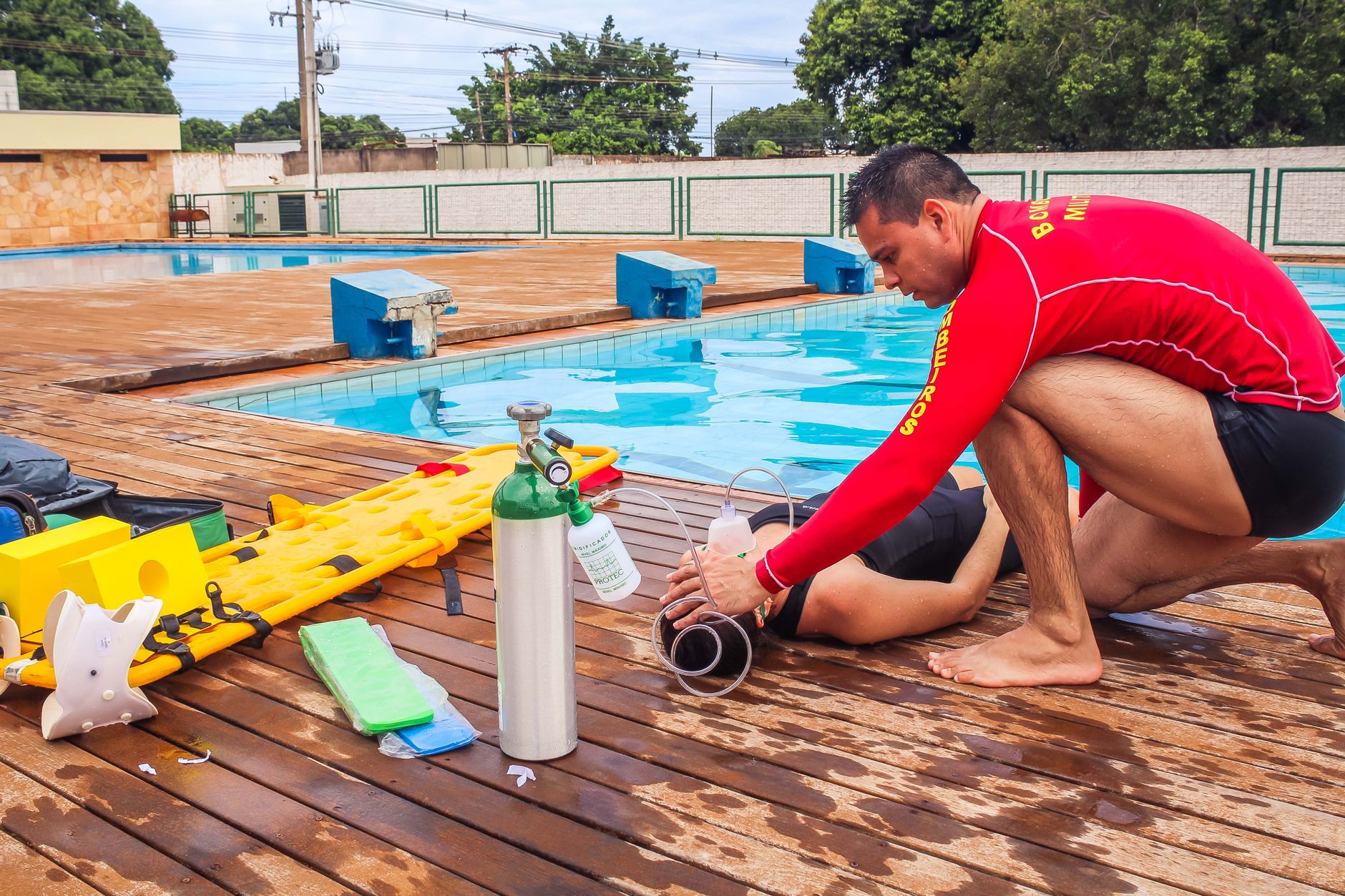
Minutes matter in a rescue, and the first move is to get help on the way. Call 911, remove the person from danger only when it can be done safely, and start CPR right away if the person is unresponsive and not breathing normally and you are trained to do it.
The Red Cross teaches a practical order for rescuers: reach or throw first, and go in only as a last choice for an untrained helper. That reduces the chance of a second victim. Severe near-drowning is a medical emergency even when the person seems better after a short recovery, because breathing problems and brain injury can worsen later.
What a rescue looks like in real time
- Call 911: Put emergency help in motion before anything else.
- Use reach or throw: A pole, rope, or flotation aid keeps you out of the water.
- Remove only when safe: Move the person out of danger without putting yourself at risk.
- Start CPR: Begin chest compressions and rescue breathing only if trained and the person is unresponsive.
- Keep watching: A recovered swimmer still needs medical care after a near-drowning event.
CPR training belongs beside every fence and gate. A short refresher can make the difference between freezing and acting, and the same goes for AED familiarity in homes that keep one nearby. A pool that has barriers without rescue skills is only half ready.
Use a short daily routine before anyone swims. Check that gates latch, drain covers sit intact, rescue gear is within reach, the water looks clear, and one adult is assigned to watch. A 60-second check can stop a week from ending in an ambulance ride.
A quick glance can confirm that the simplest safeguards are actually in place.
Final Thoughts
Strong pool safety rests on layers, not luck. You need a barrier that keeps children out, one adult who is actually watching, and rescue skills ready before a crisis starts. Add clean water and a daily check, and the pool becomes far safer for children, guests, and the people who swim without much confidence.
FAQ
What are the most important pool safety rules for children?
Children need constant adult watching, a four-sided fence with a self-latching gate, and no unsupervised access to the water. Swim lessons help, but they do not replace those layers.
What is the best way to prevent drowning around a pool?
The best protection is a layered system: active supervision, barriers that block access, and CPR-ready adults. No single tool covers every risk, especially for toddlers and weak swimmers.
Do pool fences and self-latching gates really reduce drowning risk?
Yes. A fence that fully surrounds the pool and a gate that closes and latches on its own can block a child from getting to the water without help.
When should a child wear a life jacket at the pool?
Use a well-fitting life jacket for boating, open water, and other unsettled settings. In a home pool, direct adult watching matters more, and toys such as floaties do not count as safety gear.
How can you keep pool water safe and prevent recreational water illnesses?
Keep pH and disinfectant levels in range, run circulation well, and keep sick swimmers out of the water, especially anyone with diarrhea. Showering before swimming also cuts contamination from skin and clothing.
What should you do after a near-drowning event?
Call 911, start CPR if the person is unresponsive and not breathing normally and you are trained, and get medical care even if the person seems better. Breathing trouble can show up after the rescue.