

If you are trying to keep your pool water moving properly, the flow meter you choose can make a bigger difference than you might expect.
Some models are made for tight spaces, others for salt systems, and some are better when you want a clear, easy to read GPM scale. The right choice can help protect your pump, heater, and energy bill. However, not every meter fits every setup.




More Details on Our Top Picks
FV-C Control FlowVis 2 x 2.5in. Complete Pool Flow Meter and Check Valve
If you want one unit that measures flow and functions as a check valve, this FlowVis fits the job. It is H2 Flow Controls’ FV-C model, a threaded 2 x 2.5-inch inline meter that does not need calibration, saddles, or special seals. You can mount it horizontally, vertically, upside down, or near elbows, and its clear scale shows GPM, with LPM available as an option. It is NSF certified to 50 PSI, averages 2.01% accuracy from 20 to 110 GPM, and includes a metal body with a rubber exterior. At 1 pound, it is compact and practical.
- Type:Flow meter/check valve
- Pipe Size:2 x 2.5 in
- Flow Range:20–110 GPM
- Material:Metal
- Accuracy:2.01%
- Installation:Inline
- Additional Feature:Combined check valve
- Additional Feature:NSF certified 50 PSI
- Additional Feature:No calibration required
BNRSZ GLX-FLO-RP Pool Flow Switch for Hayward Salt Systems
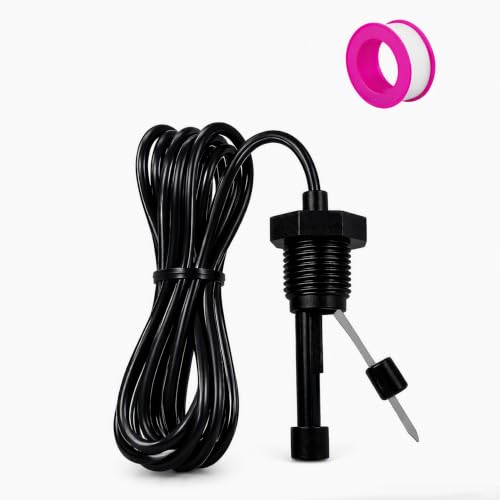
Need a reliable replacement for Hayward salt systems? The BNRSZ 2026 upgraded GLX-FLO-RP flow switch is compatible with Aquarite, Aqua Rite, Pro Logic, OmniLogic, and other chlorine generators. Its steel sensing piece helps extend service life, and the 15-foot cable provides flexible placement. Installation is straightforward with standard 1/2-inch threads, waterproof tape, and a telephone-link plug connection. It also replaces GLX-FLO-HP, Q-12DS-C2, OPT-F/S, and GLXFLOP models. BNRSZ includes live support, a one-year warranty, and compact, lightweight packaging.
- Type:Flow switch
- Pipe Size:1/2 in thread
- Flow Range:Not specified
- Material:Steel sensor
- Accuracy:Not specified
- Installation:Screw-in tee
- Additional Feature:15-foot cable length
- Additional Feature:One-year warranty
- Additional Feature:Steel sensing piece
FLOWREAD R-320 Acrylic Flow Meter for Pools
Blue-White’s FLOWREAD R-320 is a good fit if your pool uses 2-inch pipes. It is an acrylic blue meter for residential pools with a 20 to 120 GPM range and about ±5% accuracy. It does not restrict flow, so you can fine-tune a variable-speed pump for proper filtration, heater protection, cleaner water, and lower chemical and energy use. You can install it in 2-inch ID PVC without unions, adapters, primer, cement, or cutting tools. The one-piece meter includes a gasket and two stainless clamps, and it is built in the U.S.A. for outdoor use.
- Type:Acrylic flow meter
- Pipe Size:2 in ID pipe
- Flow Range:20–120 GPM
- Material:Acrylic
- Accuracy:±5%
- Installation:Clamp-on
- Additional Feature:U.S.-made construction
- Additional Feature:Direct sunlight suitable
- Additional Feature:Two stainless clamps
Blue-White FLOWREAD R-315 Acrylic Flow Meter for Pools
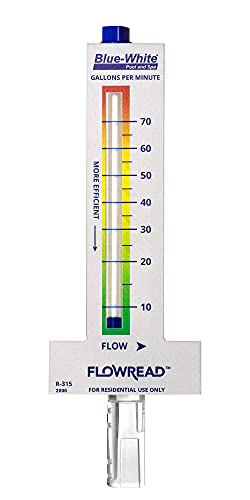
For 1.5-inch pool pipes, the Blue-White FLOWREAD R-315 gives you a clear read on flow. You can track 10 to 70 GPM with about 5% accuracy, so you can dial in a variable-speed pump without guessing. That helps you keep filtration steady, reduce chemical use, and protect your filter and heater from strain. It installs on 1.50-inch ID PVC pipe without unions, adapters, or cutting tools, and it will not restrict flow. The acrylic body handles outdoor sun, and the kit includes a gasket and two stainless clamps.
- Type:Acrylic flow meter
- Pipe Size:1.5 in ID PVC
- Flow Range:10–70 GPM
- Material:Acrylic
- Accuracy:±5%
- Installation:Clamp-on
- Additional Feature:Direct sunlight suitable
- Additional Feature:U.S.-made construction
- Additional Feature:Two stainless clamps
Blue-White FLOWREAD R-325 Acrylic Flow Meter for Pools
The Blue-White FLOWREAD R-325 is suitable if your pool uses 2.5-inch pipes. It is an acrylic inline flow meter that reads from 30 to 150 GPM with about ±5% accuracy, so you can set a variable-speed pump correctly. It does not restrict flow, which helps filtration, reduces chemical use, and protects filters and heaters. You can install it on 2.50-inch ID PVC without unions, adapters, cement, or cutting tools. It includes a gasket and stainless steel clamps, works outdoors in sunlight, and supports efficient operation, which can save energy.
- Type:Acrylic flow meter
- Pipe Size:2.5 in ID PVC
- Flow Range:30–150 GPM
- Material:Acrylic
- Accuracy:±5%
- Installation:Clamp-on
- Additional Feature:Direct sunlight suitable
- Additional Feature:U.S.-made construction
- Additional Feature:Two stainless clamps
Blue-White Flowmeter for 2 in. PVC Pipe Horizontal Installation
Need a professional grade meter for a 2 inch PVC pool line? The Blue-White F-300 flowmeter for horizontal installation helps track circulation in closed pipe systems. It mounts on top of Schedule 40 PVC and reads 20 to 120 GPM, so you can verify steady pool flow at a glance. The one piece machined acrylic body and corrosion resistant internals help it last, while the permanent screen printed scale stays easy to read. It includes a gasket seal and mounting clamps, and it is rated to 75 psi for dependable service.
- Type:Flowmeter
- Pipe Size:2 in PVC
- Flow Range:20–120 GPM
- Material:Acrylic/PVC
- Accuracy:Not specified
- Installation:Horizontal mount
- Additional Feature:Pitot tube pickup
- Additional Feature:Horizontal top mount
- Additional Feature:75 psi maximum
Factors to Consider When Choosing a Flow Meter for Pool
When you choose a flow meter for your pool, match the flow range to your system so it reads accurately under normal use. You should also check the pipe size, installation style, accuracy level, and material durability to make sure it fits properly and lasts. Balancing these factors helps you get reliable readings and easier maintenance.
Flow Range
To get accurate pool readings, choose a flow meter whose rated range comfortably covers your normal operating flow, with a lower limit below your pump’s minimum and an upper limit above its maximum. This helps the meter stay accurate at low, medium, and high speeds, especially if you use a multi-speed or variable-speed pump. Avoid running the meter near either end of its scale, because accuracy declines there. Select a precision level that matches your goals; tighter tolerances are useful when you are fine-tuning energy use or protecting the heater. Also confirm that the display or scale changes in small enough increments to show meaningful GPM or LPM shifts. If you may upgrade pumps later, choose a broader range or a modular design.
Pipe Size
Pipe size matters just as much as flow range because a meter only reads accurately when it matches your pool plumbing’s pipe ID or nominal size, such as 1.5″, 2″, or 2.5″. You should verify whether your pipe uses Schedule-40, SDR, or another wall thickness, since the same nominal size can have a different inside diameter. If you choose a meter that is too large or too small, you can create turbulence, bypass flow, or unnecessary restriction, and that hurts accuracy. With variable-speed pumps, pick a meter calibrated for the flow you will actually see at your pipe size, not just peak output. That keeps readings reliable across normal pump speeds and helps you avoid fit problems that can complicate setup later.
Installation Style
Installation style matters because it determines how easily the meter fits into your pool plumbing and how much work the install will take. If you can cut the pipe, an inline meter gives you a clean, integrated setup, but it needs full insertion in the line. If you want to avoid major changes, a saddle or insert model can mount to an existing pipe wall with less disruption. Make sure the body size and connection type match your pipe diameter and threading, or you may need adapters and risk leaks. Check whether the meter can sit horizontally, vertically, or upside down, and confirm whether it fits near elbows or tight runs. Also note whether it requires unions, clamps, primer, or cement.
Accuracy Level
Accuracy level should match what you are trying to do with your pool system: plus or minus 5% is usually fine for general tuning, while tighter control may call for about plus or minus 2% or better. You should also check the meter’s accuracy across the flow range you will actually use, because many models only stay within spec from about 20 to 120 GPM, and readings can slip near the edges. Repeatability matters too, if the meter gives you the same result under the same conditions, you can dial in pump speed with confidence, even when absolute accuracy is not perfect. Make sure the spec fits your installation, since elbows, turbulence, and odd mounting positions can throw readings off unless the meter is rated for them. Low drift and simple calibration help keep it dependable over time.
Material Durability
As you choose a pool flow meter, material durability matters as much as the reading itself. If you mount it outdoors, pick UV stabilized plastic or acrylic so sunlight will not degrade the housing or skew readings over time. For chlorinated or saltwater systems, choose corrosion resistant plastics, stainless alloys, and internal parts that can handle harsh chemistry without pitting. Check that the meter’s pressure rating and wall thickness meet or exceed your system’s operating pressure, or cracking can occur. You should also favor hard edged floats or pitot style pickups that resist wear from grit and debris. Finally, make maintenance easier by choosing meters with replaceable seals and gaskets in EPDM or Viton, so you maintain a dependable, leak free fit in treated water.
Frequently Asked Questions
How Often Should Pool Flow Meters Be Recalibrated?
You should recalibrate your pool flow meter annually, and sooner if readings drift, repairs are made, or water chemistry changes. This helps keep circulation accurate, protect equipment, and avoid costly maintenance issues.
Can a Flow Meter Detect Clogged Pool Filters Early?
Yes, a flow meter can help you spot a clogged pool filter early. When the flow rate starts to drop, you can address the problem before circulation is affected, then clean or replace the filter to keep water moving properly.
Are Digital Flow Meters Better Than Mechanical Ones?
Yes. Digital flow meters usually provide sharper readings, while mechanical ones are sturdier and simpler. You can spot problems sooner, but you will pay more. Like choosing between a lighthouse and a lantern, the decision is between precision and rugged ease.
Do Flow Meters Work With Solar Pool Heating Systems?
Yes, you can use flow meters with solar pool heating systems, and they help you track circulation through the panels. You’ll spot low flow quickly, protect your heater, and keep your pool warming efficiently.
Can One Flow Meter Monitor Both Pool and Spa Lines?
Yes, you can, provided you install it on the shared return line after the valves. You will monitor combined flow, but separate meters give better control when your pool and spa run independently.
