

The best pool calcium hardness increaser for 2026 depends on your pool type and how fast you want results.
Liquid formulas work well for spas and small systems. Granular products fit larger pools and bigger adjustments.
A solid pick keeps water balanced and helps protect pool surfaces.


More Details on Our Top Picks
SpaChoice Liquid Calcium Hardness Increaser for Hot Tubs
SpaChoice makes spas easier to balance with its liquid calcium increaser. You get a 1-quart, 2-pack made in the USA, and each bottle gives you 64 fluid ounces of liquid calcium hardness increaser. You can use it to raise spa and hot tub calcium to the ideal 200–400 ppm range. Test initially, then add 1 ounce per 500 gallons to increase hardness about 10 ppm. Pour it in with the equipment on, run the filter 1–2 hours, and retest after 20 minutes. It helps prevent etching and corrosion, and many users prefer liquid over granules.
- Form:Liquid
- Weight:64 oz
- Brand:SpaChoice
- Use Type:Hot tubs
- Purpose:Calcium hardness increaser
- Dosage Rate:1 oz/500 gal = 10 ppm
- Additional Feature:Liquid formula
- Additional Feature:Made in USA
- Additional Feature:2-pack included
AquaDoc Spa Calcium Hardness Increaser for Hot Tubs
AquaDoc is a fast-acting pick for hot tub owners who need to raise calcium hardness quickly. You can increase hardness in 10 ppm increments per ounce, which helps you fine-tune balance without overcorrecting. It protects your spa from corrosion, etching, and staining caused through soft water, and it supports stable water chemistry. Test your current level, add the dose with the equipment running, then circulate for 1 to 2 hours. Retest after 20 minutes. Keep it on hand, especially whenever levels dip below target. This professional-grade formula is made in the USA.
- Form:Liquid
- Weight:Not specified
- Brand:AquaDoc
- Use Type:Hot tubs/spas
- Purpose:Calcium hardness increaser
- Dosage Rate:1 oz = 10 ppm
- Additional Feature:Professional-grade formulation
- Additional Feature:Quick hardness boost
- Additional Feature:Made in USA
Robelle 32-Pounds Premium Pool Calcium Up Calcium Hardness Increaser
Robelle’s 32-pound calcium hardness increaser is a smart bulk buy for larger pool owners who need a fast hardness increase. You get a dry granular formula that can quickly raise total hardness, helping you fight corrosion, etching, and stains from soft water. Test initially, then mix up to 2 pounds in a 5-gallon bucket of pool water. Pour it slowly around the perimeter with circulation on. It’s ideal whenever you’re targeting 200–400 ppm, depending on pool finish. In a 10,000-gallon pool, don’t add more than 10 pounds per 2-hour period.
- Form:Dry granular
- Weight:32 lb
- Brand:Robelle
- Use Type:Pools
- Purpose:Calcium hardness increaser
- Dosage Rate:8 oz/5,000 gal = 10 ppm
- Additional Feature:Dry granular product
- Additional Feature:32-pound bulk size
- Additional Feature:Includes dosing chart
Robelle 16-Pounds Premium Pool Calcium Up Calcium Hardness Increaser
For a reliable calcium increase, this 16-pound Robelle granular increaser keeps pool water balanced. You can use it to raise total hardness and help protect your pool from corrosion, etching, and staining. It’s a smart fit whenever low calcium hardness causes water problems. Test initially, then match your pool type: vinyl needs 200–300 ppm, tile and exposed aggregate 200–400 ppm, and marcite, fiberglass, or painted surfaces 250–400 ppm. Dissolve 8 ounces per 5,000 gallons to raise hardness 10 ppm, then pour around the perimeter with circulation on.
- Form:Dry granular
- Weight:16 lb
- Brand:Robelle
- Use Type:Pools
- Purpose:Calcium hardness increaser
- Dosage Rate:8 oz/5,000 gal = 10 ppm
- Additional Feature:Dry granular product
- Additional Feature:16-pound size
- Additional Feature:Model 2816B
Robelle 8-Pounds Premium Pool Calcium Up Calcium Hardness Increaser
Robelle 8-Pounds Premium Pool Calcium Up is a compact option for small pool maintenance needs. You get a calcium chloride formula that quickly increases total hardness and helps keep your water in the ideal 200–400 ppm range. It’s useful whenever low calcium causes corrosion, etching, staining, or surface damage. With this 8-pound container, you can treat pool water efficiently: 8 ounces raises calcium hardness 10 ppm per 5,000 gallons. Should you need a simple way to protect your pool surfaces and maintain balanced water, this product gets the job done without extra hassle.
- Form:Dry granular
- Weight:8 lb
- Brand:Robelle
- Use Type:Pools
- Purpose:Calcium hardness increaser
- Dosage Rate:8 oz/5,000 gal = 10 ppm
- Additional Feature:Calcium chloride formulation
- Additional Feature:Compact 8-pound size
- Additional Feature:Ideal 200–400 ppm
SpaPure Calcium Hardness Increaser 16oz
SpaPure Calcium Hardness Increaser 16oz suits hot tub owners who need a simple corrosion-fighting lift. You can use this granular formula in any spa or hot tub to raise calcium hardness and help protect surfaces from damage. It works with bromine, chlorine, mineral sanitizer, and biguanide systems, so you won’t have to worry about compatibility. The 16-ounce bottle gives you a practical single-use size, and SpaPure, made by Haviland, keeps application straightforward. Should your water tests low, this product helps you correct it fast and keep your spa equipment in better shape.
- Form:Granular
- Weight:16 oz
- Brand:SpaPure
- Use Type:Spas/hot tubs
- Purpose:Calcium hardness increaser
- Dosage Rate:Not specified
- Additional Feature:Compatible with biguanide
- Additional Feature:Safe for all spas
- Additional Feature:Haviland manufactured
Robelle 25-Pounds Premium Pool Calcium Up Calcium Hardness Increaser
Need a lot of calcium support? Robelle 25-Pounds Premium Pool Calcium Up gives you a fast, granular raise whenever your water tests low. You’ll use it to raise total hardness and help prevent corrosion, etching, and staining on pool surfaces. It’s especially useful should your calcium drops below the recommended range for vinyl, tile, fiberglass, painted, or marcite pools. Pre-dissolve the dry product in a bucket, then pour it slowly around the perimeter with circulation running. In a 10,000-gallon pool, don’t add more than 10 pounds in two hours.
- Form:Dry granular
- Weight:25 lb
- Brand:Robelle
- Use Type:Pools
- Purpose:Calcium hardness increaser
- Dosage Rate:8 oz/5,000 gal = 10 ppm
- Additional Feature:Pre-dissolve before use
- Additional Feature:25-pound size
- Additional Feature:30-day return policy
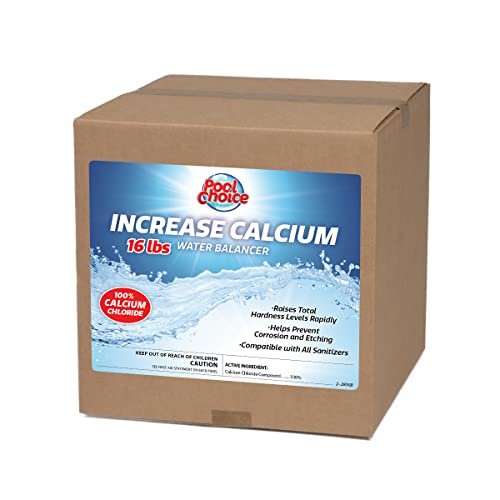
SpaChoice 16-Pounds Premium Increase Calcium Calcium Hardness Increaser
SpaChoice’s 16-pound calcium chloride granules are a smart all-around pick for keeping pool water balanced. You can use this dry, fast-acting increaser to raise calcium hardness and help protect plaster, tile, fiberglass, and vinyl surfaces from corrosion, etching, and stains. Test initially, then dose carefully: 8 ounces elevates hardness by 10 ppm in 5,000 gallons. Dissolve it in a bucket, then pour the solution around the perimeter with circulation running. It’s a practical 16-pound option for routine adjustments, and it’s backed through SpaChoice’s customer support and dosing chart guidance.
- Form:Dry granular
- Weight:16 lb
- Brand:SpaChoice
- Use Type:Pools/spas
- Purpose:Calcium hardness increaser
- Dosage Rate:8 oz/5,000 gal = 10 ppm
- Additional Feature:Dry granular calcium chloride
- Additional Feature:Follow included chart
- Additional Feature:Retailer return policy
Factors to Consider When Choosing a Pool Calcium Hardness Increaser
Upon choosing a pool calcium hardness increaser, you should look at the form type, the calcium range it covers, and how strong each dose is. You’ll also want to check that it’s compatible with your pool’s surface and system. Finally, pick an application method that fits how you like to maintain your pool.
Form Type
Choosing between liquid and granular calcium hardness increaser mostly comes down to how you want to dose and handle it. Liquid products are ready to use, so you can pour them straight into circulation and get them moving fast. Granular formulas usually need you to pre-dissolve them in a bucket, but they often give you clear dosing guidance, like ounces per 5,000 gallons. Should you desire quicker distribution, liquid can fit short run times better. Should you prefer compact storage, dry granules take up less space, though they need to stay dry to prevent caking. You should also handle granular calcium chloride carefully because it can heat up when mixed with water. Liquid options might be easier to measure, but they can be heavier and messier.
Calcium Range
Once you’ve picked a liquid or granular formula, the next step is matching the dose to your pool’s calcium range. You should aim for roughly 200–400 ppm overall, but your target depends on the surface. Vinyl pools usually do best near 200–300 ppm, while plaster, tile, and exposed-aggregate finishes often need 250–400 ppm. Test your water with a reliable kit before you add anything, then compare results to your ideal range. Keeping hardness too low can cause etching, corrosion, and pitting, while pushing it too high can trigger scaling and cloudy water. When you need a big correction, add calcium in stages, keep circulation running, and retest after 1–2 hours so you can confirm the change and stay within your safe window.
Dosage Strength
Start through checking the product’s dosage strength, since calcium hardness increasers are labeled regarding how much they raise ppm per unit of product. You’ll usually see a dosage claim such as 8 ounces of granular product raising hardness about 10 ppm in 5,000 gallons, or 1 ounce of liquid doing the same in 500 gallons. Use that ppm-per-unit figure with your pool or spa volume and current target to calculate the dose you need. Don’t dump in too much at once; follow the maximum safe addition rate and let the product dissolve and circulate evenly. Should you employ granular calcium, pre-dissolve it in a bucket of pool water to begin with. Then re-test after the recommended wait time before adding more, since readings can shift.
Pool Compatibility
Compatibility matters because not every calcium hardness increaser fits every pool. You should check whether it’s made for pools, not spas; pool-grade granular calcium chloride suits larger volumes, while spa products are often liquid or finer. Match the product to your surface: vinyl pools usually need 200–300 ppm, tile or exposed aggregate 200–400 ppm, and marcite, fiberglass, or painted finishes 250–400 ppm. Also verify it works with your sanitizer and treatment system, whether you use chlorine, bromine, mineral, or biguanide. Review the label for ppm-per-ounce or per-pound guidance, along with any limits for your pool size and circulation capacity. Product concentration and package size matter too, especially should the manufacturer cap the amount you can add within a set period.
Application Method
At the point it comes to application method, choose the form that fits your pool size and your timing needs: liquid calcium increasers disperse quickly and work well for spas or hot tubs, whereas granular calcium chloride is usually the better choice for larger pools because you can pre-dissolve it and dose more precisely. Check the label’s dosage guide, since concentration varies per product. In case you use granular calcium chloride, dissolve it in a plastic bucket of pool water, keeping each bucket to about 2 pounds, then pour it slowly around the perimeter with the pump running. After adding any product, circulate water for 1–2 hours, wait about 20 minutes, and retest. Should you need a big increase, split doses and avoid adding too much at once.
Product Size
Product size matters because you want to buy only as much calcium increaser as you’ll realistically use before it clumps or sits too long in storage. In the event that you top off a spa or rarely adjust hardness, a small container under 1 lb or 16 oz makes sense. For bigger pools, choose multi-pound bags so you’re not constantly restocking. Estimate your use from the dosage rate: about 8 ounces of granular product can raise hardness roughly 10 ppm in 5,000 gallons. That helps you match package size to your treatment schedule and avoid waste. Also consider whether you’ll add the product in stages, since larger sizes can simplify split dosing. Bulk bags often cost less per ounce, but they demand dry storage and a little more measuring.
Brand Support
Whenever you’re comparing calcium hardness increasers, brand support can matter as much as the formula itself. Check the warranty and return policy so you can handle defects or accidental purchases without extra hassle. You should also look for reachable support via phone, email, or live chat, plus clear response times, whenever you need dosing, safety, or compatibility help. Strong brands publish dosing charts, SDS sheets, and application guides, so you can use the product correctly and safely. Confirm the product stays available, along with replacement package sizes, so you don’t have to change formulations midseason. Finally, choose suppliers that explain compatibility with your sanitizer system and pool finish, since that guidance can help you avoid surface damage, cloudy water, and treatment conflicts.
Frequently Asked Questions
How Often Should I Test Calcium Hardness in My Pool?
Test calcium hardness every month, and after heavy rain, refills, or chemical changes. You’ll catch imbalances promptly, protect your pool surfaces, and keep water chemistry stable without extra hassle or costly repairs.
Can Calcium Increaser Be Added While Swimmers Are Present?
No, you shouldn’t add calcium increaser while swimmers are present; consider it like stage fog—best handled offstage. You can protect everyone through broadcasting the dose, keeping them out, and waiting until it’s fully dispersed.
What Symptoms Show Calcium Hardness Is Too Low?
You’ll notice etching on plaster, pitting in concrete, cloudy water, foaming, and corrosive equipment. Your pool might also stain more easily, and your test readings can drift low despite balanced chemicals.
Does Water Temperature Affect Calcium Hardness Balance?
Yes—water temperature absolutely affects your calcium hardness balance, and you’ll notice it whenever warm water encourages scaling or whenever cool water makes imbalance show up fast. You should test often and adjust accordingly.
Can I Use the Same Product for Saltwater Pools?
Yes, you can usually use the same calcium hardness increaser in saltwater pools, but you should check the label initially and follow dosage directions carefully, since salt systems can amplify scaling should you overapply.
