

Clear water depends on the details you measure. The 6 best swimming pool test kits can simplify chlorine, pH, alkalinity, and more, but the right choice is not always the most obvious one.
Some kits offer speed, others offer precision, and a few balance both. The difference may change how you manage every test from here on.
| Taylor K1001 Basic Residential DPD Pool or Spa Test Kit |  | Best for Basics | Test Types: Free chlorine, bromine, pH | Kit Format: Comparator kit | Pool Compatibility: Pool and spa | VIEW LATEST PRICE | Read Our Analysis |
| Clorox Pool&Spa 3-Way Water Test Kit Refill |  | Refill Pack | Test Types: Bromine, chlorine, pH | Kit Format: Refill solutions | Pool Compatibility: Pool and spa | VIEW LATEST PRICE | Read Our Analysis |
| Taylor K-1005 9-in-1 Pool Test Kit |  | Best Overall | Test Types: Free chlorine, total chlorine, bromine, pH, acid demand, base demand, alkalinity, calcium hardness, CYA | Kit Format: Multi-test kit | Pool Compatibility: Pool and spa | VIEW LATEST PRICE | Read Our Analysis |
| XtremepowerUS 5-Way Swimming Pool Test Kit |  | Best Value | Test Types: Chlorine, bromine, pH, acid demand, total alkalinity | Kit Format: Drop test kit | Pool Compatibility: Pool, spa, hot tub | VIEW LATEST PRICE | Read Our Analysis |
| U.S. Pool Supply 5-in-1 Pool Test Kit | 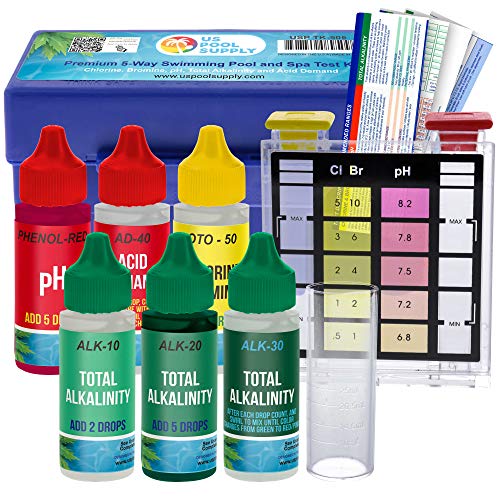 | Easy to Use | Test Types: Chlorine, bromine, pH, alkalinity, acid demand | Kit Format: Drop test kit | Pool Compatibility: Pool and spa | VIEW LATEST PRICE | Read Our Analysis |
| LUPO 2-in-1 Pool Test Kit for Pools & Spas | 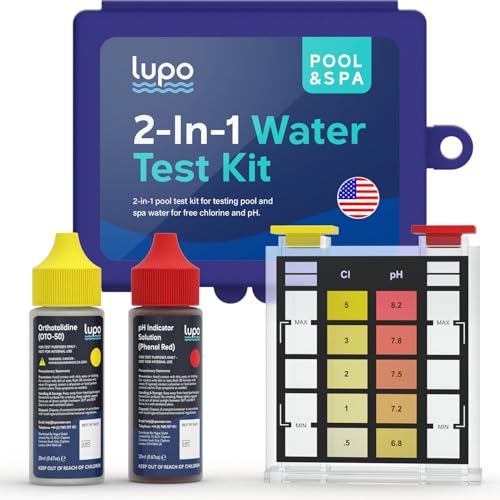 | Fastest Results | Test Types: Free chlorine, pH | Kit Format: Comparator kit | Pool Compatibility: Pool, spa, hot tub | VIEW LATEST PRICE | Read Our Analysis |
More Details on Our Top Picks
Taylor K1001 Basic Residential DPD Pool or Spa Test Kit
Taylor K1001 keeps pool testing simple with quick chlorine, bromine, and pH checks. You get free chlorine readings from 0.5 to 5 ppm, bromine from 1 to 10 ppm, and pH from 6.8 to 8.2. The easy to read comparator and molded fill lines help you test accurately, while the color coded card guides each step. Flip it over for dosage charts so you can treat water right away. You can store everything in the hard shell case, and the 0.75 ounce reagent bottles are suited for pool or spa care.
- Test Types:Free chlorine, bromine, pH
- Kit Format:Comparator kit
- Pool Compatibility:Pool and spa
- Storage Case:Hard shell case
- Instructions:Color-coded card
- Reagent Type:DPD reagents
- Additional Feature:Molded fill lines
- Additional Feature:Easy-read comparator
- Additional Feature:Dosage chart included
Clorox Pool&Spa 3-Way Water Test Kit Refill
Need a quick, accurate way to keep testing on track? The Clorox® Pool&Spa™ Swimming Pool 3-Way Water Test Kit Refill gives you fresh OTO and Phenol Red solutions in one 0.5 oz pack. You can test bromine, chlorine, and pH with your 3-way kit, so you can check water balance fast at the poolside. It is designed for reliable results, and starting each season with fresh solution helps you stay accurate. Keep a refill on hand to save time and money, and use the Clorox Pool App for helpful troubleshooting and dosage guidance.
- Test Types:Bromine, chlorine, pH
- Kit Format:Refill solutions
- Pool Compatibility:Pool and spa
- Storage Case:Not included
- Instructions:Quick-use guidance
- Reagent Type:OTO, phenol red
- Additional Feature:0.5 oz refill pack
- Additional Feature:OTO solution included
- Additional Feature:Phenol Red included
Taylor K-1005 9-in-1 Pool Test Kit
For reliable all-around pool care, the Taylor K-1005 9-in-1 stands out as the best overall pick. With one kit, you can test free and total chlorine, bromine, pH, acid demand, base demand, total alkalinity, calcium hardness, and cyanuric acid. It includes a comparator, 13 reagents, and a storage case for easy DPD testing. You will get quick, reliable results in seconds, and the pictogram instructions keep setup simple. Made in the USA by Taylor, it works well for pools, hot tubs, and spas, and replacement reagents are available whenever you need them.
- Test Types:Free chlorine, total chlorine, bromine, pH, acid demand, base demand, alkalinity, calcium hardness, CYA
- Kit Format:Multi-test kit
- Pool Compatibility:Pool and spa
- Storage Case:Storage case
- Instructions:Pictogram instructions
- Reagent Type:13 reagents
- Additional Feature:Nine water tests
- Additional Feature:Pictogram instructions
- Additional Feature:Made in USA
XtremepowerUS 5-Way Swimming Pool Test Kit
XtremepowerUS 5-Way Swimming Pool Test Kit offers budget-minded pool owners strong value with five essential water checks. You can test chlorine, bromine, pH, acid demand, and total alkalinity to help keep your pool, spa, or hot tub balanced. The clear-view polystyrene block uses UV-protected color chips and an integrated scale for easier reading. You get step-by-step instructions, a quick-reference guide, and tips for accurate drop testing. The blue storage case keeps everything organized and dry. If you want an affordable DIY kit for inground or above-ground water care, this one provides reliable results.
- Test Types:Chlorine, bromine, pH, acid demand, total alkalinity
- Kit Format:Drop test kit
- Pool Compatibility:Pool, spa, hot tub
- Storage Case:Blue storage case
- Instructions:Step-by-step guide
- Reagent Type:Drop reagents
- Additional Feature:UV-protected color chips
- Additional Feature:Clear-view test block
- Additional Feature:Affordable testing solution
U.S. Pool Supply 5-in-1 Pool Test Kit
U.S. Pool Supply 5-in-1 Pool Test Kit gives you a simple way to check pool and spa water in inground, above-ground, and hot tub setups. You can test chlorine, bromine, pH, total alkalinity, and acid demand with its clear-view block, round-view cup, and six dropper-bottle reagents. The step-by-step guide helps you get quick, accurate results without guesswork. Its durable blue polyethylene case keeps everything organized, and the kit weighs just 0.73 pounds. You will find it useful for maintaining balanced water levels year-round.
- Test Types:Chlorine, bromine, pH, alkalinity, acid demand
- Kit Format:Drop test kit
- Pool Compatibility:Pool and spa
- Storage Case:Blue polyethylene case
- Instructions:Step-by-step guide
- Reagent Type:Six solutions
- Additional Feature:Round-view testing cup
- Additional Feature:Three alkalinity formulas
- Additional Feature:1/2-ounce dropper bottles
LUPO 2-in-1 Pool Test Kit for Pools & Spas
The LUPO 2-in-1 Pool Test Kit gives you fast results for pool and spa care. You can test free chlorine and pH in seconds, whether you use a freshwater or saltwater system. Its trusted system matches the one approved for USA Swimming, so you get expert-grade confidence at home. The kit includes a heavy-duty case, clear instructions, a comparator, and OTO and Phenol Red reagents for 100 tests. With simple four-step directions and color-coded results, you can adjust water quickly, with no lab needed. Replace reagents each season for best accuracy.
- Test Types:Free chlorine, pH
- Kit Format:Comparator kit
- Pool Compatibility:Pool, spa, hot tub
- Storage Case:Heavy-duty case
- Instructions:Waterproof guide
- Reagent Type:OTO, phenol red
- Additional Feature:Approved by USA Swimming
- Additional Feature:100 individual tests
- Additional Feature:Waterproof treatment guides
Factors to Consider When Choosing Swimming Pool Test Kits
Once you select a swimming pool test kit, review the test types it covers, the measurement range, and how accurate and fast the results are. You should also check the reagent count so you know how long it will last. Finally, choose a kit that is easy to use and read.
Test Types
Picking the right test type starts with the parameters you need to measure, because not every kit checks free chlorine, total chlorine, bromine, pH, total alkalinity, calcium hardness, cyanuric acid, or acid/base demand. If you want better precision, choose a colorimetric drop test kit with DPD, OTO, or phenol red reagents; it provides multiple readings and clearer results. If speed matters more, test strips work well for quick checks, but they are usually less exact. For routine care, choose kits with titration style tests when you need dosing guidance for alkalinity, hardness, or acid/base demand. Also consider reagent life. Drop test chemicals may need seasonal replacement, while strips do not use separate reagents but can expire and lose reliability if stored poorly.
Measurement Range
A good test kit covers the range you actually manage, not just an ideal midpoint, so you can spot both low sanitizer levels and high readings that need correction. Check that its limits match pool and spa targets, such as free chlorine around 0.5 to 5 ppm and pH about 6.8 to 8.2, so you can catch values that drift outside treatment zones. Make sure it also covers any safety thresholds or local limits you track, including chlorine or bromine ceilings and pH setpoints. Finer steps matter too, 0.5 ppm chlorine increments and 0.2 pH units help you dial in dosing. Confirm it reads the scales your system needs, such as free and total chlorine, bromine, cyanuric acid, alkalinity, and calcium hardness, with low and high limits that will not leave you guessing.
Accuracy And Speed
Accuracy matters as much as range because the best kit gives you dependable numbers fast enough to act on them. You will want a method that reads clearly, like DPD or phenol red, so you can trust the color match instead of guessing. DPD tests usually give more accurate free chlorine results in the normal pool range than OTO, especially when levels are low. Choose a kit with a clear comparator, molded fill lines, or fine titration marks so you can repeat results with confidence. Speed matters too. Several DPD and drop count tests finish in seconds, while alkalinity or hardness checks can take a few minutes. Keep reagents fresh, test in proper light, and follow drop counts and mixing times to get fast, reliable readings each time.
Reagent Count
Reagent count is the balance between how many water parameters you can test and how long the kit will last. Match the bottle count to the measurements you actually need, whether that is chlorine, pH, alkalinity, hardness, or cyanuric acid. More reagents let you run more tests, but small bottles, around 0.5 to 0.75 oz, run out faster, so check volume and drop capacity. Also look at shelf life. Expired reagents can skew results even when the kit starts out full. Some kits include separate reagents for free and total chlorine, which improves accuracy but raises replacement costs. If you test daily, choose a kit with generous supplies or easy to buy refills, so you do not face frequent, expensive replacements.
Ease Of Use
Ease of use can make or break how often you actually test your pool. Pick kits with color-coded comparators and molded fill lines so you can measure samples and match colors with less guesswork. Choose the method that fits your routine. Drop-count kits give you stronger accuracy but take more steps, while strips are quick and convenient. You will also want clear, waterproof instructions and dosage charts so you can read results and adjust chemistry without hunting online. Check how easily you can see the colors under normal lighting. White backgrounds or built-in color chips help reduce misreads. Finally, consider reagent capacity and replacement frequency so you are not constantly restocking or using expired chemicals that can skew your results.
Durability And Storage
At the moment you’re choosing a pool test kit, durability and storage matter just as much as accuracy. Choose a hard case or rugged plastic body that protects the kit from knocks and sun exposure, especially if you store it poolside. Look for UV-protected parts, plus test blocks and comparators made from stain-resistant, scratch-resistant materials such as polystyrene or polyethylene so readings stay clear. Keep reagent bottles upright in a cool, dark place, and do not let them sit in heat above 77°F or freeze. Check shelf life often, and replace solutions whenever they age or change color. After each use, dry every piece thoroughly and use desiccant packs or sealed compartments to keep moisture out and accuracy in.
Pool Compatibility
Make sure the test kit fits your pool system, not the other way around. If you have a freshwater pool, a standard kit may work fine, but saltwater pools and salt-chlorine generators often need specific reagents and ranges to read chlorine accurately. Choose a kit that measures every chemical you manage, such as free chlorine, total chlorine, bromine, pH, total alkalinity, calcium hardness, and cyanuric acid. Check that each range matches your pool’s expected levels so you do not get useless out-of-range results. Also, pick a testing method that matches your precision needs, drop-count titration gives more accuracy, while strips are faster. Finally, make sure reagents last through your season and that replacements are easy to buy if needed.
Frequently Asked Questions
How Often Should I Test My Pool Water?
You should test your pool water at least twice a week, and daily during heavy use, hot weather, or after rain. This helps you catch imbalances promptly, protect swimmers, and keep chemicals working properly.
Can I Use Pool Test Kits on Saltwater Pools?
Yes, you can use pool test kits on saltwater pools. You should still test chlorine, pH, alkalinity, and salt levels regularly to keep your pool balanced, safe, and sparkling.
Do Test Strips Expire Quickly?
Yes, test strips can expire within 12 to 18 months, and heat, moisture, or sunlight can damage them sooner. Store them sealed, check the expiration date, and replace the strips if the results seem inconsistent.
What Chemicals Should I Adjust First After Testing?
Start with pH, then adjust chlorine, alkalinity, and calcium hardness. Balance one level before moving to the next. This keeps the water clearer, safer, and easier to manage.
Are Digital Pool Testers More Accurate Than Strip Kits?
Yes, digital testers usually provide more consistent readings than strip kits, but strip kits are still useful for quick checks. Calibrate digital units regularly, and store strips properly for the best results.
