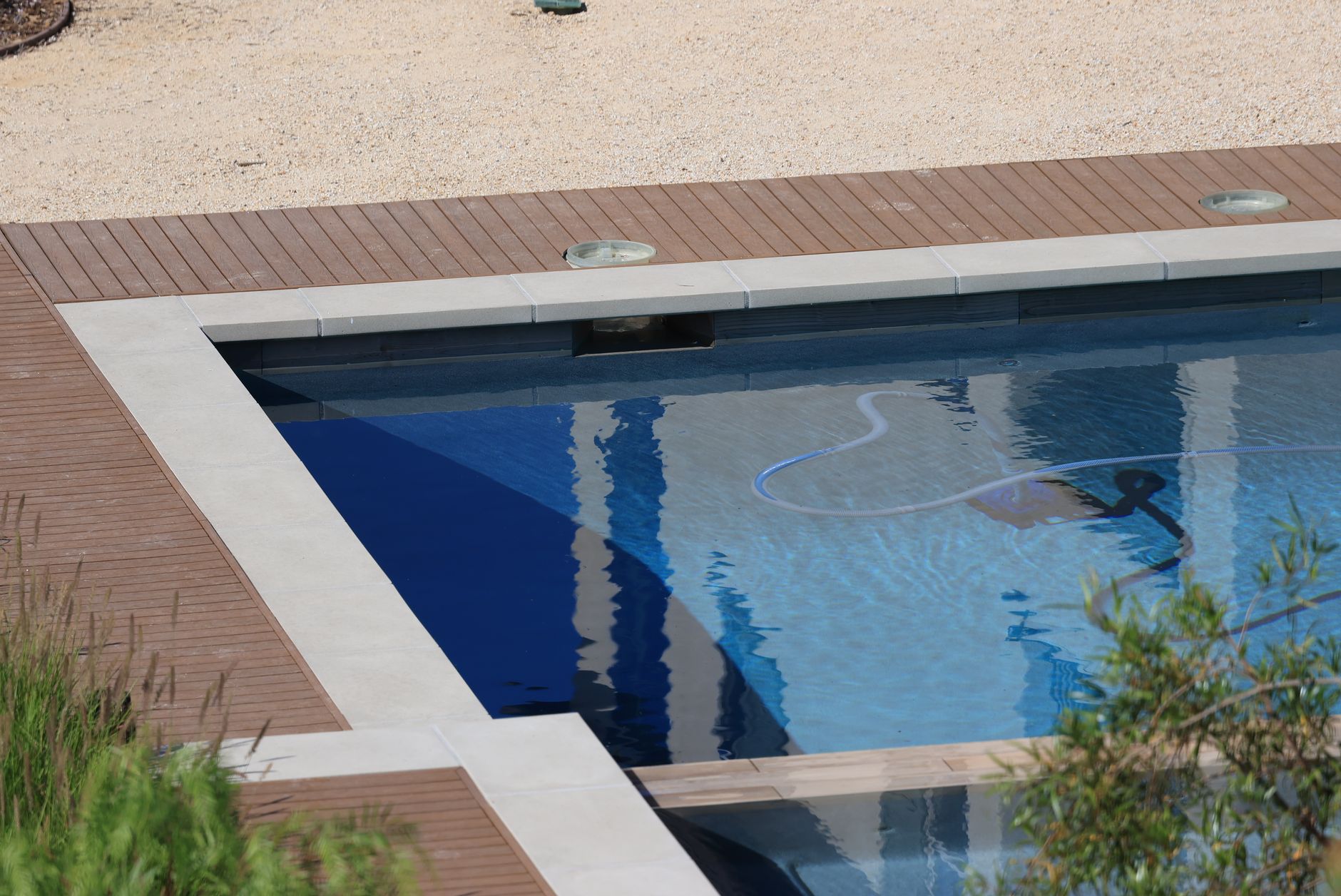

Settled dirt on the pool floor is drawn through the vacuum head, hose, skimmer, and pump-and-filter system during the cleaning process. To do it well, you fill the hose with water, keep the head flat, and move slowly so debris and sediment travel into the line instead of clouding the water.
You can handle the job with basic pool equipment and avoid the common mistakes that waste time or stir up fines. The steps below fit pool owners who want a cleaner floor, steadier suction, and fewer surprises at the equipment pad.
Gather The Right Tools And Check The System
Start at the deck, not in the water. A pool vacuum head, telescopic pole, vacuum hose, and skimmer adapter or vacuum plate give you the standard pool vacuum setup, and a quick system check can save you from a suction issue that was already there.
Brush the floor and clear surface debris before you lower the head. That matters because leaves and grit can clog the line, while loosened dirt on the bottom is easier to lift in one pass.
Lay Out The Vacuum Gear
The vacuum head stays on the pool floor, the pole gives you reach, and the hose carries water and debris back to the circulation system. A weighted head or one with wheels helps it track across plaster, vinyl, or fiberglass without bouncing.
- Vacuum head — choose a style that matches the pool surface and stays in contact with the floor.
- Telescopic pole — extend it enough to keep your hands steady on the deck.
- Vacuum hose — inspect both ends for cracks, soft spots, and loose cuffs.
- Skimmer adapter — use it to lock the hose into the suction path cleanly.
Check The Pump, Filter, Baskets, And Valves
Pool equipment works as a chain, and one weak link can ruin the pull at the head. The pump should be running normally, the filter should not be packed, and the skimmer basket and pump strainer basket should be clear enough to keep water moving.
Valve position matters because the suction side needs the proper flow path before vacuuming starts. A dirty filter or a shifted multiport valve can leave the head moving while pickup falls off, which feels like suction trouble but starts at the equipment pad.
Brush first, vacuum second. That order lifts settled grit off seams and steps, then lets the vacuum collect it before it drifts back into suspension.
Filter choice matters just as much as brush order. Light dirt can go through the filter, but heavy sludge, dead algae, or fine sediment often calls for a waste setting so the filter does not clog and send the mess back into the pool.
A waste setting prevents clogging, while the next step is keeping the hose fully water-filled before the pump pulls.
Prime The Hose Without Letting Air Into The Line
A hose full of air can break suction before the job starts. To prime a pool vacuum hose, fill it with water, keep the open end underwater, and connect it only after the line is completely flooded so the pump draws water instead of pockets of air.
That same principle shows up in pool maintenance manuals from major brands: the suction side wants a continuous water column, not bubbles. Once air slips in, the pump can lose pull and the head starts to feel light or jittery on the floor.
Fill The Hose Underwater
Lower the hose and vacuum head into the pool, then feed the hose down until water pushes all the air out. A steady stream of bubbles leaving the open end means the line is still purging; a solid flow with no sputter means the hose is ready.
You can also use a return jet to push water through the hose on some setups. Keep the open end submerged during the connection so the water seal stays intact while you attach the hose to the skimmer adapter or vacuum port.
Connect After The Line Is Full
Join the hose to the skimmer or dedicated vacuum port only after priming is complete. That order keeps the suction line sealed and reduces the chance of drawing air into the pump basket.
Vacuuming instructions from pool retailers point to the same common slip: lifting the hose end out of water too soon. The hose can look ready, but a tiny air pocket at the end is enough to interrupt flow once the pump starts pulling hard.
Even a small air pocket can break suction, which makes the choice between filtration and bypass crucial beforehand.
Watch the hose end for a steady water stream before you connect anything. A few stray bubbles are fine; a sputtering line means air is still inside.
Choose Filter Or Waste Before You Start
The valve setting decides where the debris goes, and that choice shapes the whole job. Use the filter setting for routine dirt and light debris; switch to waste for heavy leaf loads, fine sediment, or algae that would clog the media or cloud the pool.
That tradeoff is simple: filter keeps water in the pool, while waste sends dirty water out of the system. On a sand, DE, or cartridge setup, the wrong setting can turn a 20-minute cleanup into a cloudy, low-flow mess.
| Setting | Best For | Main Tradeoff |
|---|---|---|
| Filter | Light dirt, small leaves, and normal floor dust | Water returns to the pool, but the filter loads faster |
| Waste | Heavy debris, fine silt, and dead algae | Water level drops while debris bypasses the filter |
| Vacuum port | Systems with a dedicated suction line | Needs the right valve position and a sealed hose connection |
Keep the water level high enough that the skimmer never gulps air while you work. A low level can break prime, starve the pump, and leave you with weak suction right when the vacuum head reaches the dirtiest part of the floor.
That is why vacuuming through the skimmer works well for routine cleanup, while waste mode is the cleaner move for sediment-heavy jobs. It keeps tiny particles from circulating back through the pool.
Routine cleanup can stay gentle, but heavier sediment demands a slower approach to keep particles settled.
Move Slowly So The Debris Stays Down
Speed ruins more vacuum jobs than weak equipment does. Move the head in slow, overlapping passes, keep it flat on the floor, and let suction pull the dirt instead of pushing the brush around like a broom.
The physics is straightforward: fast motion creates turbulence, and turbulence lifts settled debris into the water column. Once particles are suspended, the filter has to chase them instead of collecting them in one pass.
Work In Overlapping Passes
Cover the floor the way you would mow a lawn carefully, with each pass overlapping the last by a few inches. That pattern keeps narrow strips from getting missed and stops you from recrossing the same cloud of dust.
Service pros and pool retailers describe the same rhythm: move slow enough that the head can pick up fine grit, not just leaves. In a vinyl liner pool, that slower pace also reduces dragging and helps keep the surface smooth.
Keep The Head Flat And Low
Pressing down hard does not improve pickup. The head needs contact, not force, and a steady angle lets the suction pull sand, pollen, and dead algae into the hose without bouncing off the floor.
Take extra care around corners, steps, and settled piles. One quick sweep over a pile of leaves can send the load back into the water, which is how a clean-looking floor turns cloudy in under a minute.
A pool after a storm is a good example. Skim the surface, then vacuum the floor in deliberate strips, and the low spot clears without turning the entire basin brown.
That careful pace helps, yet a sudden loss of suction or rising cloudiness needs attention before it spreads.
Handle Lost Suction And Cloudy Water Before They Spread
Turn the equipment off before you touch the hose, valve, basket, or vacuum head. Suction-side fittings can grab hard, and adjusting them while the pump runs can pull air into the line or strain the connection.
The usual trouble spots are the skimmer basket, pump basket, clogged filter media, or a valve that has shifted from the vacuum position. A head that still moves on the floor does not mean the line is pulling well.
Check The Air Side And The Baskets
Air bubbles in the hose or at the return can signal a leak, a low water level, or a loose fitting on the suction side. Start with the skimmer basket and pump strainer basket, then look at the hose cuffs and the lid seal on the pump.
- Air in the hose — re-prime the line and keep the open end underwater.
- Low water level — raise it so the skimmer stays covered.
- Clogged baskets — empty skimmer and pump baskets before restarting.
- Shifted valve — return the multiport or suction valve to the vacuum setting.
Rethink The Filter Path When Water Clouds Up
Cloudy water means fine particles are staying in suspension or slipping through the filtration path. Turbidity is the technical term, and in pool work it usually points to too much agitation, a loaded filter, or a cleaning mode that should have been waste instead of filter.
Dead algae and very fine sediment need slower passes and, in some cases, a waste setting so the material leaves the pool instead of cycling through the media. In a cartridge system, that choice matters even more because cartridges load quickly and flow drops fast once they clog.
That is the pattern service work reveals again and again. The floor looks half clean, then the water turns hazy because the vacuum head moved too fast over silt, so the fix is a pause, a valve check, and a slower pass with the right setting.
A fast pass through silt often leaves the problem worse, so cleanup has to protect the filter afterward.
Finish With Cleanup That Protects The Filter System
Once the floor is clean, pull the head out, shut the pump down, and return the valves to normal circulation. Leaving the system in vacuum mode can starve other circulation paths and make the next run harder than it should be.
Manual pool vacuuming does not end when the debris disappears. The filter, baskets, and pressure gauge tell you how hard the system worked, and the cleanup after the job keeps the next session smoother.
Clean The Baskets And Watch Filter Pressure
Empty the skimmer basket and the pump strainer basket after a heavy load, then rinse or backwash the filter as needed. A sand or DE filter that picked up fine debris may need a pressure drop before normal flow returns; a cartridge filter may need a full cleaning instead of a rinse.
Major pump makers stress routine basket care because trapped debris keeps stealing flow after the vacuum is gone. A rising filter pressure reading is a clue that the media is loaded and needs attention before the next cleanup.
Set A Simple Vacuuming Schedule
Use weather, traffic, and visible debris as the clock. A pool that sits under trees after a windy day needs more frequent vacuuming than one with a cover and light use, and a storm week can push you from weekly work to every few days.
- After storms — clear leaves and grit before they break down on the floor.
- After heavy use — check the deep end where dust and sunscreen residue settle.
- After yard work — vacuum sooner so tracked sand does not spread across the basin.
- After algae treatment — brush, vacuum to waste, then clean the filter.
A cartridge-filter pool with pollen and dust should be vacuumed in smaller sections, with the pressure gauge watched between passes. That approach keeps the system from choking on one large load and avoids dragging fine debris back through a loaded filter.
With the pressure gauge monitored between passes, the whole process stays controlled and the filter avoids overload.
What To Remember
The cleanest result comes from the order, not the effort. Fill the hose with water, keep the water level up, choose filter or waste before you start, and move the head slowly enough for the debris to settle into the suction path instead of rising into the water.
FAQ
What equipment do I need to vacuum a pool manually?
You need a vacuum head, telescopic pole, vacuum hose, and a way to connect the hose to the suction side, such as a skimmer adapter or vacuum plate. A pool brush also helps because brushing first lifts settled dirt before the vacuum pass.
How do I prime the vacuum hose before starting?
Lower the hose into the pool and fill it with water until all visible air is gone. A steady stream with no sputter means the hose is primed, while bubbles still leaving the open end mean more air remains inside.
Should I vacuum to waste or through the filter?
Use the filter setting for light dirt and everyday floor dust. Switch to waste for heavy debris, fine sediment, or dead algae, because those loads can clog the filter and send cloudy water back into the pool.
What is the best technique for moving the vacuum head?
Move the head slowly, keep it flat, and overlap each pass by a few inches. That technique lets the suction lift debris from the floor instead of kicking it back into the water.
How do I avoid getting air into the system?
Keep the hose full of water, keep the open end underwater during connection, and avoid lifting the hose out of the pool before the attachment is sealed. A low water level can also pull air into the skimmer and break prime.
What should I do if the suction is weak?
Turn the pump off and check for air bubbles in the hose, low water level, clogged skimmer and pump baskets, a shifted valve, and a dirty filter. Those are the most common causes of weak suction during manual pool vacuuming.