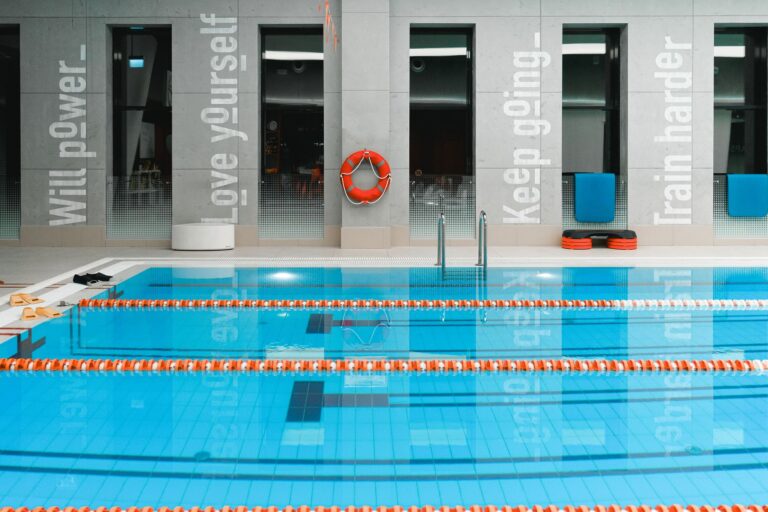

A standard pool setup includes the shell, coping, deck, skimmer, main drain, pump, filter, return jets, heater, lights, plumbing lines, and safety gear that keep water contained, cleaned, and moving. To identify them fast, start at the edge, then follow the water from intake to return.
You can sort the visible structure from the equipment and spot weak points before they turn into leaks, cloudy water, or safety issues. That helps you speak clearly with a contractor and inspect an in-ground pool with more confidence.
The Structure You See First
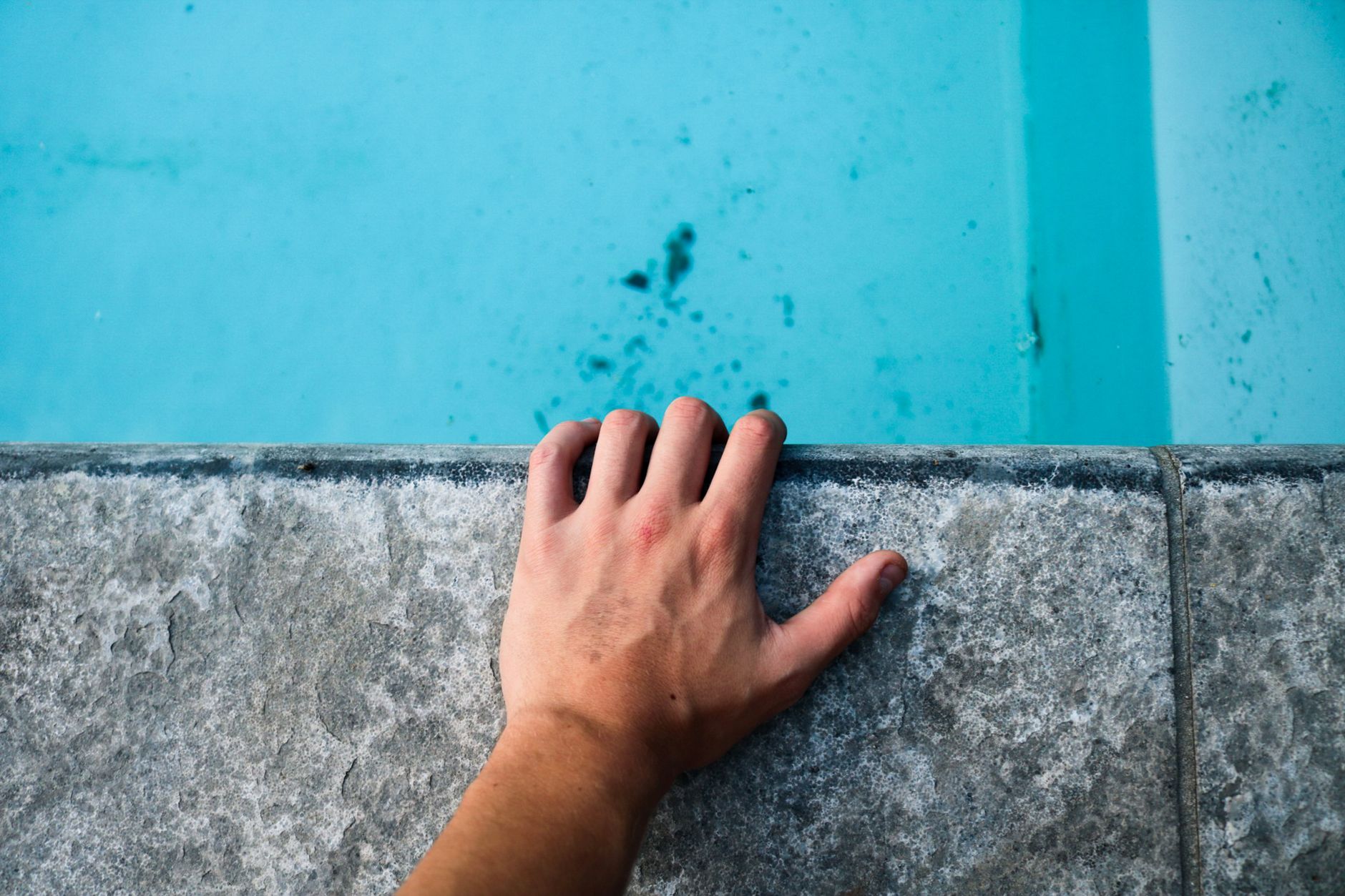
The shell is the body of the pool, and the coping is the cap that finishes its top edge. Around that, the deck defines the working space, while the waterline tile marks the band where oils, scale, and splash stains show up first. Vinyl pools add a liner, and fiberglass pools rely on a molded gelcoat finish, so the surface layer changes with construction.
That difference matters because the finish changes how damage shows up and how repairs are handled. A concrete pool depends on plaster, pebble, or quartz on the water side of the vessel, while a vinyl-liner pool uses a flexible membrane that can wrinkle, tear, or pull at the track. Fiberglass gives you a smooth shell, but gelcoat wear shows up as dull patches, chalking, or hairline cracks near steps and corners.
You can spot a lot at a glance. Cracked coping, loose waterline tile, chipped deck edges, and stained joints often point to movement, aging sealant, or poor drainage rather than a plumbing fault. A quick walk around the perimeter tells you more than most service calls start with, and that sets up the water path that keeps the whole system moving.
Visible parts that deserve a close look
Start with the edge where the shell meets the deck. That seam takes heat, foot traffic, and splash-out, so it is where settling and small failures show up early.
- Coping stones cap the shell and shed water away from the vessel.
- Waterline tile shows chemical buildup and splash staining first.
- Deck joints open or shift when soil movement stresses the slab.
- Ladders and handrails loosen at anchor points and should feel firm.
- Steps and benches crack, stain, or flex when the finish wears.
These surface clues often show where the pool shell or surrounding slab is moving. Once you can read the visible edges, the next step is tracing how water actually circulates through the system.
That visible outline only tells part of the story; circulation reveals how the whole system keeps moving.
The Water Path That Keeps a Pool Alive
Water enters through skimmers and, in many pools, a main drain at the floor, then travels to the pump, the filter, and back through return jets. The pump creates flow; the filter catches suspended grit; the returns send treated water back across the surface and deep end.
That path is not just plumbing for the sake of plumbing. The CDC says circulation and filtration help move sanitizer through the basin, while poor flow lets debris and germs build up. A strong pump with a clogged filter still gives weak results, and a clean filter with bad circulation leaves dead spots along steps, corners, and tanning ledges.
Here is the plain-English version: skimmers pull from the top, main drains pull from low points, the equipment pad does the work, and buried lines carry water between them. You can see the skimmer throat, the pump basket, the filter tank, and the return eyes; the underground run stays out of sight, which is why leaks there can hide for weeks.
| Part | Job | What you can see |
|---|---|---|
| Skimmer | Pulls surface water and debris into the system | Opening at the waterline with a basket inside |
| Main drain | Moves water from the floor and supports circulation | Floor fitting with a safety cover |
| Pump | Pushes water through the circuit | Motor and wet end on the equipment pad |
| Filter | Catches fine particles | Tank, canister, or grid assembly |
| Return jets | Sends treated water back into the pool | Round fittings in the wall |
Hayward Pool Products lays out this sequence in simple terms, and that map matches what most service techs see in the field. The real trick is learning which parts sit on the pad and which stay underground, because that split tells you where to look when flow changes or a leak starts. From there, sanitation and water quality come into view.
Where flow splits between above and below ground, the chemistry controls begin shaping every swimmer’s experience.
Sanitation, Heat, and Water Quality Controls
Chlorine or bromine does the actual sanitation work, while the pump, filter, heater, and chemical feed gear help those chemicals stay distributed and effective. The EPA ties sanitizer level and pH together for a reason: pH drift changes how active chlorine is, and water that feels harsh can still be under-sanitized.
Salt systems deserve plain language. A saltwater pool still uses chlorine; the cell turns dissolved salt into chlorine at the equipment pad. That setup changes how the sanitizer is made, not what the sanitizer is.
Heat adds another layer. Gas heaters, heat pumps, and electric models warm the water, but warmer water can increase sanitizer demand, especially in spas and heavily used pools. The California Department of Public Health points out that temperature control and chemical control move together, not separately.
Cleaning debris and balancing water are different jobs
A skimmer basket catches leaves; it does not keep water safe to swim in. The filter clears suspended dirt and pollen; it does not fix low sanitizer or bad pH.
That split trips up a lot of pool owners. Cloudy water can come from a dirty cartridge, weak circulation, low chlorine, high bather load, or a mix of all four, so adding more shock is rarely the whole answer. In practical terms, you need the water path and the chemistry to work together.
Controls that affect comfort and clarity
Look for the heater, chlorinator, salt cell, and any automatic chemical feed unit on the pad. Each one changes the feel or clarity of the water, and each one gives you clues when the pool starts drifting out of range.
- Heater extends the season and keeps water usable in cooler weather.
- Chlorinator feeds sanitizer at a steady rate.
- Salt cell makes chlorine on site from dissolved salt.
- pH control gear helps water stay comfortable and stable.
Balance beats brute force. A bigger chlorine dose cannot fix poor circulation, and a stronger pump cannot fix out-of-range pH.
That chemistry sets the stage for safety hardware, which matters even more than water clarity when someone is near the pool edge.
Because clear water alone never guarantees protection, the hardware around the edge deserves a closer look.
Safety Parts That Deserve Extra Attention
Drain covers and anti-entrapment systems sit on the short list of pool parts that can turn urgent fast. The CPSC and CDC both stress compliant drain hardware because suction at the wrong point can trap hair, limbs, or clothing, and that risk rises when a cover is broken, loose, or missing.
Modern residential pools also rely on layers of access control. Fencing, self-closing gates, latches, alarms, and sturdy covers all reduce the chance of unsupervised entry. A single latch that no longer catches cleanly can undo the value of a strong fence, so the weakest link deserves the most attention.
InterNACHI inspection guidance treats ladders, handrails, lighting, and barriers as safety parts, not cosmetic extras. That view makes sense: a loose rail can slip under a hand, a dark step can hide a misstep, and a damaged cover can fail right when you expect support. Once you know the safety pieces, the overlooked equipment pad becomes easier to read.
Problems that need prompt attention
- Broken drain cover calls for immediate shutdown until it is fixed.
- Missing gate latch leaves the barrier weak and access too easy.
- Nonworking alarm removes a layer that may catch a lapse.
- Loose handrail can shift under weight near slick steps.
- Dark entry zone makes shallow water and steps harder to judge.
A drain cover is not a trim piece. Treat any damage there as a safety problem, not a cosmetic one.
Those visible risks are only part of the picture. The next layer lives on the pad and under the yard, where leaks and flow problems hide in plain sight.
Even the most obvious components leave hidden failures behind, especially where equipment and buried lines do their work.
Hidden Equipment and Plumbing Most Owners Miss
The equipment pad holds the pump, filter, heater, valves, unions, and sometimes a cleaner hookup or automation panel. Beneath the deck or yard, plumbing lines carry water between the pool and that pad, and those pipes can bend, split, or clog without leaving a visible clue at the surface.
Texas A&M AgriLife Extension describes the system as a chain of intake, treatment, and return parts, and that chain is the key to diagnosis. Weak suction at the skimmer can point to a clogged basket, a stuck valve, air in the line, or a pump lid seal issue. Weak return flow points somewhere else, often to a dirty filter, a failing pump, or a partial blockage in the return side.
Because the underground sections stay out of sight, symptom patterns matter. A wet patch in the yard near the shell can point to a line leak. Air bubbles in the pump basket often mean the suction side is pulling air. A return that spits weakly from one side but not another can point to a valve setting, a blockage, or a split line farther down the run.
Failure patterns that help you describe the problem
Use the symptom, not a guess about the cause, when you speak with a tech. That shortens the call and cuts down on wrong parts being swapped.
- Cloudy water can point to filtration, sanitizer, or flow trouble.
- Air in basket suggests suction-side air leaks.
- Weak returns often trace back to the filter, valves, or pump.
- Wet soil near the shell can signal a buried line issue.
- Pump noise can mean wear in bearings, seals, or impeller flow.
That kind of mix-up happens often enough to waste time, especially when a simple suction problem gets blamed on the filter. Naming the right component helps you narrow the fix, and the last section gives you a clean way to do that at home.
When the filter is named correctly, troubleshooting becomes sharper and the final checklist makes identification easier.
A Homeowner Checklist for Naming Pool Parts With Confidence
Stand at one corner and move in a loop. Start with the skimmer opening, then the pump basket, the filter tank, the heater, the return jets, the steps, the drain cover, the coping, and the deck edge. That order maps the system from intake to output and keeps you from mixing up structure with equipment.
Separate essential parts from optional features as you go. Lights, fountains, waterfall spillways, automatic cleaners, and decorative grottos add comfort or style, but the pool still runs without them. The core swimming pool components are the shell, liner or finish, skimmer, drain, pump, filter, returns, sanitizer feed, and safety barrier.
Identify the essential parts at home
- Find the skimmer by tracing the surface opening with the basket inside.
- Locate the main drain on the floor and check that the cover sits flush.
- Trace the returns by spotting the small fittings that push water back.
- Find the pad and label the pump, filter, heater, and valves.
- Check the barrier for latch action, fence gaps, and gate closure.
- Mark extras such as lights, water features, and automation panels.
Use the right names in service calls
Tell the technician whether the problem is at the skimmer, the main drain, the pump, the filter, or the return line. Those names point to the right side of the system and save time, especially when the issue is a leak, low flow, or a clogged line.
That vocabulary also keeps repair quotes clean. A request for a liner patch, a drain cover check, or a valve replacement is clearer than a broad complaint about the pool. Once you can name the parts of an in-ground pool with confidence, maintenance gets simpler, and service visits become a lot less expensive in mistakes.
That confidence pays off beyond the backyard, turning routine care into fewer surprises and lower repair costs.
Final Thoughts
A pool works because structure, circulation, sanitation, and safety all pull their weight. Once you can separate the visible shell and deck from the pump, filter, drains, returns, and barrier gear, you can spot wear faster, describe problems more clearly, and make better calls before a small issue spreads.
FAQ
What are the basic parts of a pool?
A standard backyard setup includes the shell, coping, deck, skimmer, main drain, pump, filter, return jets, heater, lights, plumbing lines, and a safety barrier. Optional pieces such as fountains and automation gear add comfort, but they do not make up the core system.
What is the difference between pool structure and pool equipment?
Pool structure is the physical vessel and surrounding surface: the shell, coping, deck, tile, liner, or finish. Pool equipment is the working system that moves and treats water, including the skimmer, pump, filter, heater, return jets, valves, and plumbing lines.
What do skimmers, drains, and return jets do?
At the surface, skimmers pull debris into the system, main drains draw water from the floor, and return jets send treated water back into the pool. Together, they keep water moving through the circulation system and help prevent dead spots.
Which parts of a pool need the most maintenance?
The skimmer basket, pump basket, filter, waterline tile, drain covers, and barrier hardware need the most regular attention. Those parts collect debris, handle flow, or affect safety, so they show wear and buildup faster than structural pieces.
What are the most common pool parts that fail or wear out?
Skimmer baskets, pump lid O-rings, filter cartridges, drain covers, heater components, valves, lights, and liner seams are common wear points. Coping joints, deck caulk, and plumbing lines also fail when age, movement, or pressure build up.
How do I identify the parts of my pool at home?
Walk the pool edge first, then check the skimmer, main drain, return fittings, pump, filter, heater, and barrier hardware. If you can describe where the issue appears and which part sits there, a contractor can usually narrow the problem faster.