
Pool aerator refers to any device or water feature that mixes air into pool water through spray, splash, bubbles, or a venturi injector. That extra air-water contact speeds gas exchange, so carbon dioxide leaves faster and pH tends to rise.
You may need one if your water drifts acidic, your circulation feels weak, or you want a decorative feature that also changes water movement. The chemistry is simple, but the tradeoffs show up fast in real pools and spa spillways.
What Aeration Changes Inside Pool Water
As carbon dioxide leaves the water more quickly, the carbonate balance inside the pool shifts with it. The result is a pH rise that can happen without a big change in total alkalinity, which is why one test reading can look steady while another drifts.
Gas Exchange Drives The Chemistry Shift
Aeration works by enlarging the water surface exposed to air. More agitation means more gas exchange, and more gas exchange means faster carbon dioxide stripping. The pool does not gain sanitation from that process, but it can feel fresher because some dissolved gases leave the water.
That chemistry detail matters because chlorine efficiency tracks pH. A pool that drifts higher after aeration can need closer testing and smaller chemical corrections, even when the water looks calm. EPA and CDC pool guidance both keep circulation, filtration, and disinfection at the center of water care.
Circulation Changes More Than Oxygen
A moving jet, fountain, or spillway does more than add air. It helps pool circulation, reduces stagnant water near the surface, and can move chemical readings into a more even pattern across the vessel. The effect is mechanical first, chemical second.
That is why water aeration can improve the way the pool feels without fixing a sanitation problem. Once you understand that difference, the design choices start to matter, because each setup changes the water in a slightly different way.
Practical chemistry effects to watch
Aeration often raises pH by stripping carbon dioxide, but it usually leaves total alkalinity closer to where it started. Calcium hardness matters too, because a higher pH can push scale risk up on tile, heaters, and salt cells when the water already runs hard.
Watch pH and calcium together. A pool that climbs from 7.4 to 7.8 after strong splash or spray may stay within a usable range, while the same jump in hard water can leave white residue sooner. That pattern is a common reason pool owners test more often after adding surface agitation.
That residue often points to a design choice, which is why the equipment itself matters next.
The Main Pool Aerator Designs In Use
Different setups move air into water in different ways, and the choice affects spray pattern, energy demand, and noise. The same goal can be met by a return-jet attachment, a fountain, a spillway, or a plumbing-based venturi pool aerator.
Return-Jet Attachments And Eyeball Fittings
A return jet attachment replaces or modifies the pool return so the flow breaks up as it exits. The simple shape makes it a common homeowner choice because it works with existing plumbing and nudges pool circulation without a major rebuild.
A venturi pool aerator uses pressure drop to draw air into moving water. That venturi injector can be efficient, but it also adds resistance, so weak pumps can lose some flow and send less water back to the pool. An eyeball fitting with the right angle can sometimes do enough mixing on its own.
Fountains, Waterfalls, And Spillways
Fountain heads, waterfall lips, and spa spillways create aeration by breaking water into sheets or droplets. They also add sound and visual movement, which makes them useful in backyards where the water feature matters as much as the chemistry.
These are surface aerators. They create strong air-water contact near the top and modest mixing below, so they fit decorative pools and raised-spa spillovers better than deep mixing jobs. A quiet laminar jet behaves differently from a splashing spillway, and that acoustic difference can shape the whole yard.
Diffused-Air Systems And Broader Setups
At the bottom of the pool, tubing, air stones, or diffusers send a steady stream of bubbles upward. In a pool setting, that setup is less common than in ponds, but it can still appear in larger water features or specialized pool aeration system designs.
Compared with surface aerators, diffused-air systems can move water through a deeper column and use a different energy pattern. Surface units lean on spray and splash; diffusers lean on rising bubbles. The choice depends on what you want more of: visible movement or deeper mixing.
| Design | Mixing Pattern | Best Use |
|---|---|---|
| Return-jet attachment | Surface agitation at the return point | Basic homeowner circulation help |
| Venturi injector | Air drawn into flowing water | Plumbing-based pH rise and mixing |
| Fountain or waterfall | Spray, splash, and thin-film flow | Decorative features and surface exchange |
| Diffused-air system | Bubbles rising through the water column | Large water features and pond work |
For a simple backyard pool, return-line gear and spillway features usually make the most sense. For a pond or a large decorative basin, the broader aeration setup tends to fit better because it handles oxygen transfer and circulation over a wider area.
Those wider systems work best where circulation is uneven, especially when the water body itself is larger.
Where Aeration Helps Pool Balance Most
Stagnant water along the edges often responds best when a gentle aeration boost nudges the chemistry upward. A pool that smells stale or feels flat after a warm week often benefits from stronger surface movement, especially where water sits still between pump cycles.
Stagnation And Odors Respond First
That where circulation is weak. The USGS explains that adding air raises dissolved oxygen and strips dissolved gases, which is why aeration can reduce odors and improve water feel in treatment settings. In a pool, the same mechanism can make a corner or shallow shelf feel less stale.
One common example is a residential pool with a raised spa and a spillway. The spillway adds motion, the main circulation loop handles filtration, and the surface stays cleaner in the visual sense because water no longer sits flat and lifeless at the edge.
Natural pH Rise Helps Acidic Water
Aeration can be useful in water that drifts acidic after repeated acid additions. Removing carbon dioxide raises pH without dumping more alkalinity into the water, which gives you a cleaner correction path than adding more chemicals blindly.
That matters in saltwater pools, where pH drift can already run high from normal operation. Add a pool aerator to that mix and you can end up testing more often, but you also get a tool that can help restore a more comfortable balance after acid treatment.
Cleaner Feeling Does Not Mean Cleaner Water
Better mixing can improve the way the pool feels, yet it does not replace filtration or sanitizer. CDC pool guidance keeps the core rule simple: circulation, filtration, and disinfection do the actual sanitary work. Aeration only helps those systems do their jobs more evenly.
Do not treat aeration as a sanitizer substitute. A cloudy pool still needs filter service, sanitizer checks, and a look at bather load and debris control. The feature can support water quality, but it cannot fix the root cause by itself.
Even with those benefits, more air also changes the chemistry in ways that deserve a closer look.
The Tradeoffs That Come With More Air
Strong surface agitation changes more than pH. It can increase evaporation, splash-out, cooling, and the amount of make-up water you need to add back into the system.
Water Loss And Cooling Rise Together
Every break in the surface sends moisture into the air, and a pool under heavy aeration loses more water than a calm one. That matters in dry climates, around indoor natatoriums, and in homes where the fill line already drops between service visits.
Cooling can follow the same path. A breezy surface and a hard spray dump heat faster than still water, which can be useful in midsummer and annoying in shoulder seasons. The same fountain that feels pleasant in July can feel wasteful in April.
More Agitation Can Push Chlorine Demand Up
Extra motion does not consume chlorine directly, but it can make water management less stable. As pH rises, chlorine shifts toward a less active form, so the same sanitizer residual does not work as well at a higher number.
That chemistry link is easy to miss. A pool with steady aeration can need more careful pH control because the water no longer sits in the same state from morning to evening. The sanitizer still works, just not on autopilot.
Scale Risk Grows When pH Climb Meets Hard Water
High pH and high calcium hardness can leave deposits on tile, heaters, and salt cells. A pool that already runs hard can show white crust sooner after aggressive aeration, especially near warm surfaces where evaporation concentrates dissolved minerals.
One practical example is a tile band that starts to roughen after a spa spillway runs all evening. The culprit is not hard water alone. It is the pH rise from carbon dioxide stripping layered onto calcium that is already near the upper edge.
Check heater surfaces and tile lines after you increase spray or splash. A rising pH paired with high calcium hardness can leave scale faster than most owners expect, especially when evaporation is already high.
That shift is why ponds and pools are managed with different priorities when aeration enters the picture.
Pond Aeration Brings Different Priorities
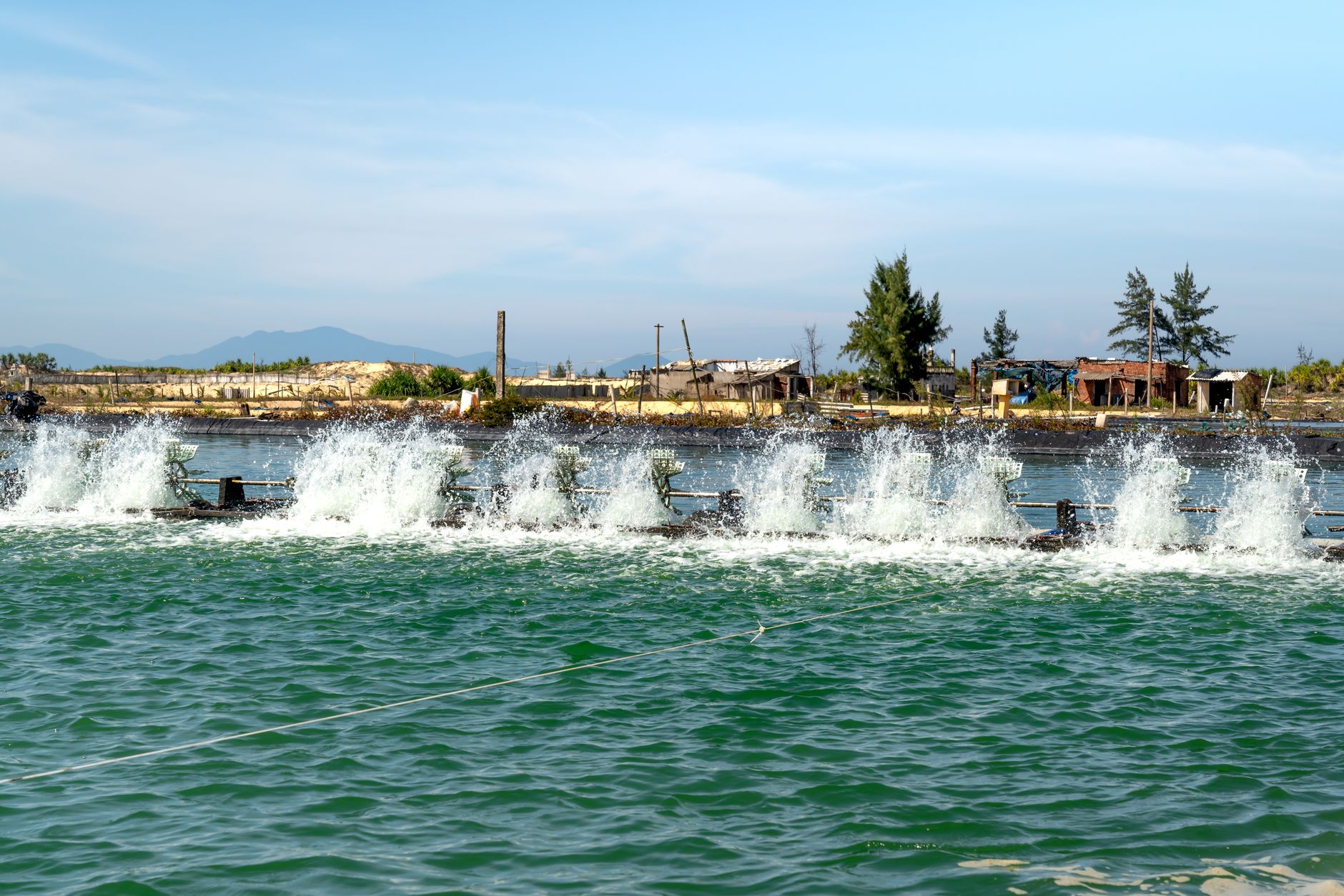
A pond aerator serves a fish and water-quality problem before it serves a chemistry problem. In pond work, the main target is dissolved oxygen, because low-oxygen stress can hit fish hard during warm nights, algae die-offs, and turnover events.
Oxygen Support Helps Fish Health
In guidance from USDA NRCS and Texas A and M AgriLife Extension, aeration is linked to higher oxygen levels, less stratification, and healthier fish. That is a different job from a pool return or a spa spillway, even though the hardware can look similar from a distance.
A backyard koi pond is a clean example. A diaphragm compressor feeding diffused stones can keep surface water moving and give fish a better oxygen supply, while the same system would be overkill in a chlorinated swimming pool.
Poor Placement Can Stir Sediment
Pond equipment can make water look worse when it sits in the wrong spot. North Carolina State University Extension warns that a badly placed setup can stir bottom sediments, release trapped nutrients, and cloud the water instead of clearing it.
That is why pond aeration setup depends on depth, shape, and the season. A shallow basin with loose muck reacts very differently from a deep pond with stable layers. The wrong bubble pattern can turn clear water murky in a single afternoon.
Aeration Does Not Replace The Other Controls
Aeration can raise oxygen and improve movement, but it does not handle nutrients, filtration, or disinfection. Fish ponds still need vegetation control, runoff control, and regular monitoring to keep water quality steady.
That broader lesson carries back to pools too. Once you add air to water, the next question is how to keep control of the system rather than let the new movement drive the chemistry.
Control becomes the real challenge once added movement starts influencing pH, circulation, and evaporation.
Using Aeration Without Losing Control
Start small and watch what the water does over a full day. A short run time, a gentle nozzle angle, and moderate intensity tell you far more than a nonstop blast on day one.
Adjust Run Time Before You Lock In Constant Use
An every-hour schedule sounds efficient, but it can overshoot the need in a small residential pool. Begin with a shorter cycle, then watch pH, water movement, noise, and splash-out during the next 24 to 48 hours.
That simple habit saves trouble. A venturi nozzle that works well at one pump speed can turn finicky at another, so pump head and return pressure deserve attention before assuming more air equals better water.
Track Chemistry As A Pair, Not Alone
pH and total alkalinity belong on the same test strip or drop kit check. Calcium hardness needs the same attention because the three numbers shape whether aeration helps stabilize the water or starts a scale problem.
Cornell Cooperative Extension and EPA pool guidance both point to the same operating habit: introduce change gradually and keep testing. A sudden pH jump after a new waterfall or deck jet tells you the water wants less aeration, not more.
Use A Simple Decision Check
- Weak circulation: Choose aeration when dead spots, odor, or stagnant water show up near returns or shallow edges.
- High pH drift: Use it when the water needs a natural pH rise after acid additions.
- High calcium: Skip aggressive spray when scale already builds on tile or heaters.
- Water loss concern: Avoid strong splash patterns in dry weather or indoor settings.
- Decorative goal: Pick a fountain or spillway when sound and appearance matter as much as chemistry.
- Pond use: Choose diffused air for oxygen support, not a surface fountain meant for pools.
That checklist leads to a clear decision. A pool aerator is a smart add-on when you need more circulation, a steadier pH rise, or a water feature that earns its place; it is extra complication when your pool already balances cleanly and stays stable without it.
Sometimes the best choice is restraint, especially when the existing water balance already holds steady.
Wrap Up
Aeration changes pool water by stripping carbon dioxide, raising pH, and improving mixing at the surface. The best setups help you tune water balance and circulation; the wrong ones add evaporation, splash-out, and scale risk without solving a real problem.
FAQ
What is a pool aerator?
Spray, splash, bubbles, and venturi injectors are common ways to add air to pool water. It is used to increase gas exchange, which can raise pH and change how the water moves near the surface.
What does a pool aerator do?
It introduces air into moving water so gas exchange happens faster. In a pool, that usually means stronger surface agitation, better circulation near returns or features, and a faster pH rise as carbon dioxide leaves the water.
How does a pool aerator work?
It works by increasing contact between water and air. Spray, spillover, and bubbles expose more surface area, and a venturi it can also draw air into the stream as water passes through a narrowed passage.
How does a venturi pool aerator work?
A venturi it uses fast water flow through a narrowed passage to draw air into the stream. That air mixes with the returning water, which boosts surface exchange and can raise pH more quickly than a plain return in some setups.
What are the benefits of using a pool aerator?
It can help raise pH after acid additions, improve circulation near dead spots, and make water feel less stagnant. A decorative setup can also add sound and motion, which is useful in backyard pools with spas or spillways.
Can a pool aerator raise pool pH?
Yes. Aeration often raises pH by stripping carbon dioxide from the water, which shifts the carbonate balance. Total alkalinity can stay close to the same reading, so the pH move can look larger than the rest of the chemistry change.