
Surface fixtures move splash-out, rain, and washdown water off walking areas before it turns slick. They protect coping, joints, and nearby walls by sending runoff away from the deck instead of letting it sit where people step.
If you manage a residential patio or a public pool, the real job is the same: keep water moving, keep surfaces dry faster, and match the drain to the deck shape, climate, and local code rules.
How Deck Drains Protect Pool Areas
Water on a deck creates a slip hazard fast, especially on smooth concrete or pavers with a light film of sunscreen residue. A properly placed drain removes surface runoff before it spreads into traffic lanes, step areas, and doorways.
Pool deck drains work as surface drainage, not as part of the pool circulation system. They carry rain, hose water, and splash-out to an approved discharge point, which helps protect the deck finish and the path people use around the pool.
How Water Leaves The Deck Surface
The drain only works when the deck itself feeds it. A positive pitch sends water toward the grate, while flat bays let puddles spread around loungers, coping, and entry points.
Standing water holds dirt and organic debris, and that buildup can speed algae growth on rough finishes. That is why the CDC and aquatic facility guidance treat surface water control as a safety issue, not just a maintenance detail.
Why Runoff Routing Matters Beyond The Pool Edge
Where the water goes after it enters the drain matters just as much as the grate you see on top. If runoff heads toward a wall, expansion joint, or foundation, repeated wetting can stain surfaces and keep the area damp long after the deck dries.
A paver deck that slopes toward a house wall can push washdown water under the sill plate. A short edge drain changes that flow path, keeps the wall drier, and reduces the chance of the same water coming back as a maintenance problem. The next step is choosing the drain layout that fits the deck.
Where Drainage Fits With Surface Grading
Grading does the heavy lifting because it controls where the water wants to go first. The drain accepts that flow, so a flat deck can still pond even with a large grate and a generous outlet line.
Pool deck drainage works best as a system that includes the finish, the slope, the drain body, the outlet pipe, and the discharge route. If one part is off, the deck can still hold water in the same low spot after every rinse.
That balance determines whether the deck sheds water cleanly or channels it along a more precise path.
Drain Types That Fit Different Deck Layouts
Deck shape usually determines the best drain style. Long, open pool aprons often call for linear trench drains, while smaller low spots can work with a point drain or area drain.
Slot drains sit between those options. They can look cleaner beside decorative coping, but they depend more on accurate pitch and regular debris removal because the opening is narrower and less forgiving.
| Drain Type | Best Fit | Main Tradeoff |
|---|---|---|
| Linear trench drain | Long edges, broad decks, perimeter runoff | Needs clean channel access and careful setting height |
| Point drain | Small low spots, compact patios, localized pooling | Handles less sheet flow than a continuous channel |
| Slot drain | Cleaner visual line near decorative finishes | More sensitive to debris and slope errors |
| Area drain | Central collection point for modest runoff | Can leave water stranded on broader open decks |
Linear Trench Drains For Long Capture Runs
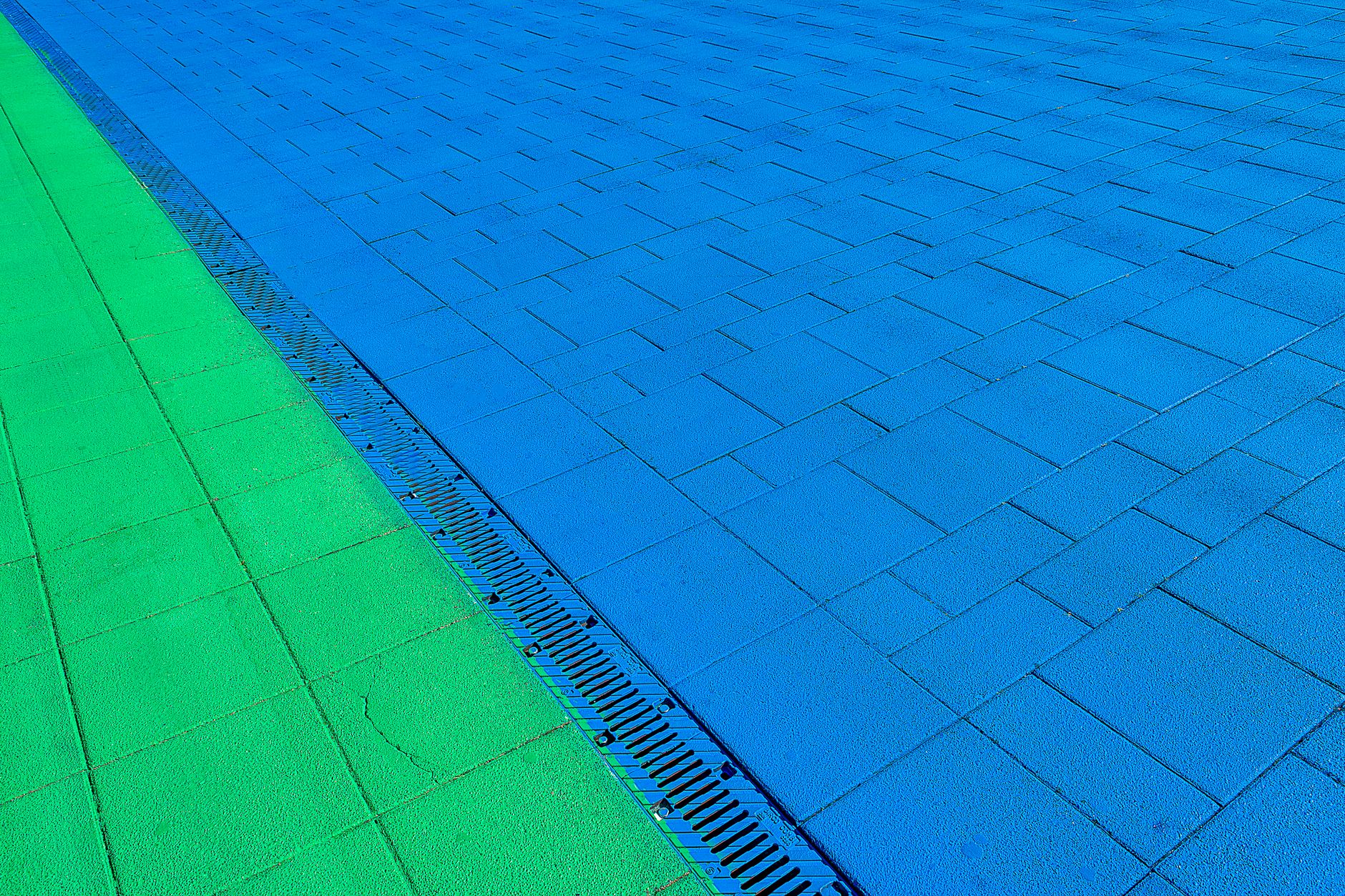
A trench drain behaves like a gutter built into the deck, catching sheet flow across a long run. That makes trench drains around pools useful on resort decks, patio edges, and service door areas where water spreads quickly.
The National Plasterers Council points designers toward slope plus drainage, not drainage alone. That matters because the grate frame has to sit flush and the deck pitch has to feed the channel evenly, or the drain loses much of its value.
Point And Area Drains For Smaller Collection Zones
A point drain works best where one corner naturally collects runoff after rain or washdown. It is simpler to frame into a small slab or paver field and can keep the layout cleaner when the runoff volume is modest.
But a point drain can be undersized on a broad deck with heavy splash-out. A shallow bowl of water near a step, gate, or spa edge often needs a linear channel, not a single outlet in the middle of the slab.
Slot Drains For Cleaner Sight Lines
Slot drains hide most of the channel and leave only a narrow opening visible. That can suit upscale pool coping and hardscape where a wider grate would feel too heavy visually.
The tradeoff is service access. Narrow openings collect leaves, sunscreen residue, mulch, and grit faster than a broad deck drain grate, so maintenance has to be part of the design from the start.
Smaller openings handle debris better in one setting, which makes the underside flow path even more important.
Drain choice should follow deck geometry, not the other way around. A narrow patio edge, a broad pool apron, and a raised spa each ask for a different capture method.
Slope, Grading, And The Flow Path Beneath The Surface
A drain frame cannot fix a flat deck. The pitch above the slab controls where water goes, and the outlet below the slab controls where it ends up.
That split matters because a deck can look level to the eye and still hold a thin puddle at a joint or coping line. Once water misses the intended path, it spreads across textured concrete and lingers in low points.
Positive Pitch Keeps Water Moving
Pool deck slope to drain should create a clear route without making the walking surface feel steep or awkward. Even a modest fall can move splash-out to a trench drain before it reaches seats, doors, or steps.
Facilities guidance from the VA and aquatic design groups points the same way: pitch the hardscape so water moves away from structures and accessible routes. On a pool deck, that means the grade has to work with coping height, not against it.
Flat Spots And Joints Trap Runoff
Joints interrupt the flow path. Expansion cuts, paver edges, and slab transitions can slow runoff just enough to leave a ring of water on the surface, especially after a storm or heavy hose-down.
That is one reason a deck can still pond after a drain install looks right on paper. The finish may be sloped in one bay and flat in the next, or the bedding may settle and shift the surface over time.
Below-Slab Movement Needs Room To Breathe
Drainage has to work with waterproofing and structural movement. If the frame is locked against a moving slab edge, cracking can open around the channel and let water migrate where it should not go.
FEMA flood guidance on flow paths offers a useful physical lesson here: water needs a clear route in and out. Beneath a pool deck, that means the bedding, piping, and discharge line must stay open so hydrostatic pressure does not build under the surface.
When water keeps moving below the slab, the design has to account for safety, durability, and compliance.
Set the grade before you set the grate. A deep channel with poor pitch performs worse than a modest drain fed by a clean, even fall.
Code And Safety Details That Shape The Design
Safety rules shape pool deck drainage as much as hydraulics do. Grates, openings, outlet paths, and surface texture all sit inside a larger slip and safety system.
The International Code Council, the International Swimming Pool and Spa Code, the Uniform Plumbing Code, IAPMO guidance, and local plumbing rules can all affect the plan. Public and commercial pools often need formal review because the drainage layout touches walking safety, discharge, and access routes.
Slip Resistance Starts With Drying Speed
Wet concrete can still be fairly safe when water clears quickly. The risk rises when runoff slows, pools in traffic lanes, and leaves a glossy film on a smooth finish.
That is why code and health guidance focus on quick drying, controlled discharge, and a slip-resistant surface. The CDC Model Aquatic Health Code treats standing water as both a contamination risk and a fall hazard.
Discharge Must Leave The Pool Area
A deck drain should move water away from the pool, not back toward it. Reentry can carry dirt, sunscreen residue, leaves, and washdown water into the swimming area, where it works against sanitation and creates a mess at the coping line.
Drain systems should not dump into the basin or flood the route beside it. A closed loop from deck to pool invites contamination and can create standing water at the very edge where people step in and out.
Public Projects Face Extra Review
Commercial sites often need local code checks, IBC review, and accessibility review under ADA-related requirements. That matters because grate openings, level changes, and frame edges can create toe catches or wheelchair problems on a route that should stay smooth.
One practical point comes from the Virginia Graeme Baker Pool and Spa Safety Act. That law focuses on suction entrapment at pool and spa outlets, but it reminds designers to separate surface drainage from intake hardware and to keep covers and outlets from creating new hazards.
For large facilities, ASPE and PHTA guidance also helps because it ties drainage to hydraulics, sanitation, and maintainability. A drain that passes a simple eye test can still fail if it blocks cleaning, traps debris, or sits in the wrong part of the traffic lane.
Even a tidy-looking layout can fail without careful attention to access, placement, and jobsite details.
Code review belongs at the drawing stage, not after the concrete cures. A misplaced grate can trigger rework, delay inspections, and leave the deck unsafe in the meantime.
What Installation Really Involves On A Pool Deck
A drain installation is an assembly job, not a single fixture swap. The drain body, grate, outlet line, bedding, and discharge route all have to match the deck finish and the way water moves across the slab.
Pool deck drain installation also has to account for coping, pavers or broom-finished concrete, and movement joints. A clean-looking grate can fail early if the surrounding slab cracks, the pitch is off, or the outlet line backs up downstream.
The Parts That Must Work Together
- Drain body The channel or basin must match the runoff load from the deck and nearby hardscape.
- Grate choice The cover needs the right load rating, opening size, and corrosion resistance for the site.
- Outlet piping PVC drainage pipe or another approved line must carry water to a lawful discharge point.
- Bedding and support Solid support keeps the frame from shifting under foot traffic and thermal movement.
- Discharge route Water should reach storm drainage, a dry well, detention, or approved daylight location.
Alignment With Coping And Joints
The tightest spots in the assembly form where coping meets the joints. The drain frame has to sit far enough from the edge to avoid cracking, but close enough to catch runoff before it reaches a wall or trip path.
A raised spa makes the point even more clearly. Water spilling from the spillway can move in a narrow sheet, so a lone point drain is not enough; a linear channel at the spill edge often works better because it catches the whole flow line.
Outlet Quality Decides The Final Result
A poor outlet can undo a good layout. A line that sags, clogs, or discharges into compacted soil can back water up into the drain body and leave the deck wet longer than expected.
That is why the discharge route matters as much as the grate. The drain should leave the deck cleanly and keep water away from foundations, mulch beds, and any place where erosion can form a new problem.
A resort pool with heavy washdown water may need more than one run of trench drains around bar and loungers. A small residential deck, by contrast, may need only one edge drain and a smart pitch line to keep the paving dry.
Those choices affect not just drainage performance, but also how much care the system will need later.
Keeping Drains Clear Through The Seasons
Leaves, grit, hair, sunscreen residue, and mulch all slow drainage before you see a full clog. Once the channel fills with debris, water starts to bypass the grate and spread across the deck.
Routine maintenance matters because access can be harder than it looks. A drain with a locked grate, a buried outlet, or a clogged cleanout can go from minor nuisance to backed-up water in one storm.
Inspect Before Debris Builds Up
A quick visual check catches bent grates, loose frames, and sediment lines in the channel. Those signs tell you runoff is already slowing, even before water starts to sit on the surface.
Inspection should happen before leaf season, after major storms, and after any deck washdown that pushes sand or grit into the channel. That simple habit protects deck drains for pools from the kind of slow failure that hides in plain sight.
Clean Channels And Outlets On A Schedule
Debris removal has to reach the outlet, not just the visible grate. A clean top with a packed line below still backs water up, and odors can show up in stagnant sections that do not drain fully.
The CPSC and CDC both stress routine maintenance around pool drainage and circulation areas. Clear channels help keep standing water off the deck, and they cut down on the worn, dirty look that appears when runoff keeps reusing the same path.
Freeze-Thaw Weather Demands Closer Attention
Cold climates punish trapped water. When moisture freezes inside the channel or around the frame, expansion can crack thin bedding, shift a shallow drain, or lift a grate just enough to create a trip edge.
That is why a deeper, well-supported drain body and a corrosion-resistant grate make sense in freeze-thaw regions. A system that sheds water quickly in October can heave by February, so winter prep should include outlet clearing and crack checks before temperatures drop.
Saltwater pools and coastal air add another wrinkle: dissimilar metals can corrode faster, and seized fasteners make cleanup harder. Stainless grates help, but they still need debris removal and occasional lift-out access so the line stays open.
Corrosion and stuck hardware can turn simple upkeep into a bigger task unless the system is regularly checked.
Wrap Up
A larger drainage plan is where these drains perform best. You need the right drain type, a clear slope, a safe discharge route, and a maintenance schedule that keeps water moving instead of sitting underfoot.
When those pieces line up, the deck dries faster, the walking surface stays safer, and the structure beneath the finish takes less abuse from runoff and freeze-thaw cycles.
FAQ
How do pool deck drains work?
They collect rain, splash-out, and washdown water from the deck surface, then send it through a channel or pipe to an approved discharge point. The deck has to slope toward the drain, or water will keep pooling in low spots.
Do pool deck drains need to be sloped a certain way?
Yes. The deck surface needs a positive pitch toward the drain, and the pitch has to stay even enough to avoid flat spots and reverse flow near joints, coping, and entries. A drain body alone cannot fix a poorly graded surface.
What is the difference between a trench drain and an area drain around a pool?
A trench drain is a long linear channel that intercepts sheet flow across a broad run of deck. An area drain collects water at one localized low point, so it suits smaller spaces and less runoff.
Are pool deck drains required by code?
Many public and commercial projects face code review for drainage, slip resistance, discharge, and accessibility, and local rules can vary. The International Swimming Pool and Spa Code, the Uniform Plumbing Code, and local plumbing or building departments often shape the final layout.
How do you keep water from pooling on a pool deck?
Start with proper grading, then place the drain where water naturally wants to travel. Clean grates, open outlets, and a discharge route that stays clear of backflow all help the surface dry faster after storms and washdowns.
Can pool deck drains discharge back into the pool?
No. Surface runoff should move away from the pool area, not return to the water that people swim in. Returning deck water to the basin can carry debris and contaminants back into the pool and create a sanitation problem.