Don't miss our holiday offer - up to 50% OFF!

Pool Features: Safety, Style, and Smart Upgrades

A well-designed backyard setup can balance circulation, cleaning, comfort, and safety through a few smart upgrades. A skimmer, drain covers, lighting, seating, a cover, and the right equipment can change how water moves and how easy the pool is to use every day.
Homeowners planning a new build or improving an existing pool need choices that balance safety, upkeep, and long-term value. The best results come from matching each upgrade to the yard, the budget, and the way the pool will actually be used.
The Features That Shape a Pool’s Job
A pool works like a compact water system, not a static bowl. Circulation, filtration, skimming, drain layout, and disinfection decide whether debris clears out fast or settles into trouble spots.
Core parts that do the heavy lifting
The pool skimmer pulls leaves, pollen, and body oils off the surface before they sink or spread. Main drains and return lines move water through the filter and back into the basin, while sanitizer levels stay in range for daily use. That matches CDC guidance on healthy swimming, which ties clean water to turnover, circulation, and correct sanitizer delivery.
- Skimmer: Removes surface debris before it spreads through the basin.
- Pump: Pushes water through the system and sets the flow rate.
- Filter: Traps fine debris that a skimmer cannot catch.
- Main drain: Draws water from deeper zones and helps move the full volume.
- Sanitizer feed: Adds chlorine or bromine in steady amounts.
Design choices that change hydraulics
Waterfalls, deck jets, and spa spillovers are not just decoration. They add head loss, so the pump has to work harder to move the same amount of water. A wide tanning ledge changes circulation too, because shallow shelves create slow zones that need thoughtful return placement.
That is why a feature list has to match the pool’s purpose. A lap pool needs clean flow and fewer interruptions, while a family pool can handle more visual movement and bench seating without sacrificing balance. Those tradeoffs matter again when you compare structural additions with easier retrofits.
Structural parts versus add-ons
Some residential pool features belong in the shell from day one. Steps, benches, integrated spas, and wall niches are easiest to plan during construction, especially in gunite or concrete pools. Other items, such as pool lighting, pool automation systems, or a cover, can fit many existing pools without major reconstruction.
Material choice matters as much as shape. Tile, stone, stainless hardware, and sealants need to stand up to chlorinated water, salt systems, UV exposure, and freeze-thaw cycles in colder climates. Once that base is set, water quality becomes the next test.
That foundation also determines how much balancing and sanitizing the water will need over time.
Water Quality Depends on the Right Systems
Clear water does not always mean clean water. A pool can look calm at the surface while weak circulation, poor filtration, or low sanitizer levels let germs linger in dead spots.
How circulation, filtration, and sanitizer work together
The EPA and CDC point to the same chain: move the water, filter the debris, and keep the sanitizer in range. Chlorine or bromine needs steady contact with the full volume, and pH has to stay balanced so the water does not irritate skin and eyes or blunt sanitizer performance.
Pool water also changes with bather load. More people mean more sweat, skin cells, sunscreen, and organic waste, which raise demand on the system. Variable-speed pumps help because they can run longer at lower speed, improving turnover without the noise and energy spike of a single-speed unit.
What goes wrong when maintenance slips
- Poor upkeep: Bacteria and parasites can linger in warm, poorly circulated water.
- Crypto risk: Cryptosporidium can survive for long periods in badly managed water.
- Cloudy water: Often signals filtration trouble, not just a cosmetic issue.
- High bather loads: Sanitzer demand can rise fast, especially in hot weather.
- Salt systems: Still need pH, alkalinity, and calcium checks.
Test water often enough to catch drift before it becomes cloudy or harsh. A pool can stay visually clear and still carry a sanitizer problem, especially after heavy use or hot weather.
Salt chlorine generators add convenience, but they do not remove the need to monitor pH, alkalinity, or calcium balance. The system changes how chlorine is made, not whether the water needs care. From there, safety equipment becomes the next nonnegotiable layer.
When chemistry is under control, the focus shifts to preventing accidents and making emergency response easier.
Safety Equipment That Should Never Be Optional
A fence and a gate do more for drowning risk than a waterfall ever will. The CDC and CPSC both stress layered protection: barriers, self-closing gates, functioning drain covers, supervision, and rescue gear all work together.
Barrier, gate, and alarm basics
Four-sided fencing keeps the pool isolated from direct house and yard access. Self-closing, self-latching gates reduce the chance that a child or guest wanders in unnoticed, and alarms add another signal when a door or gate opens.
- Four-sided fence: Separates the pool from direct, unsupervised access.
- Self-closing gate: Returns to a closed position without relying on memory.
- Self-latching gate: Locks as soon as it shuts.
- Pool alarm: Alerts you to unexpected entry or movement.
- Anti-entrapment drain covers: Reduce suction hazards at the main drain.
Drain covers and rescue tools
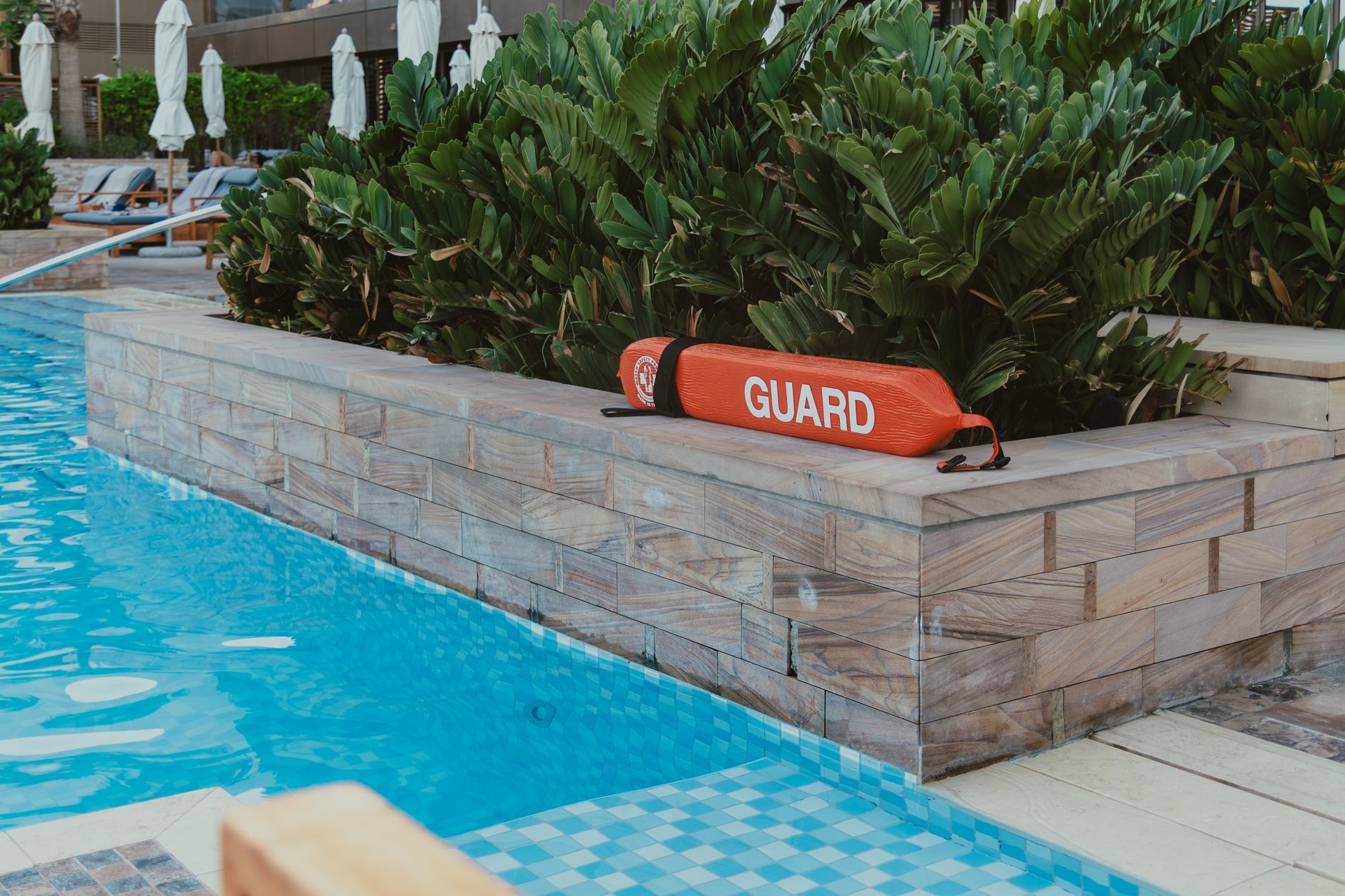
Anti-entrapment drain covers matter because suction can trap hair, limbs, or clothing. CPSC guidance treats compliant drain covers as part of the safety chain, not a substitute for supervision. A reaching pole and life ring should sit near the water, not in a storage closet across the yard.
That same layered logic applies to visible comfort upgrades. Once safety is handled, the next question is how to make the pool easier to enjoy without creating a maintenance mess.
With hazards addressed, attention naturally turns to touches that make swimming more inviting without adding much strain.
Comfort Features That Change How People Use the Pool
A shallow ledge with a pair of bubblers can change how long people stay in the water. So can a spa spillover, a wall bench, or LED lighting that keeps the pool usable after sunset.
Relaxation and lounging features
A pool tanning ledge works well for sunbathing, very young children, and anyone who wants to sit in a few inches of water. Pool bench seating gives swimmers a rest spot without forcing them out of the basin, and a pool spa adds hotter water for soaking after exercise or on cool nights.
These are strong choices for families that want slower, social use. A raised spa with a spillover edge also adds sound, which can soften a hard patio and mask street noise. But the same water movement that feels relaxing also raises maintenance needs.
Play and visual-impact features
Pool water features such as waterfalls, deck jets, splash pads, and bubblers create motion people notice right away. A pool slide or splash zone shifts the pool toward active play, while pool lighting changes the scene after dark. For small yards, compact deck jets and wall scuppers often fit better than a large rock waterfall.
| Feature | Best use | Maintenance load |
|---|---|---|
| Tanning ledge | Lounging, shallow play, sun exposure | Low to moderate |
| Bench seating | Rest, conversation, family use | Low |
| Waterfall | Visual impact, sound, atmosphere | Moderate to high |
| Pool slide | Active play, family entertainment | Moderate |
| LED lighting | Night use, visibility, mood | Low |
Interactive features also change supervision demands. A slide, splash pad, or deep seating shelf pulls attention away from quiet swimming and can crowd the water in a small footprint. That is where cost and upkeep start to matter just as much as style, especially once operating expenses enter the picture.
Those upgrades can transform use, yet they also introduce bills and repairs that eventually shape satisfaction.
Energy, Maintenance, And Repair Costs Add Up
A pool that looks simple on day one can become expensive by month six. Pumps, heaters, filters, lights, and moving water all draw power and need service, and the U.S. Department of Energy points to pumps and heat loss as major cost drivers.
Equipment that lowers operating load
Variable-speed pumps use less electricity than older single-speed units because you can run them at a lower RPM for longer periods. Pool covers cut evaporation, which saves water and reduces heating demand. LED lighting also draws less power than older incandescent or halogen fixtures and lasts longer before replacement.
| Feature | Cost effect | Service impact |
|---|---|---|
| Variable-speed pump | Lowers electricity use through slower circulation cycles | Needs clean baskets and periodic programming checks |
| Pool cover | Reduces evaporation and heat loss | Needs cleaning and safe storage |
| LED lighting | Uses less power than older bulb systems | Needs sealed fixtures and access points |
| Heater | Adds fuel or electricity use | Needs winter care and corrosion checks |
Features that raise repair complexity
A hidden pump pad, a long run of decorative stone, or a complex spillover spa can make service slower and pricier. Saltwater systems can also corrode the wrong metal faster, especially near coastal air, so material compatibility matters from the start.
Put service access in the plan before the water goes in. A pretty feature that blocks the pump lid or light niche turns a small repair into a long job.
Climate matters too. In freeze-prone regions, exposed scuppers, rockwork, and shallow plumbing runs need winterization that matches local conditions, or cracks and leaks show up later. That leaves one last question: what fits a small yard or an existing pool without turning the space into a maintenance headache.
Practical limits matter most when space is tight and every feature has to earn its keep.
Choosing Features For Small Yards And Existing Pools
Compact yards reward restraint. A plunge pool with built-in seating, a cover, and a few lights can work harder than a large shell packed with extras that crowd the deck.
Retrofit options that make sense
Pool lighting, a safety cover, a variable-speed pump, modest landscaping, and a small spa can often be added to an existing pool without rebuilding the shell. A bench seat or tanning ledge may also work in some concrete pools, but the structure has to support the change and local code has to allow it.
- Safety cover: Helps with access control, heat retention, and debris reduction.
- LED lighting: Improves visibility and evening use.
- Variable-speed pump: Cuts energy use and supports gentler circulation.
- Small spa: Adds comfort without taking over the yard.
- Simple shade structure: Extends daytime use without major plumbing work.
Features better reserved for new construction
Built-in waterfalls, large spillover spas, and deep integrated ledges are easier to plan during a new build. Vinyl liner and fiberglass pools offer less flexibility than gunite for heavy structural changes, so retrofit choices need a reality check before any design work starts.
One smart shortcut is to rank your goals before you pick finishes. Safety for children, room for guests, resale appeal, and how much cleaning you can handle will tell you more than a glossy photo ever will. A small, well-planned pool often feels better than a crowded one with too many moving parts.
In the end, restraint usually produces a pool that feels more livable than one packed with extras.
Final Thoughts
The best pool features do one job well and do not fight each other. A safe fence, balanced circulation, a sensible cover, and a few comfort upgrades often beat a crowded wish list, especially when you want lower upkeep and steady day-to-day use.
FAQ
What are the most popular pool features?
LED lighting, bench seating, tanning ledges, waterfalls, covers, and energy-efficient pumps tend to top the list for many homeowners. Families often choose a mix of comfort and safety features instead of one large showpiece.
Which pool features add the most value or enjoyment?
Bench seating, a tanning ledge, a spa, LED lighting, and a cover often deliver strong day-to-day enjoyment. For resale appeal, safety features and easy maintenance usually matter more than dramatic extras that require more upkeep.
What pool features improve safety and usability?
A four-sided fence with self-closing, self-latching gates helps meet safety standards while making everyday use easier. Clear edges and well-lit steps make the pool easier to use after dark.
How much do different pool features typically cost?
Costs vary by pool type, site access, and whether the feature is part of new construction or a retrofit. Simple upgrades such as LED lighting or a variable-speed pump usually cost less than integrated spas, waterfalls, or structural changes like a tanning ledge.
Which pool features are best for small backyards?
In tight yards, a compact spa, LED lighting, a safety cover, and bench seating deliver the most value without crowding the space. A modest water effect or a few well-placed lights can add interest without eating up the deck.
How do pool features affect maintenance and energy use?
Moving water, heaters, slides, and decorative spillovers raise both maintenance and energy use because they add plumbing, pumping demand, and surfaces that collect debris. Variable-speed pumps, pool covers, and LED lighting help keep operating costs lower.