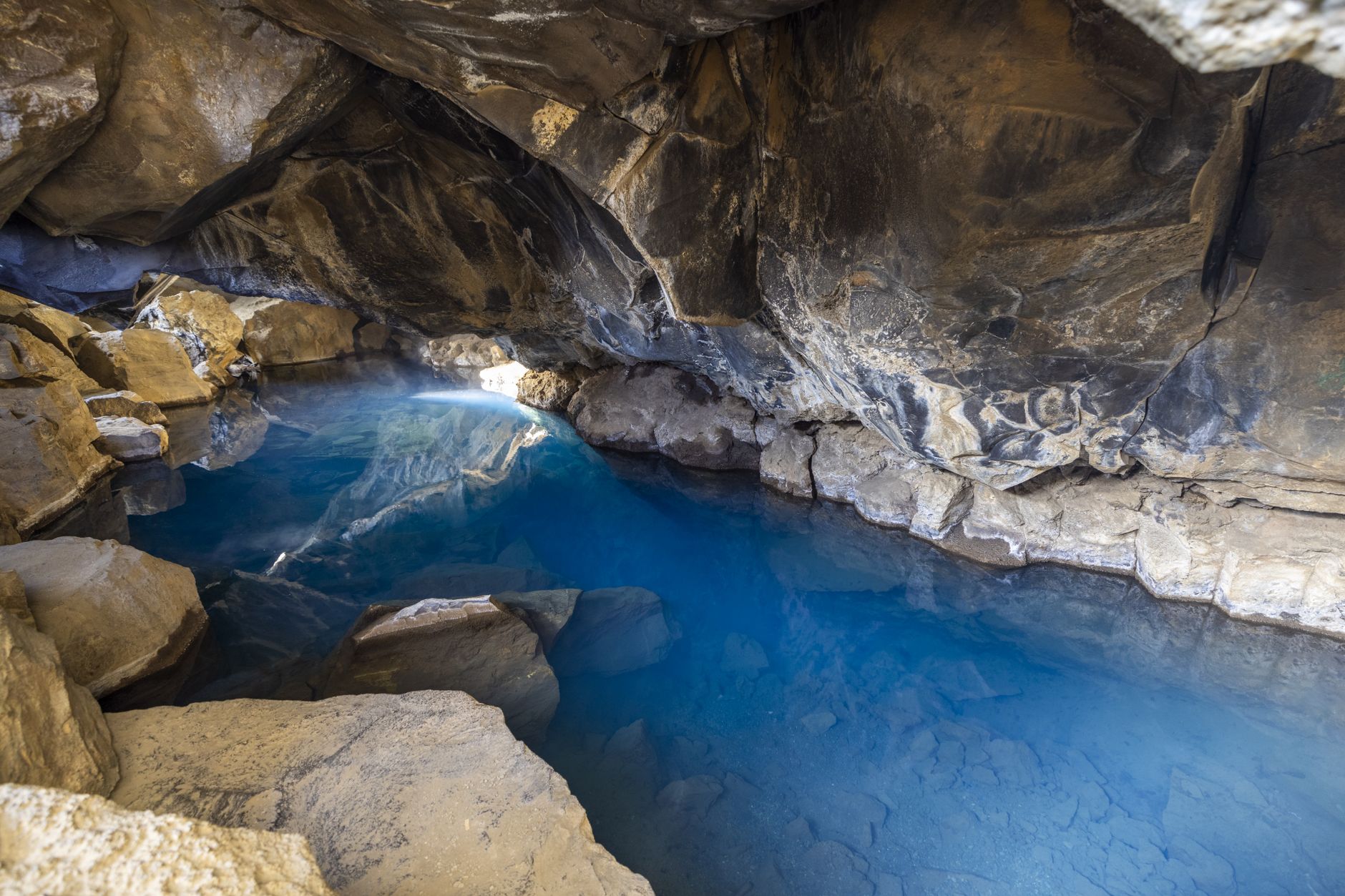

Pool grotto refers to a cave-like recess built into a pool, often finished with rockwork, a waterfall, or a shaded seat you can sit beside or inside. It changes a standard swimming area into a more private, structural feature that needs planning for weight, water flow, and safety.
If you are weighing a custom pool design, a pool remodel, or a larger inground pool, the key issues are space, cost, and upkeep. You need to know how the feature fits the shell, the pump, the filtration system, and the rest of the backyard before you commit.
What A Pool Grotto Adds To The Backyard
Shaded seating, added shelter, and a strong focal point can make the backyard feel planned rather than pieced together. That matters in a backyard where a pool waterfall or rock feature can either elevate the layout or clutter it.
In pool construction, the feature sits between scenery and structure. A waterfall alone moves water over a face; a grotto creates a recess, a pocket, or a passage behind the flow, and that changes circulation, visibility, and support requirements.
Industry groups such as the Pool and Hot Tub Alliance treat grottos as luxury elements because they affect how you use the pool, not just how it looks. The payoff is a resort-style pool effect, but the feature takes more room, labor, and materials than a simple rock accent.
Cave-Like Space Versus Rock Accent
A rock stack at the edge of the water is surface dressing. A grotto is a void or alcove that must be framed, waterproofed, and supported before the finish goes on.
That difference is why a pool grotto often feels more like a small outdoor room than a decoration. The shape can hold a bench, block direct sun, and create privacy right at the waterline.
Where It Fits Best
Larger residential pools and leisure-focused layouts give you the room this feature needs. Freeform pools, lagoon shapes, and custom backyard projects usually leave more space for rockwork, circulation lines, and safe access around the entry.
In a compact yard, the footprint can crowd everything else fast. Once you factor in the shell, the pool pump, and the waterfall structure, layout matters more than style, and that is where the real decisions begin.
That same focus on structure sets the stage for choices that determine whether the space feels dramatic or restrained.
Design Choices That Shape The Look And Feel
Stone choice changes weight, texture, color, and how the feature holds up in sun and spray. Natural stone reads rugged and heavy, while engineered rock systems can be shaped with more control and less mass.
Scale changes the mood just as much. A low opening with a shallow seat feels relaxed; a deeper recess with a taller roof feels more theatrical. Water movement, planting, and pool lighting finish the effect, and the best designs make those elements read as one composition.
| Material | Look and use | Build tradeoff |
|---|---|---|
| Natural stone | Strong texture and a heavy, organic feel | Higher weight and more demanding support planning |
| Shotcrete sculpting | Shaped directly into the shell for custom forms | Needs skilled placement and careful waterproofing |
| GFRC panels | Lighter formed rock surfaces with detailed edges | Requires good attachment and joint control |
| Concrete shell with finish coat | Flexible for custom pool rock feature layouts | Depends on workmanship at every layer |
Good rockwork should belong to the yard, not sit on top of it. That means the grotto, nearby deck, and planting beds need to share the same visual language if you want the feature to feel intentional.
Equipment makers such as Hayward Pool Products also point to flow and light as design tools. A lit waterfall edge and a bright recess change the experience at dusk, and they help you see surfaces that would otherwise disappear into shadow.
Shape, Seating, And Waterfall Integration
Entry height changes how you use the space. A low opening invites lounging, while a taller opening feels more enclosed and asks for stronger support and better visibility.
Seating ledges work best when water falls beside the seat rather than directly across it. That keeps spray from turning the area into a slick bench and makes conversation easier.
Once comfort is sorted, the conversation turns to framing the feature without turning it into a hazard.
What It Takes To Build One Safely
The shell has to carry rockwork, water, and sometimes a partial overhang. That is why structural engineering, rebar placement, gunite or shotcrete, and waterproofing all need to be set before the decorative finish starts.
University of Georgia Marine Extension and Georgia Sea Grant materials on feature-heavy pools make the same point in plain terms: rock additions can trap water, block access, and create maintenance problems when drainage is an afterthought.
Structure, Plumbing, And Waterproofing
Reinforced shotcrete or gunite gives custom builders the base shape. From there, plumbing lines feed the waterfall grotto or jets, while a waterproofing membrane or coating protects joints, ledges, and penetrations from seepage.
A poor seam between the rockwork and the shell can turn into a leak path. Water works into hairline gaps through repeated wet-dry cycles, which is why detailed sealing matters more than the surface finish you see first.
Circulation, Lighting, And Drainage
Water movement inside the recess needs its own plan. Returns, suction placement, and overflow paths keep the shaded interior from becoming a dead zone where debris settles and algae take hold.
Lighting belongs in the build, not as an afterthought. A dark alcove beside reflective water can hide steps, edges, and entry points, while a waterproof fixture helps with both use and inspection.
Tip: Ask for brush access to every surface before the final finish goes on. A grotto that looks seamless but cannot be reached with a pole becomes a cleaning headache fast.
Retrofit Limits In Existing Pools
Retrofitting an older gunite or shotcrete pool can be harder than starting from scratch. Site access, shell thickness, equipment room space, and local code all shape what is realistic.
In many pool remodel projects, part of the deck or shell needs removal before new reinforcement can go in. That raises labor, extends downtime, and can force changes to the pool pump, filtration system, or electrical runs.
Those hidden upgrades explain why the price climbs quickly before the first decorative stone is even set.
The Real Cost Behind A Pool Grotto
A small decorative cave feature can sit in a very different budget band from a full new-build resort feature. The price rises with stonework, labor hours, engineering, plumbing, lighting, and how much of the pool has to be opened or reworked.
The Spruce notes that custom rock features with caves, slides, and waterfalls can move total project cost sharply upward because every layer is custom. You are not buying a prefab add-on; you are funding a complex piece of pool construction.
| Project type | Typical scope | Main cost drivers |
|---|---|---|
| New-build grotto | Designed with the pool shell from day one | Engineering, shell shaping, rockwork, plumbing, lighting |
| Retrofit grotto | Added to an existing inground pool | Demolition, access limits, reinforcement, utility rerouting |
| Small decorative cave feature | Shallow recess or partial rock alcove | Finish work, seat shaping, modest lighting, circulation tweaks |
A $20,000 inground pool budget leaves little room for a major grotto once excavation, shell, equipment, decking, and finish are covered. That amount can fit a basic pool in some markets, but the feature usually competes with the core build instead of sitting outside it.
Guidance from the National Association of Home Builders points to the same economics: more trades, more coordination, and more room for error. A larger budget can absorb a water feature; a tighter one usually cannot without shrinking the rest of the project.
What Moves Price Fast
Stone selection can swing labor time because heavy pieces demand more support and more handling. Lighting adds wiring and sealing steps, while pump upgrades may be needed to keep the waterfall moving and the recess clean.
With costs rising, upkeep becomes the real test of whether the feature stays beautiful or turns troublesome.
- Material weight Heavy rock and thick shell work add structural labor.
- Water feature size Taller falls and wider openings need more plumbing.
- Electrical work Interior lighting adds bonding, wiring, and fixture sealing.
- Retrofit access Tight yards raise demolition and equipment-handling time.
- Finish quality Cleaner joints and better texture work take more skilled labor.
Maintenance, Safety, And The Problems Owners Miss
Uneven rock surfaces get slick faster than plain plaster because spray, shade, and mineral buildup all gather in one place. Visibility also drops inside a recess, which makes the feature harder to monitor from a patio or pool deck.
National Park Service pool-safety guidance around aquatic features centers on barriers, supervision, and fast access to rescue tools. Those same concerns apply here, only the uneven edges and narrow openings raise the stakes.
Slip, Visibility, And Access Control
Rock steps and ledges need textured surfaces and clear entry paths. A dark opening with no clear edge line can hide depth changes, and that creates trouble for both children and adults.
Access control matters even in private yards. A grotto should not invite unsupervised hiding, and it should never trap a person behind a curtain of water with no obvious way out.
Warning: A shaded cavity with weak light and a poor sightline can hide standing water and loose debris. Put inspection access into the design, or the feature becomes harder to trust over time.
Water Quality And Hidden Surfaces
Poor circulation inside the recess lets fine debris settle and biofilm form along seams. The CDC links recreational water problems to weak maintenance and low sanitizer effectiveness, and shaded water features are classic trouble spots for both.
Stone, mortar, and sealant also age in damp conditions. Hairline cracks, soft joints, and loose edges show up first at the waterline, where constant wet-dry stress works the hardest.
Long-Term Upkeep
Brush the recess, inspect lighting seals, and watch for white mineral crust at the joints. Those small clues tell you more about the structure than the waterfall ever will.
Pool and Hot Tub Alliance maintenance resources stress routine checks of decorative features because hidden flow can conceal defects. A bright, clean grotto feels effortless; a neglected one can stain the whole pool experience.
Because even attractive water features need constant attention, the question becomes whether the investment fits the pool at all.
When A Grotto Makes Sense In A Pool Project
The right time is a larger custom build where ambiance matters as much as swim room. Guidance from the National Association of REALTORS treats this kind of feature as a luxury add-on, which means the value depends on local taste, upkeep costs, and the quality of the rest of the yard.
HGTV and River Pools point toward the same pattern: grottos work best in leisure-focused designs, not in simple family pools that need every square foot for laps or play. A waterfall, slide, or spa can deliver some of the same enjoyment without the same structural burden.
New Build Versus Remodel
A new build gives you the cleanest path because the shell, plumbing, and grading can all be planned together. That lowers the chance of awkward sightlines, weak circulation, or difficult access points.
A remodel only makes sense when the existing pool already has the size, depth, and utility capacity to absorb the change. Otherwise, the project can turn into a demolition job with a decorative payoff that feels small next to the disruption.
Budget, Space, And Lifestyle Fit
Use a pool grotto when the backyard has room for a feature zone, not just a water basin. The space around it matters as much as the structure itself because you need circulation, seating, and safe movement around the edge.
Skip it when the pool budget already strains the essentials. A clean shell, sound pool filtration system, and durable finish usually deliver more day-to-day value than a cramped custom rock feature that fights the site.
That tradeoff is what ultimately decides whether the feature earns its place in the backyard.
- Choose it when luxury ambiance and shaded seating matter most.
- Skip it when the yard is tight and access is limited.
- Plan it early when starting a new custom pool.
- Reconsider it during a remodel that needs major shell work.
- Pair it with strong circulation, lighting, and easy cleaning access.
Final Thoughts
After the last tile is set, the most successful versions feel like part of the structure instead of an afterthought. The projects that age well are the ones that plan for support, circulation, lighting, and access before the rockwork starts.
FAQ
What is a grotto in a pool?
Rockwork, a waterfall, or a tucked-away seat usually turns that integrated recess into a small cave-like space. It changes the pool from a simple swimming space into a more sheltered, resort-style feature.
How much does it cost to add a grotto to a pool?
The cost depends on whether you are starting with a new build, retrofitting an existing pool, or adding a smaller decorative cave feature. Stonework, labor, engineering, plumbing, lighting, and access all move the budget quickly, especially in a retrofit.
How do you build a grotto for a pool?
The process starts with structural design, then moves through reinforced shotcrete or gunite, plumbing for the waterfall or jets, waterproofing, and finally the rock or sculpted finish. Safe drainage, circulation, and lighting need to be part of the plan from day one.
Can a grotto be added to an existing inground pool?
Yes, but the retrofit can be far more difficult than a new build. Shell thickness, access, code requirements, and utility rerouting can all limit what is realistic, and some projects require deck or shell demolition before new reinforcement can go in.
What materials are best for a pool grotto?
Natural stone gives a heavy, organic look, while shotcrete, gunite, and GFRC panels allow more control over shape and weight. The best choice depends on support needs, attachment details, waterproofing, and how much custom shaping the project requires.
How much space does a pool grotto require?
The amount of space depends on the opening height, seating depth, waterfall width, and the room needed for circulation and access around the feature. Larger residential pools handle it best, while compact yards can run out of usable layout quickly.