Don't miss our holiday offer - up to 50% OFF!

Pool Safety: Layers That Prevent Drowning at Home

A locked gate, a practiced reach tool, and a working alarm can keep one small mistake from becoming a drowning at home. Because a water emergency can turn silent in under a minute, the safest home setup uses more than one layer at the same time.
That matters for families, guests, and non-swimmers alike. You need practical steps that fit daily routines, work in a backyard, and hold up when attention slips for just a few seconds.
Why Drowning Prevention for Pools Depends On Layers of Protection
One skill never covers every risk. A strong swimmer can cramp, panic, hit cold water, or slip near a step, and a child can disappear from sight in the time it takes to answer a text.
That is why pool safety works best as a system. Supervision, a pool fence, self-latching gate, alarms, rescue tools, and CPR all cover different failure points, so one weak link does not decide the outcome.
Swimming Skill Reduces Risk But Does Not Remove It
Swimming ability helps, but it does not make anyone flood-proof. Fatigue, panic, and shallow-water hazards still matter, especially around spas, ledges, and crowded decks.
Child pool safety depends on that reality. A child who has taken lessons still needs access control and close watching because a short lapse can be enough to cause trouble.
Redundant Protection Matches Public Safety Guidance
Overlapping defenses are stronger than any single device. A four-sided barrier slows entry, an alarm adds notice, and an adult watcher can respond in real time if something still goes wrong.
That approach aligns with guidance from the Consumer Product Safety Commission (CPSC), the American Red Cross, and the CDC, which all treat layers of protection as the right way to reduce drowning risk.
Once the risk is layered, supervision becomes the first thing to tighten at home.
That layered approach works only when an adult keeps eyes on the water without distraction.
Supervision That Actually Works Around Water
Focused supervision is the active layer that catches problems the fastest. A chair on the patio does not count, because drowning is often silent and easy to miss.
Phones, grilling, and side conversations break attention. The watcher needs one job, one view of the water, and a clean handoff when another adult takes over.
Young Children Need Touch-Range Attention
Toddlers and preschoolers need an adult close enough to touch them near any water. Hearing distance is not enough when a child can slip under at a step or around a drain ledge.
The American Red Cross and Nationwide Children’s Hospital both stress constant watching for young children because swim ability alone gives a false sense of safety. A child can tire, panic, or slip without warning.
Groups Need A Clear Watch Handoff
Pool parties need one responsible watcher at all times. The next adult should say yes, step in, and take over before the first adult walks away.
Short watch shifts work better than vague shared responsibility. That keeps attention sharp and reduces the common failure where everyone assumes someone else is watching.
And once supervision is set, the physical barrier should stop entry before anyone reaches the water.
Even attentive supervision has limits, which is why a secure perimeter matters before the pool is reached.
Fences, Gates, And Alarms In The Right Order
A fence blocks access first, which is why a barrier comes before a warning system. The CPSC favors four-sided fencing because an alarm only reacts after someone has already gotten close.
Self-closing gates and self-latching gates keep that barrier working after everyday use. If a gate is propped open, the pool area is no longer protected in the way a family expects.
A Four-Sided Fence Stops Entry
The strongest home setup uses a pool fence on all four sides with no easy climb points and no gaps large enough for a child to squeeze through. That design gives you time by stopping wandering children before they reach the water.
That timing matters more than noise. A locked barrier prevents access, while an alarm only tells you that access has already happened.
Alarms Add Warning, Not Control
Door alarms, gate alarms, surface alarms, and underwater alarms can help, but they are backup alerts. They do not replace a fence, and they do not supervise the water for you.
Use alarms as a second layer after the barrier is already in place. That sequence matches CPSC guidance and gives you both delay and notice during the few seconds that matter most.
| Layer | What It Does | What It Cannot Do |
|---|---|---|
| Four-sided fence | Blocks access from the house, yard, and neighboring areas. | It cannot replace supervision or rescue readiness. |
| Self-latching gate | Returns shut after use without relying on memory. | It fails when propped open or damaged. |
| Pool alarm | Signals entry or movement near water. | It alerts only after access has happened. |
| Attentive adult | Detects trouble fast and responds in real time. | It cannot work while distracted elsewhere. |
That order matters because a warning after entry is not the same as a barrier before entry. Once the perimeter is set, the next step is making the pool area ready for an emergency.
A locked boundary delays trouble, but rescue tools nearby can still make the difference in minutes.
The Safety Gear Every Pool Area Should Have Nearby
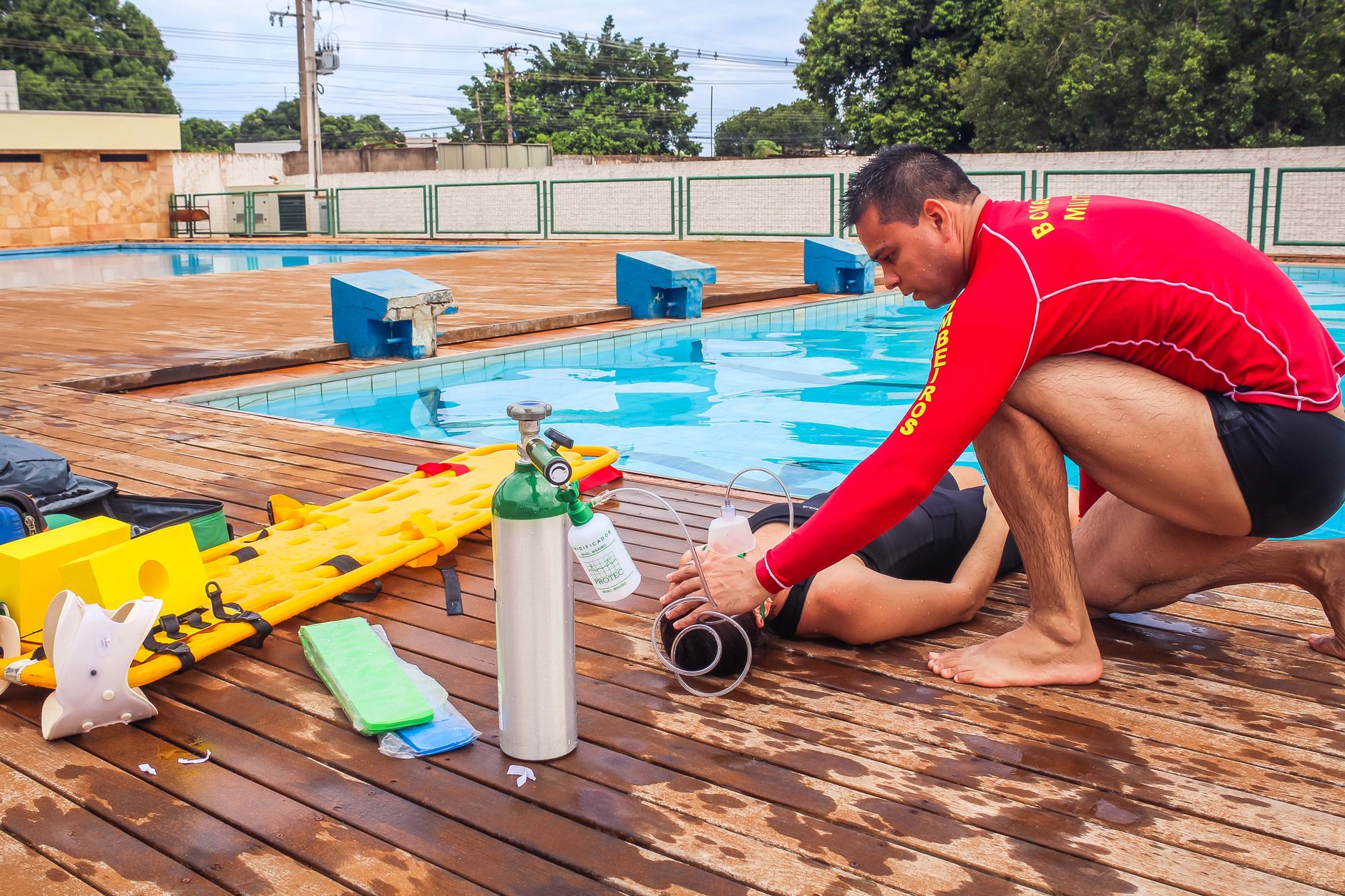
Rescue gear should sit within arm’s reach of the water. A charged phone, a reaching pole, and a throw device help you act from land instead of jumping in and becoming a second victim.
The CDC and CPSC both support practical rescue tools such as a reaching pole, a shepherd’s crook, and a ring buoy or life ring. Those tools let you pull, reach, or throw while someone else calls emergency services.
Rescue Gear Belongs In Sight
- Portable phone Keep it close to the pool so 911 calls do not get delayed.
- Reaching pole Use it to pull a distressed person toward the edge from dry ground.
- Shepherd’s crook Hook clothing or an arm without entering the water.
- Ring buoy Throw it to someone who can still grab a float.
- AED access Know where the device is and who can bring it fast.
A life jacket has a place, but not every place. It helps in boating, docks, open water, and some closely watched pool activities, yet it never replaces adult supervision or a closed barrier.
Drain Safety Matters Too
Drain entrapment is a separate hazard from drowning. Broken, missing, or loose covers can trap hair, limbs, or body parts against suction fittings or spa outlets.
That risk connects to the Virginia Graeme Baker Pool and Spa Safety Act and standards such as ANSI/APSP/ICC-16, which focus on anti-entrapment design. If a cover is damaged, the spa or pool should stay closed until the part is repaired and compliant.
With rescue gear ready, the next layer is the house rules that prevent risky behavior in the first place.
When the right gear is within reach, clear expectations keep children from turning brief access into danger.
House Rules That Reduce Risk Before Anyone Gets In
Clear pool safety rules stop a lot of trouble before the water comes into play. The best ones are short, enforced every time, and explained before feet touch the deck.
Start with entry rules, then add behavior rules. A child who hears the limits early is less likely to treat a slick deck like a playground, and guests need the same standard from the moment they arrive.
Entry Rules Need Daily Use
Close doors that lead to the pool area as part of the normal house routine, not only during parties. Gates, latches, and alarms work best when people stop treating them like background fixtures.
Remove toys from the water and deck after swim time. A floating ball can draw a toddler back to the edge, and a pile of noodles can turn a locked area into a temptation.
Pool Behavior Needs Simple Limits
- No running Wet concrete and tile turn quick steps into falls.
- No shallow dives Head and neck injuries happen in low water.
- No solo swimming A second person gives you a faster rescue path.
- No rough play Horseplay pushes tired swimmers under the surface.
- No alcohol around children Judgment and reaction time drop after drinking.
Alcohol raises drowning risk for adults and for children nearby because it slows decisions and weakens rescue choices. That is why pool safety for families has to include the adults, not just the kids.
Guest Supervision Needs Assignment
Guests often assume another adult has the watch, and that assumption gets people hurt. Assign one responsible person to supervise every water session, then make the role change visible when another adult takes over.
That habit turns vague help into actual oversight. Once the house rules are in place, the last layer is knowing exactly what to do during the first frantic minutes.
Rules reduce risk, yet a calm response plan is what turns panic into useful action.
Emergency Steps That Buy Time In The First Minutes
The first minute after a water rescue can decide the rest of the day. The CDC says the priority is to get help, remove the person from danger only when it is safe, and start CPR fast when breathing is absent.
Those steps work because drowning cuts off oxygen. The brain and heart start to suffer quickly, so hesitation matters more than perfect technique.
The First Three Actions Come In Order
- Alert help Call emergency services right away and send someone else for the AED.
- Reach without entering Use a pole, buoy, or crook before stepping into the water.
- Start CPR Begin chest compressions and rescue breaths when the person is not breathing normally.
- Use the AED Follow the device prompts as soon as it arrives.
- Keep going Continue until professional responders take over or the person revives.
Rescue breaths matter in drowning because the main problem is oxygen loss, not just heart rhythm. The American Red Cross teaches that early ventilations can buy time while emergency teams are on the way.
Practice Makes The Response Faster
CPR training for parents, babysitters, grandparents, and older teens turns panic into motion. A home with several trained adults is stronger than one that depends on a single person who happens to be nearby.
Run a short family drill at the start of swim season. Use the same words each time, assign the same roles, and keep the phone, rescue gear, and gate keys in the same place so nobody wastes seconds searching.
That practice belongs in pool safety, not outside it. The stronger your emergency response, the more room every other layer has to do its job.
Those first minutes matter most, and the key lessons are easier to keep when families rehearse them together.
What To Remember For Family Pool Safety
it at home works like stacked doors, not one lock. A child, guest, or weak swimmer stays safer when supervision, a four-sided fence, a self-latching gate, rescue gear, and CPR training all line up at once.
Know the difference between a barrier, a backup alert, and active supervision. A pool cover or alarm can help, but neither one replaces a fence, a closed gate, or an attentive adult.
FAQ
What are the most important pool safety rules?
The strongest it rules are no swimming without an attentive adult, no running, no diving in shallow water, and no rough play. Keep doors and gates closed, store rescue gear within reach, and make sure every guest hears the rules before entering the water.
How do you keep children safe around a pool?
Keep children out of the water without active adult supervision, use a four-sided fence with a self-closing, self-latching gate, and keep toys off the deck after swim time. For toddlers and preschoolers, stay within arm’s reach and treat every water break as a supervised moment.
Does knowing how to swim prevent drowning?
No. Swim skills lower risk, but fatigue, panic, cold water, cramps, and medical events can still lead to trouble. Children and adults alike need barriers, watching, and emergency readiness even when they know basic strokes.
What kind of fence is recommended for pool safety?
A four-sided isolation fence is the standard recommendation because it separates the pool from the house and yard. The gate should close and latch on its own so a lapse in memory does not leave the water area open.
Do I need a pool alarm or door alarm?
Alarms help as a backup layer, especially door alarms and gate alarms that alert you to entry. They do not replace a fence, a self-latching gate, or attentive adult supervision, so treat them as extra warning rather than primary protection.
What should be included in a pool safety checklist?
A strong checklist includes a four-sided fence, self-closing gate, working alarms, rescue equipment, a charged phone, life jackets for boating, drain cover checks, and CPR-trained adults. Add house rules for entry, diving, rough play, guest supervision, and alcohol restrictions near the pool.