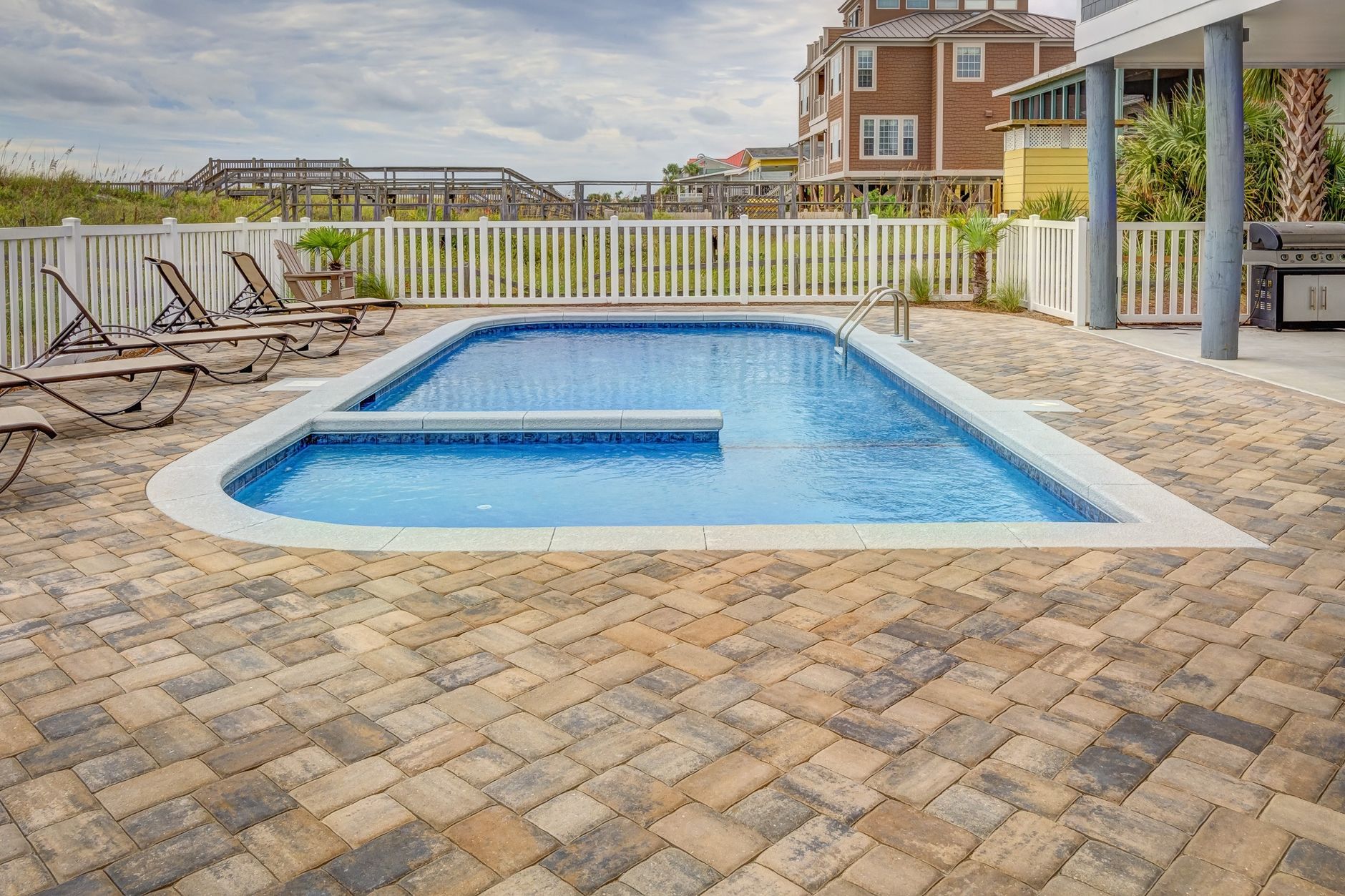

A preformed shell can be craned into place in a single day, then leveled, plumbed, and backfilled in an excavated yard. The gel coat surface is smooth, which helps slow algae buildup and reduces scrubbing, but your shape choices stay fixed.
You are weighing speed, upkeep, site access, and long-term value. The details below help you judge whether a fiberglass pool fits your yard, your budget, and your plans better than other pool types.
Why Fiberglass Pools Appeal To Homeowners
That factory-built shell shortens the work because it arrives cured and ready for placement. The faster timeline is a major reason many fiberglass pool installation projects finish sooner than a poured concrete build.
The smooth gelcoat has fewer pores, so brushing takes less effort and algae has fewer places to grip. That matters after heavy rain, during humid stretches, and in yards where trees drop leaves every week.
You get faster installation and easier upkeep, then give up wide-open design freedom. A custom spa ledge, a deep diving end, or a fully tailored outline points you toward concrete, while fiberglass favors fixed molds and a cleaner handoff from factory to yard.
What The Factory Shell Changes
The shell arrives as a rigid unit, so your crew spends more time on excavation, plumbing, electrical work, and decking than on forming the pool itself. That shift is a big reason the pool installation process is shorter and easier to plan.
Because the finish is built into the shell, you skip plaster curing and liner stretching. The surface feels smooth from day one, and that often changes how quickly you can start enjoying the space.
The Main Tradeoff You Feel Later
Fixed molds narrow your choices. A 12-by-26-foot shell may fit a slim lot with room for a deck, while a wider yard can still run into delivery route limits and equipment access issues.
That leaves you with a clear split between convenience and design freedom. The split becomes real on your property line, where the shell either fits the site or runs into the next problem: getting it in place.
That site fit determines everything else, especially the sequence of equipment, access, and heavy-lift coordination.
How Installation Really Works On Site
That fit depends on the yard, because the shell can sit correctly only after the area is cut, graded, and cleared for delivery. North Carolina State University Extension notes that base prep, drainage, and compacted fill matter as much as the shell itself.
Your crew starts with excavation, then sets a stable base of sand or gravel, runs plumbing, checks electrical routes, and lowers the shell with a crane or other lifting gear. Water goes in while backfill goes in, so pressure stays balanced on both sides of the wall.
Groundwater can change the whole job. A high water table, poor drainage, or an empty shell can create upward pressure that lifts, tilts, or warps the structure before it is fully set.
The Sequence That Keeps The Shell Stable
- Excavate the hole. Crews dig to the exact shape and depth, leaving room for base material and deck edges.
- Prepare the base. A compacted sand or gravel bed gives the shell even support and reduces voids.
- Set plumbing and conduit. Lines for circulation, drains, and lights run before the shell locks into place.
- Lower the shell. Crane placement or another lift method drops the unit into the opening with level checks at each corner.
- Backfill in lifts. Fill goes in layers while water rises inside, which keeps inward and outward forces in balance.
- Finish the deck. Coping, decking, and drainage tie the pool to the rest of your yard.
Why Access Can Decide The Project
A shell has to travel from truck to hole without snagging fences, tree limbs, wires, or rooflines. The delivery route matters as much as the pit itself, and pool delivery and crane placement can rule out a site that looks open on paper.
A compact suburban lot with a side-yard easement may work fine. A steep yard with narrow gates and no crane pad can turn the same shell into a poor fit, even before digging starts.
Groundwater control deserves as much attention as pool shape. Hydrostatic relief valves, drainage stone, and proper grading help keep a partially filled shell from floating or twisting under soil pressure.
A Short Case From The Field
A homeowner with a sloped lot and clay soil chose a shell that fit the yard, then spent extra on drainage and fill compaction. The shell itself went in cleanly, but the real success came from keeping water out of the excavated area after heavy rain.
That kind of site work changes the final result more than color chips or brochure photos. Once the shell is stable, the next question turns to money over the full ownership run.
Once installation details settle, lifetime expense becomes the real measure of value for many owners.
The Costs That Matter Beyond The Sticker Price
Your quoted build price is only the opening line. Energy, chemicals, utilities, and repairs all shape pool maintenance costs over time, and those expenses do not show up in the first estimate.
Fiberglass pool costs can land above a vinyl liner project on day one, but below a custom concrete build in many markets. The long view changes the comparison because resurfacing and liner replacement happen on different clocks for each pool type.
Site access can push the number up fast. Crane placement, haul distance, drainage fixes, utility relocation, and landscape restoration can matter as much as the shell price itself.
| Pool Type | Front-End Work | Long-Run Expense Drivers |
|---|---|---|
| Fiberglass | Excavation, shell delivery, crane set, plumbing, backfill | Filtration, sanitation, chemistry, equipment replacement, site drainage care |
| Vinyl liner | Excavation, wall system, liner fit, plumbing, backfill | Liner replacement, puncture repairs, water balance, equipment upkeep |
| Concrete | Forming, steel, gunite or shotcrete, curing, plaster finish | Plaster renewal, crack repair, chemistry control, higher energy use in some setups |
Where Fiberglass Saves Over Time
The smooth finish cuts brushing time and lowers the odds of rough-surface staining. That can mean fewer labor hours, less aggressive scrubbing, and less pressure to resurface the interior.
Vinyl liners need periodic replacement, and concrete surfaces can need replastering after years of wear. A well-kept pool can also support curb appeal when you stay put or sell later, which is one reason total ownership value matters more than the first bid.
Where The Bill Grows
A difficult lot can erase part of the savings. Rock excavation, drainage tile, soil stabilization, and extra equipment access often cost more than a standard dig in open ground.
Energy use matters too. A cover that cuts evaporation and heat loss does more for your operating expense than a shiny shell does, because water and heat leave the surface fast in open air.
Those ongoing expenses are only part of the story, because daily care and balance quickly take over.
Maintenance And Water Chemistry In Everyday Use
Fiberglass does not mean hands-off. You still test water, run filtration, and keep sanitation in range so the surface and equipment stay in good shape.
The gelcoat surface is nonporous, so dirt and algae cling less than they do on rough plaster. That makes brushing easier and can reduce the stubborn buildup that shows up as cloudy spots or a green film along the waterline.
Balanced chemistry protects more than the shell. Stable water helps guard the heater, pump seals, and metal parts around the system, so small drifts do not turn into bigger repair bills.
What To Check Each Week
- pH range. Keep it steady so water stays comfortable and surface wear stays down.
- Sanitizer level. Keep chlorine or another sanitizer in the target band for clear water.
- Total alkalinity. Keep it stable so pH does not swing hard after rain or heavy use.
- Circulation flow. Run the pump long enough for skimming, mixing, and filtration.
- Waterline check. Wipe off scale, sunscreen film, and dust before they set up.
Why The Surface Still Needs Care
Water that runs too acidic can attack metal fittings and heater parts, even when the shell itself looks fine. Low pH also pushes calcium out of balance, which can leave scale or haze near the waterline.
You may watch this play out in service calls more than once: the pool looks clean, yet a small chemistry drift has already started dulling the finish. The surface holds up, but the equipment around it pays the price.
Even a well-kept surface can’t eliminate risk, which is why barriers and code compliance matter so much.
Salt systems work well with this pool type, but salt does not replace water care. High salt plus poor bonding or weak chemistry can still corrode ladders, lights, and heater parts.
Safety Standards That Apply To Every Residential Pool
The shell material changes the finish, not the safety rules. Layered protection still matters around any residential pool, no matter whether the surface is fiberglass, vinyl, or concrete.
Fencing, self-latching gates, alarms, and compliant drain covers matter whether your pool is fiberglass, vinyl, or concrete. The Virginia Graeme Baker Pool and Spa Safety Act addresses entrapment risks tied to circulation systems, not shell material.
Constant supervision matters more than any gadget. A barrier slows access, an alarm adds notice, and rescue readiness gives you a plan when seconds count.
The Protection Layers That Matter Most
- Barrier fence. Use a fence tall enough to block easy entry from the yard or side gate.
- Self-latching gate. Keep latches above a child’s reach and make sure the gate closes on its own.
- Pool alarm. Add an alarm that alerts you to unexpected entry or water disturbance.
- Drain cover. Keep circulation covers compliant with local code and the system design.
- Reach tools. Keep a life ring or shepherd’s hook near the water for fast aid.
Rescue Readiness At The Pool Edge
Basic rescue gear belongs within reach of the deck, not in the garage. A charged phone, clear house rules, and a direct line of sight from the kitchen or patio cut delays that turn into emergencies.
Your child supervision stays active even with every barrier in place. That rule does not change with shell type, and it never loses weight because the finish feels smooth underfoot.
Compliance reduces danger, but the right shell still depends on matching shape, depth, and build quality to the yard.
Choosing The Right Shape, Size, And Shell Quality
Fixed molds limit design freedom, so the best shell is the one that fits your lot, your use, and your access route. UF IFAS Extension guidance on residential pools ties layout to site conditions, drainage, and usable space.
Shell quality comes from the material stack as much as from the mold. Vinylester resin handles harsher chemistry better than basic polyester systems, gelcoat quality shapes stain resistance, and laminate thickness affects stiffness under soil load.
PHTA educational materials also tie shape to function. Straight-sided models give you cleaner swim lanes and pair better with automatic covers, while curves can soften the look but eat into usable deck space.
Shell Quality Signs That Matter
| Quality Check | What You Look For | Why It Matters |
|---|---|---|
| Resin system | Vinylester in higher-stress builds | Better chemical and blister resistance |
| Gelcoat finish | Even color, smooth touch, clean waterline edge | Stain resistance and surface appearance |
| Laminate thickness | Consistent shell wall and rib structure | Stiffness against flex and soil movement |
| Factory control | Clean layup, even curing, straight edges | Lower chance of print-through and cosmetic flaws |
A Practical Decision Checklist
- Measure access. Confirm gate width, overhead clearance, and crane staging room.
- Map drainage. Look for runoff paths, soft ground, and standing water after rain.
- Match use. Pick a shape that fits laps, play, lounging, or cover use.
- Check build quality. Ask about resin, gelcoat, laminate, and factory controls.
- Budget for site work. Include hauling, restoration, and any grading or dewatering.
- Plan upkeep. Tie your choice to chemistry habits and filtration routine, not just the shell.
For a narrow yard, a modest one-piece shell with a clear crane path can beat a larger custom idea that never gets in the ground. For a wide property with room for shaping and a long run of deck, concrete still keeps the edge on customization, while fiberglass pools win on speed and simpler upkeep.
That tradeoff leaves the final decision balancing flexibility against convenience, with each option serving a different kind of owner.
Wrap Up
The shell matters, but the site matters just as much. You get the best result when the mold fits the yard, the drainage is sound, and the chemistry stays steady after the project is done. That mix decides whether your pool feels easy for years or turns into a steady source of repairs.
FAQ
What is a fiberglass pool?
A preformed shell arrives from the factory ready to be lowered into an excavated yard, then leveled, plumbed, and backfilled. The gel coat surface is smooth, which helps slow algae buildup and reduces scrubbing.
How long do fiberglass pools last?
A fiberglass pool can last for many years when the shell is installed well and the water stays balanced. Long life depends on site drainage, proper backfill, and steady pool maintenance, not just the shell itself.
How much does a fiberglass pool cost?
Fiberglass pool costs vary with shell size, delivery route, crane placement, soil, drainage, plumbing, and deck work. A simple site can stay near the quoted package, while a difficult lot can push the total much higher.
Are fiberglass pools better than concrete or vinyl liner pools?
For many homeowners, the shorter install timeline and simpler maintenance make this option a stronger fit than concrete or vinyl liner alternatives. Concrete gives you the most design freedom, and vinyl liner pools can cost less up front, so the best choice depends on your yard, budget, and long-term plans.
How are fiberglass pools installed?
Fiberglass pool installation starts with excavation, then a compacted base, plumbing and electrical work, crane placement, backfill, and deck finishing. Water goes in while backfill goes in so pressure stays balanced on both sides of the shell.
What maintenance do fiberglass pools require?
Fiberglass pool maintenance still includes testing pH, sanitizer, alkalinity, and calcium hardness, along with filtration and routine brushing. The smooth gelcoat makes cleaning easier, but it does not replace water care.