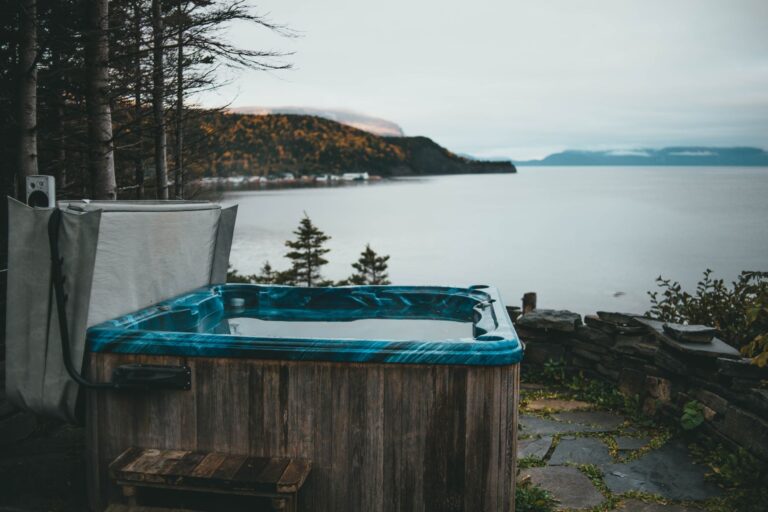

A typical spa bill includes electricity, water-care, and upkeep expenses that keep the water warm, filtered, and ready. A covered tub in mild weather can stay modest, while the same model on a windy patio can use far more power overnight.
You can estimate your hot tub running cost with your local rate, the heater draw, and how often the circulation pump runs. That helps you compare climates, seasons, and usage patterns before the bill surprises you.
The Main Forces Behind Every Bill
Electricity drives the bill, not the shell itself. The heater, circulation pump, and jet pump all draw power, but standby heat loss usually does the most damage over time.
Heat escapes through the cover, cabinet, and plumbing while the spa sits idle, so insulation and cover quality matter as much as runtime. The U.S. Department of Energy ties spa cost to water temperature, insulation quality, cover use, and local climate, and PG&E also points to wind exposure and frequent cover removal as major drivers.
Heating Uses The Most Power
The hot tub heater is usually the largest active load. A common electric resistance unit runs at 3 to 6 kilowatts, so each hour of heavy recovery can use several kilowatt-hours before you count pump power.
The circulation pump adds a smaller, steady draw, but that draw adds up over 30 days. Jet use raises electricity use during a soak, yet that burst is often smaller than the energy needed to keep 100 to 400 gallons at set temperature.
Heat Loss Drives The Real Total
Standby heat loss is the quiet cost you pay while the spa sits closed. Warm water loses energy through evaporation from the surface, heat leakage through the shell, and gaps around plumbing and access panels.
A waterlogged cover acts like a wet blanket with holes. A tight insulated cover blocks evaporation far better, and a well-sealed cabinet keeps warm air from slipping out around the equipment bay.
Wind matters more than most owners expect. A breezy patio can strip heat from the lid, force more heater cycles, and raise the monthly electricity bill even when soak time stays the same.
Those forces set the baseline, but your own bill still depends on how kilowatt-hour (kWh) use turns into dollars. That part is straightforward once you apply your local electricity rates to real runtime.
Local rates make the math real, and runtime is where those kilowatt-hours become a monthly total.
Turning Kilowatts Into Monthly Cost
The math starts with power and time. Kilowatts measure draw at a moment in time, while kilowatt-hours measure the energy that shows up on your utility bill.
The U.S. Energy Information Administration uses kilowatt-hours as the standard billing unit, and the Department of Energy says you can estimate cost by multiplying power draw by hours of use, then multiplying that energy total by your local rate. That gives you a monthly number you can actually compare with your bill.
Use A Simple Conversion
Take the heater wattage, add the circulation pump for a fuller estimate, and divide by 1,000 to get kilowatts. Then multiply by the number of hours the equipment runs.
For example, a 5,000-watt heater is 5 kW. Run time of 2 hours uses 10 kWh, and at 16 cents per kWh, that activity costs $1.60.
Separate Hourly, Daily, Monthly, And Annual Cost
| Usage Pattern | Energy Use | At 16 Cents Per kWh | What It Shows |
|---|---|---|---|
| 1 hour of heater recovery at 5 kW | 5 kWh | $0.80 | Short bursts can stay modest. |
| 8 hours at 1 kW combined draw | 8 kWh | $1.28 | Steady background load adds up. |
| 24 hours at 1 kW combined draw | 24 kWh | $3.84 | Full-day standby cost becomes visible. |
| 30 days at 24 kWh per day | 720 kWh | $115.20 | Monthly electricity bill impact. |
That table shows the part many estimates miss. A tub can look cheap during a single soak, then become expensive during the hours between soaks, especially in colder weeks.
Electricity Rates Change The Answer Fast
Local tariff matters as much as runtime. A tub that uses 10 kWh per day costs $1.20 at 12 cents per kWh, $1.80 at 18 cents, and $2.50 at 25 cents.
Tiered rates and time-of-use pricing can push the number higher. The same spa, on the same patio, can carry very different hot tub electricity cost totals depending on where you live and when the heater cycles.
Once the conversion is clear, the next issue is timing. One hour of use and a full day of operation can look nothing alike.
Because usage is counted over time, a single hour can cost pennies while a full day adds up fast.
What One Hour And A Full Day Really Cost
A single hour can cost under a dollar or several dollars depending on what the heater is doing. A tub that is already hot may only need circulation and a little jet power, while a recovery cycle after a cold soak can pull a heavy load.
DOE home energy methods treat this the same way as any appliance: energy use times local rate. For hot tub running cost per hour, that means you need to separate active heating from background hold temperature, or the estimate misses the real bill.
One Hour Is Not Always The Same Hour
One hour with the heater idle can cost under a dollar in many setups. One hour while a 5 kW heater is recovering water temperature can cost several times that, even before the pump starts its next cycle.
That spread explains why soak time alone is a poor budget tool. The real bill comes from how hard the spa works to climb back to set temperature after you open the lid, lose heat through the jets, or use it on a cold night.
A Full Day Favors Insulation Over Jet Use
A tub left on all day usually spends more on standby loss than on the jets. Jet pumps only run during use, but the heater and circulation system keep working every hour to replace lost heat.
A 24/7 operation can stay manageable in a sheltered yard with full foam insulation, a tight cover, and a moderate thermostat setting. In a cold climate, that same setup can climb fast once wind and low ambient temperature increase heat loss.
Lowering the set temperature a few degrees during long absences can cut energy use, but freeze protection still matters in cold regions.
That daily pattern changes again with weather. Climate can turn a fair monthly estimate into a bad one very quickly.
Weather shifts the equation, with colder or windier days stretching a simple estimate far beyond its starting point.
Why Climate Changes The Price So Much
Cold air pulls heat from the shell faster, and wind strips warmth from the cover even faster. A sheltered spa in southern Arizona does not face the same load as a tub on a windy deck in Michigan.
The University of Florida IFAS Extension points to ambient temperature, wind, and humidity as key variables. Caldera Spas notes the same pattern in its ownership guidance: colder, drier, and windier settings raise heat demand, while warmer sites lower it because the heater runs less.
Cold Nights Raise Heat Loss
Nighttime air drops the temperature gap between water and surroundings in the wrong direction for your bill. The heater cycles longer, and the cover has to work harder to hold the heat already stored in the water.
Wind is the hidden amplifier. Even a moderate breeze can increase evaporative loss from the lid and force extra recovery cycles after each soak.
Warm Regions Lower The Baseline
Warm outdoor air cuts the work the heater has to do. That is why the same model can show a much smaller hot tub running cost per month in Houston than in Minneapolis.
Usage still matters in warm areas, but the seasonal penalty is far gentler. The more stable the outdoor temperature, the less the system needs to fight heat loss hour after hour.
Frequent Winter Soaking Pushes The Bill Up
Cold-weather use compounds the expense. Every open lid dumps heat, every soak adds a recovery cycle, and every windy evening pulls the water back toward ambient air temperature.
That makes winter the season where ownership surprise shows up fastest. The average across a year can hide the sharp spike in the coldest months, so a seasonal estimate matters more than a single monthly guess.
Climate sets the penalty, but equipment design can soften it. That is where insulation, cover fit, and pump efficiency start paying back.
Better engineering can blunt that weather penalty, especially when heat retention and circulation work efficiently together.
The Efficiency Features That Pay Off
A tight insulated cover can cut running expense because the top surface is where a lot of heat escapes. ENERGY STAR materials and DOE guidance both point to the same fix: reduce standby loss first, then trim pump and heater waste.
Efficient pumps and controls matter because they shorten or soften the load. A variable-speed circulation system can move water at lower wattage for longer periods, while smart controls stop unnecessary runtime.
Cover Fit Changes The Monthly Total
A cover that seals well keeps vapor from escaping and traps a warmer air layer above the water. That slows evaporation, which is the physical process that takes the biggest bite out of stored heat.
A worn hinge, sagging foam core, or waterlogged lid can raise monthly spending without any obvious sign at first. The difference shows up in heater cycling, not in appearance.
Insulation And Cabinet Sealing Matter Too
Full-foam insulation gives warm water less room to bleed heat into the cabinet. Partial-foam and perimeter designs can still work well, but only when the shell, access panels, and plumbing penetrations seal tightly.
Exposed plumbing under the cabinet acts like a heat bridge. Warm water gives up energy through the pipes, then the heater has to replace that loss again and again.
Efficient Controls Trim Waste
A thermostat that cycles cleanly avoids needless reheating. Better control logic also keeps the filtration cycle from running longer than needed, which trims circulation electricity use across the month.
That helps more than many owners expect. A few hundred watts saved for 10 or 12 hours a day adds up faster than a short jet session ever will.
- Seal the lid. A snug insulated cover slows evaporation and keeps the heater from cycling as often.
- Trim run time. Efficient pumps and sensible filtration schedules lower circulation electricity use.
- Block wind. A fence, hedge, or enclosure can cut heat loss on exposed patios.
- Check cabinet gaps. Loose panels and exposed plumbing leak heat into the air.
- Watch water temperature. Each extra degree raises energy use because the heater works harder against ambient air.
Those upgrades help only so much if day-to-day habits waste heat. The next layer is ownership discipline, because small habits add up over a year.
Even efficient equipment leaks savings when maintenance slips, which is why daily choices matter as much as hardware.
Keeping Ownership Costs From Sneaking Up
Lowering the thermostat during long gaps can trim the bill, but the savings depend on freeze risk and how long the spa stays idle. DOE guidance says lower set temperatures and good insulation matter because the tub spends most of its time holding heat, not serving as a bath.
Water care also affects spending. Dirty filters force the circulation system to work harder, and poor chemistry can trigger extra drain-and-refill cycles that add heating and pump load during recovery.
Daily Habits That Save Power
- Rinse filters. Clean filters reduce pump strain and keep circulation efficient.
- Keep the lid closed. Every open lid dumps heat and raises the next heating cycle.
- Use jets wisely. Jet use adds cost, but it is still smaller than nonstop heating.
- Lower idle heat. Reduce set temperature during long trips or storage periods.
- Check water balance. Stable chemistry reduces extra draining and reheating.
Purchase Price Is Only The Start
The sticker price tells you little about the true budget. A modest spa with poor insulation, a weak cover, and high local electricity rates can outspend a better-built unit within a few seasons.
California Energy Commission guidance and ENERGY STAR materials both point to the same buying lesson: shell insulation, cover quality, circulation design, and controls matter because they shape monthly operating expense for years.
Before you buy, compare the equipment spec and your local rate, not just the showroom price. A slightly more efficient spa can cost less to own even when the purchase tag looks higher.
That ownership view is the real test. Hot tub running cost is not one number, but the result of heat loss, thermostat setting, climate, and your electricity rate working together.
All those variables finally meet in the total, making the bill a blend of usage, climate, and power prices.
Bottom Line
The bill follows physics more than mood. Keep heat in, limit unnecessary runtime, and multiply your own kWh use by your own rate instead of trusting a generic average. That is the cleanest way to judge whether the spa fits your monthly budget.
FAQ
How much does it cost to run a hot tub for 1 hour?
One hour can cost under a dollar or several dollars, depending on whether the heater is idle or recovering heat. A 5 kW heater uses 5 kWh per hour, so the local electricity rate decides the dollar figure.
How much does it cost to run a hot tub 24 hours a day?
A spa running all day can cost a few dollars per day in a mild, sheltered setting and far more in winter wind. The real total depends on insulation, cover fit, temperature setting, and how much heat escapes through the shell and plumbing.
Does it cost a lot of money to run a hot tub?
It can, especially in cold weather or with poor insulation. A well-covered tub with efficient pumps and a moderate set temperature can stay manageable, while a leaky cover and high water temperature can push the bill up fast.
How much will a hot tub increase my electricity bill?
The increase depends on kWh use and your local rate, so the same spa can add very different amounts in different states. A practical estimate comes from heater power, pump runtime, and standby loss over a month.
What affects the running cost of a hot tub the most?
Water temperature, insulation, cover quality, wind exposure, and local electricity rates have the biggest effect. Standby heat loss is often the largest cost driver, because the tub spends far more time holding heat than heating during a soak.