Don't miss our holiday offer - up to 50% OFF!

Pool Grotto: Costs, Design, and Real-World Tradeoffs

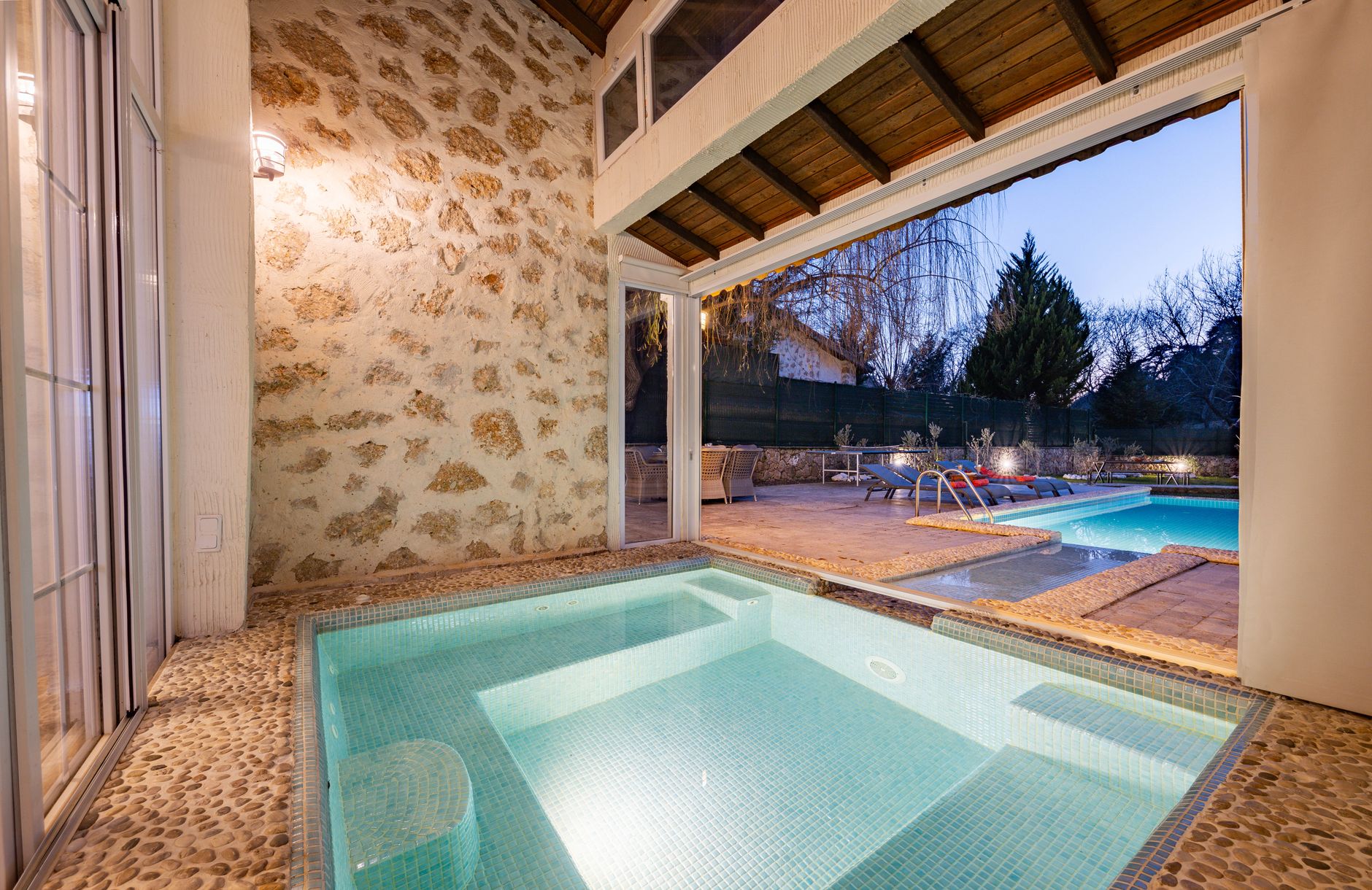
Pool grotto is a cave-like pool feature built into or beside the water, usually with an opening, shaded nook, and sometimes a waterfall or bench inside. It can add privacy and a resort feel, but the shell, plumbing, and access details determine whether it works well.
If you are weighing a custom backyard upgrade, the useful questions are design, budget, safety, and whether the feature fits a new build or an existing inground pool.
What sets a pool grotto apart
A backyard grotto is built, not carved by erosion. It usually combines a recessed opening, a hard shell, and a place to sit or pass under moving water, which makes it feel more enclosed than a standard waterfall or rock accent.
The difference matters because function changes the whole experience. A rock formation can decorate the edge, a pool waterfall can add motion, and a pool cave can create a shaded destination inside the water.
The cave-like opening changes the experience
The opening does the heavy lifting. It creates shade, a sense of privacy, and a cooler spot to pause during hot afternoons or crowded pool days.
That shape also changes acoustics. Narrow spillways make water sound softer and more echoing, while wider flow paths sound louder and more exposed. That is part of why the feature feels more immersive than a simple ledge.
Usable space matters more than ornament
The best designs give you a seat, a ledge, or a small swim-in nook. Houzz project photos and pool contractor specs show the same pattern: the feature works best when someone can actually use it.
That use changes behavior around the pool. Kids tend to head toward it, adults linger there, and the rest of the pool starts to orbit the cave-like space. From there, the next choice is whether you want a waterfall, a slide, or a place to sit.
Waterfall, slide, and seating each change the role
A waterfall turns the grotto into a focal point. A slide turns it into a play feature. A bench inside the recess turns it into a shaded retreat.
A pool grotto with slide leans family-friendly, while a bench and spillway lean more resort-style. Once you decide how the space should function, the build method matters because the shell and finish control both appearance and upkeep.
That kind of resort feel depends on choices under the surface, where materials and finishes set the tone.
Materials and design choices that shape the look
Shotcrete, gunite, stone, and sculpted concrete each create a different result. The shell carries the load, while the finish controls texture, shadow, and the rough stone look people expect from a swimming pool cave feature.
Natural stone reads rugged, while formed concrete gives you tighter curves and more control. Lightweight sculpted rock systems can reduce load, which matters when the existing pool shell or deck cannot take much extra weight.
Stone and concrete each age differently
Rough stone hides small stains, but porous stone can hold moisture and mineral scale. Textured concrete gives you more shaping control, though cracks show sooner if the base moves.
That tradeoff is familiar in pool finishes. Surface texture affects both appearance and upkeep, and rougher finishes usually demand more cleaning and sealing than smooth tile or plaster.
Lighting and water effects need early planning
Lighting inside a recessed cave is difficult because dark pockets swallow standard fixtures. Concealed LEDs, uplights, and underwater lights need to be planned before the shell closes up.
Pool lighting also changes nighttime safety. One well-placed fixture can reveal the opening, while a poor layout leaves blind corners near a hidden swim-through or bench. That is why lighting should be part of the structure, not an afterthought.
Scale and placement should match the shell
A large feature on a small pool can crowd circulation and make the water feel busy. A compact one at the deep end usually works better because it preserves open swim space and leaves room for deck access.
Placement matters too. The strongest designs tie into boulders, planting beds, or grade changes so the feature looks anchored. Once the scale is right, cost becomes the main question.
Those anchored looks often come with bigger numbers, because scale and site complexity drive the final price.
The cost drivers behind a pool grotto
Excavation, shell work, plumbing, and labor drive the bill more than the decorative stone does. National Association of Home Builders pricing guidance for custom pools shows the same pattern: complex site work and extra features push costs upward faster than simple square footage.
Pool grotto cost also rises with access. Tight side yards, sloped lots, and long equipment runs mean more labor hours, more handling, and more chances for structural changes mid-project.
| Cost Driver | What It Covers | Why It Moves The Budget |
|---|---|---|
| Shell work | Gunite or shotcrete shaping, reinforcement, and the base form | It carries the load and sets the feature’s size and stability |
| Rock work | Stone veneer, sculpted concrete, or formed rock surfaces | Custom shaping adds labor and material handling |
| Plumbing | Feed lines, returns, spillway lines, and circulation changes | Longer routes and higher flow needs require more pipe and pump planning |
| Lighting | LED fixtures, wiring, controls, and niche placement | Recessed spaces need careful routing before finish work closes access |
| Labor | Layout, forming, waterproofing, finishing, and cleanup | Custom work takes skilled time, not just material volume |
Custom shaping pushes labor up fast
Every curve has to be framed, reinforced, and finished by hand or with specialized forms. That is why a plain spillway costs far less than a carved cave with a bench and a waterfall lip.
Reinforced shells matter because water features add weight and vibration to the structure. Shotcrete and gunite are common because they create a strong monolithic base that can support sculpted rockwork.
A $20,000 inground pool budget leaves little room
In many markets, $20,000 may cover only a basic shell, and adding a grotto usually forces compromises elsewhere. The usual cuts are size, finish quality, depth changes, deck length, or the feature itself.
HomeAdvisor pricing data on pool projects shows how quickly optional features stack up. A small waterfall is one thing; a full cave-like feature with plumbing, lighting, and structural shaping is another. On a tight budget, the practical path is often a small accent ledge or modest waterfall now, with the grotto delayed or scaled back.
That budget pressure leads straight into planning. New construction gives you more control, while retrofit work can become a structural puzzle.
When the budget tightens, the decision often hinges on whether the grotto is part of a new build or a retrofit.
Adding one to a new build or existing pool
A new build gives the designer room to place the structure, run plumbing, and reinforce the shell as one system. That is why adding a pool grotto during construction is usually simpler than trying to fit one onto a finished pool.
Retrofit work can still happen, but it depends on shell type, yard access, and how much demolition the existing pool can handle. This Old House and Pool & Spa News both point to the same reality: the more the pool is already built, the more the feature has to work around what exists.
New build planning keeps the structure coherent
During new construction, the pool contractor can form the grotto into the shell from the start. That means the rebar, bond beam, plumbing, and lighting move together instead of being patched in later.
You also get cleaner water circulation. Returns can be aimed to move water through the recess, and drainage can be set before finishes hide the pipe runs.
Retrofitting an existing pool needs a close structural review
An existing gunite pool has more retrofit potential than a vinyl-lined pool, but even gunite needs scrutiny. The shell may need cutouts, anchor points, or extra reinforcement, and those changes can trigger permit requirements.
Pool contractor inspection matters here because small mistakes become expensive. A weak bond between old shell and new rockwork can crack, a shallow deck edge can limit size, and an awkward layout can trap debris in the recess.
Permits and inspections enter early
Local permit offices may want structural drawings, electrical details, and drainage plans before work starts. An inspector may also check bonding, barrier placement, and access around the new feature.
That paperwork can feel slow, but it protects the build from surprises. Once the legal and structural path is clear, the build sequence becomes easier to follow, especially when plumbing and sealing come into view.
With permits and structure settled, the practical work shifts to the sequence that keeps water contained and flowing properly.
Build steps, plumbing, and waterproofing basics
The work starts with excavation and shell layout, not with stone. A pool grotto is a structural feature, so the base, pipe runs, and waterproofing layer all need to land in the right order.
Water movement is the quiet issue that decides long-term success. Water circulation has to reach the recess, and waterproofing has to keep moisture from working into joints, seams, and service spaces.
The core build sequence follows the shell
- Excavate the footprint – The crew shapes the hole and sets the grotto zone before the shell is shot.
- Set the reinforcement – Rebar and forming steel carry the load for the cave-like opening and ledge.
- Install plumbing – Water lines for the pool grotto waterfall, jets, and circulation go in before finish work closes access.
- Apply the shell – Gunite or shotcrete forms the structural body that holds the feature.
- Add waterproof layers – Sealants and membrane work keep water from entering seams and weak spots.
- Finish the surface – Stone veneer, sculpted concrete, or rock coating gives the final look.
Drainage and circulation keep the recess from going stale
Stagnant water invites algae growth and mineral scale. A grotto with poor flow can look fine from the deck and still develop problems behind the rock face where light and air are limited.
NSF water-quality guidance points to a simple rule: hydraulics matter as much as chemistry. If the pump and return layout leave dead zones, sanitizer levels drop in those pockets and maintenance gets harder.
Plan service access before the finish goes on. A small access hatch or crawl space can save hours when a pipe fitting, light, or seal needs inspection later.
Waterproofing failures usually start at the base
Hidden leaks often begin where new material meets old material or where a shell joint was not sealed cleanly. A crack under the rock face can stay invisible until dampness shows at the deck edge or a stain forms near the waterline.
That is why crews use layered sealing, not a single coat. Pool & Spa News coverage of custom builds points to the same trade practice: good substrate prep is what keeps the feature from becoming a repair project.
Once the structure is in place, the day-to-day question changes from build quality to user safety. Cave-like spaces need more attention than open water does.
Those hidden details matter even more once people start using the space, because comfort and safety depend on careful upkeep.
Safety and maintenance issues to plan for
Slippery stone, low light, and narrow recesses make this feature different from a flat wall or open waterfall. CPSC guidance on pool safety calls out slips, trips, and poor visibility around complex structures for good reason.
The surface can also hide trouble. Debris collects in corners, algae clings to shaded stone, and a recessed seat can block sightlines for adults standing on deck.
Lighting and visibility reduce risk
Keep the opening lit from more than one angle. A single fixture leaves shadows that make depth and edge changes hard to read, especially after sunset.
Good visibility also helps supervision. A family pool with a hidden swim-through or bench needs a clear view from the deck, not just a dramatic silhouette.
Cleaning around rockwork takes more effort
Rough stone catches leaves, sunscreen residue, and calcium scale. A brush with stiff nylon bristles, a skimmer net, and access to the back side of the structure make routine care easier.
Cornell Cooperative Extension water-quality materials note that balanced pH and calcium hardness reduce scale formation. That matters more on textured surfaces because mineral deposits cling to rough edges faster than they do to smooth tile.
Access and circulation shape swimmer-friendly use
- Keep ledges visible – Dark recesses hide depth changes and raise fall risk.
- Use non-slip texture – Wet rock needs grip, especially near the entry and seat.
- Leave cleaning access – A reachable panel or service gap helps with repairs and inspection.
- Move water through the cavity – Flow reduces stagnation and keeps the surface from going stale.
- Check drain placement – Code-compliant fittings lower entrapment concerns near alcoves and steps.
Because shade and splash never stop, inspect the grotto after the pump shuts off. A damp patch, white crust, or loose stone edge deserves attention before it spreads.
That mix of safety and upkeep is the real filter. A it can be a striking resort-style addition, but the version that works long term is the one with clear sightlines, solid hydraulics, and a surface you can actually clean.
The best designs balance drama with durability, leaving you with a feature that is beautiful, safe, and manageable.
Final Thoughts
The smartest feature is the one that fits the shell, the budget, and the way you use the pool. Style matters, but structure and water flow decide whether the addition stays inviting or turns into a damp, high-maintenance corner.
FAQ
What is a grotto in a pool?
A carved recess beside the water creates a cave-like space that can feel shaded, private, and unexpectedly dramatic. It can add shade, privacy, and a seating spot, and it is often paired with a waterfall or slide.
How much does it cost to add a grotto to a pool?
The cost depends on shell work, rock work, plumbing, lighting, and labor. A small add-on can fit a modest upgrade budget, but a full custom feature often pushes far beyond a basic pool build.
How do you build a grotto for a pool?
The build starts with excavation and reinforcement, then moves to plumbing, shell work, waterproofing, and finish materials. The feature has to tie into the pool structure and circulation system from the start.
What materials are used to build a pool grotto?
Builders use stone, concrete, shotcrete, gunite, and sculpted rock systems. Each material changes the look, weight, maintenance load, and how the feature handles moisture over time.
Is a pool grotto just decorative or does it have a function?
It can do both. The feature is decorative, but it also adds shade, privacy, seating, and a sheltered spot for a waterfall or hidden swim-in area.